Maldives
Overview of Diving in Maldives
The Maldives is a chain of 26 atolls made up of more than 1,000 coral islands. It’s known worldwide for diving, and once you’re in the water, it’s easy to see why. Coral reefs, thilas, and deep channels create a space where marine life thrives. The water is warm, and visibility is often crystal clear.
This is a place where big encounters are normal. Manta rays and whale sharks move through the currents, while healthy reefs are packed with fish. You’re not chasing rare moments here—they happen naturally.
Scuba divers, freedivers, and snorkelers all get great access to the underwater world. What makes the Maldives stand out is consistency. The conditions are comfortable, the life is rich, and almost every day in the water delivers something worth remembering.
Best Time to Visit Maldives for Diving & Marine Life
Knowing the seasons in the Maldives helps a lot when planning a dive trip. The climate is tropical, with two main monsoon seasons. Each one affects visibility, currents, and where marine life tends to gather.
Dry season (December to May)
This is the calmer time of year. Water temperature stays warm at around 27–30°C, and visibility is usually excellent. On good days, you can see 30 meters or more underwater.
The weather is mostly dry, with clear skies and light winds. Boat rides are smoother, and getting in and out of the water feels easy. That’s why many beginners prefer this season.
Currents can still be strong, especially in channels during new and full moons. And that’s a good thing. Strong currents often mean more action.
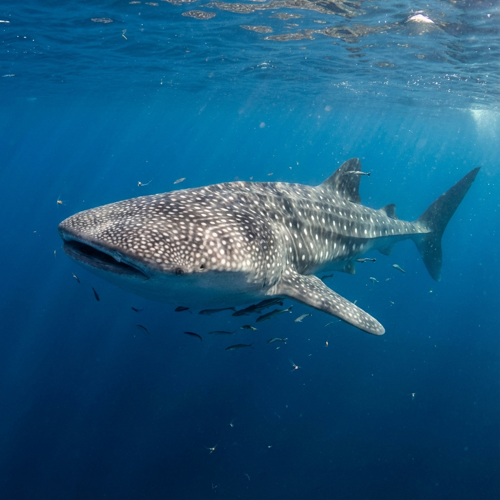
This season offers a higher chance of seeing sharks and other pelagic animals. Grey reef sharks, whitetips, eagle rays, and sometimes hammerheads show up at deeper sites. Manta rays are common on the western sides of the atolls. Whale sharks live in South Ari Atoll year-round, and sightings are often more consistent thanks to clearer water.
If you want calm conditions or plan to do underwater photography, this is usually the easiest time to go.
Wet season (June to November)
The water is still warm, around 27–29°C. Visibility drops slightly because there’s more plankton in the water, usually around 15–25 meters. It’s not crystal clear, but still very diveable.
There’s more rain, but it often comes in short bursts. Winds can be stronger, and the sea can get choppy, especially on exposed sites.
Currents remain strong, and nutrient-rich water rises from below. That plankton brings life with it.
This is manta season on the eastern atolls. Large groups gather to feed, especially in places like Hanifaru Bay, where snorkeling is the main way to see them. Whale sharks are still present in South Ari Atoll and are often drawn in by the plankton blooms. Reef sharks and turtles are around all year.
If big animals are your priority, this season delivers. You may deal with rougher surface conditions, but underwater, there’s plenty happening.
So when should you go?
Diving in the Maldives is good all year. It really comes down to what you care about more. Choose the dry season for calm seas and clear water. Choose the wet season if you want peak manta activity and don’t mind a bit of chop. Either way, the underwater world doesn’t disappoint.
Seasonal Marine Life Highlights
The Maldives offers an incredible diversity of marine life. Here are some of the stars and when best to encounter them:
Manta Rays: These majestic creatures are a top highlight.
November to May: More commonly found on the western side of the atolls (e.g., North Male, South Ari, Baa Atoll).
June to October: Migrate to the eastern side of the atolls, with Hanifaru Bay (Baa Atoll) being world-famous for aggregations during this period (snorkeling only here, strict conservation rules apply). They appear here for plankton blooms and at cleaning stations.
Whale Sharks: The gentle giants of the ocean.
Year-round: Most reliably encountered in the South Ari Atoll Marine Protected Area (SAMPA), particularly along its western edge.
More frequent/consistent sightings: Dry season due to clearer water, but still present in wet season, often attracted by plankton. They cruise the reefs feeding on plankton.
Hammerhead Sharks: Elusive and sought-after.
Dry Season (Dec-May), early mornings: Possible at specific deep dive sites like Rasdhoo Madivaru (Hammerhead Point). They school in deeper waters.
Best Dive Sites in Maldives
The Maldives boasts hundreds of incredible dive sites. Here are a few notable ones that offer a taste of what's available:
Banana Reef (North Male Atoll)
Depth Range: 5-30 meters
Experience Level: Beginner / Intermediate
Highlight: One of the oldest dive sites in the Maldives, known for its vibrant hard and soft corals, caves, overhangs, and a rich diversity of reef fish. A great introduction to diving in Maldives.
Maaya Thila (South Ari Atoll)
Depth Range: 10-30 meters
Experience Level: Intermediate / Advanced
Highlight: Famous for its incredible night dives, where whitetip reef sharks actively hunt. During the day, expect grey reef sharks, turtles, moray eels, and abundant reef fish swirling around the pinnacle.
Fish Head (Mushimasmingali Thila, Ari Atoll)
Depth Range: 10-30 meters
Experience Level: Advanced (due to strong currents)
Highlight: A protected marine area, this thila is a magnet for large pelagics, especially grey reef sharks. Schooling snappers and barracudas are also common.
Kuredu Express (Lhaviyani Atoll)
Depth Range: 10-30 meters
Experience Level: Advanced (drift dive with strong currents)
Highlight: A thrilling drift dive through a channel, famous for encounters with large schools of grey reef sharks, eagle rays, and schooling reef fish.
Hanifaru Bay (Baa Atoll)
Depth Range: Snorkeling only (surface to 5 meters)
Experience Level: All levels (snorkeling)
Highlight: A globally renowned aggregation point for manta rays and whale sharks, especially during the southwest monsoon (June-November) when plankton concentrates here. Strict regulations are in place to protect the animals.
Broken Rock (South Ari Atoll)
Depth Range: 10-30 meters
Experience Level: Intermediate
Highlight: Named for a large, broken coral formation creating a canyon, this site is adorned with colorful soft corals and hosts a variety of reef fish, moray eels, and occasionally reef sharks.
Fotteyo Kandu (Vaavu Atoll)
Depth Range: 15-40 meters
Experience Level: Advanced (strong currents)
Highlight: Considered one of the best channel dives in the Maldives, offering spectacular hard coral formations, schools of grey reef sharks, eagle rays, barracudas, and fusiliers.
Freediving in Maldives
Freediving in Maldives is an absolutely incredible experience, catering to a wide range of skill levels. The conditions are almost custom-made for it.
Typical Depths & Visibility: Visibility is consistently outstanding, often 20-40 meters+, allowing freedivers to enjoy clear views of the underwater landscape from the surface. While reefs typically start shallow (2-5m), walls and channels often drop to 30m+ within easy reach of shore or a short boat ride.
Suitability: The Maldives is fantastic for both recreational freedivers seeking relaxed exploration and advanced freedivers aiming for depth progression. The warm, clear water and minimal thermoclines make for comfortable training.
Common Freediving Environments: You'll find a mix of vibrant reefs, dramatic walls, intriguing pinnacles (thilas), and current-swept channels. The blue water itself is a draw for pelagic encounters. Wrecks are accessible for experienced freedivers.
Best Seasons for Freediving: The dry season (December-May) offers the calmest surface conditions and highest visibility, making it ideal for relaxed exploration and depth training without strong swells. However, the wet season can still be excellent, especially for encounters with plankton-feeding mantas.
Marine Life Encounters: Freedivers are likely to experience mantas, whale sharks (snorkeling-style freediving), reef sharks, turtles, eagle rays, and vast schools of reef fish. The silent nature of freediving often allows for closer, more natural encounters with marine animals.
The destination is perfectly suitable for relaxed exploration of house reefs, practicing breath-hold techniques, depth progression with professional guidance, or simply enjoying the freedom of movement in the crystal-clear Maldivian waters.
Family-Friendly Snorkeling in Maldives
The Maldives is truly an ideal destination for families with children when it comes to snorkeling. It's world-class and incredibly accessible.
Calm, Shallow Snorkeling Areas: Most resorts are built around natural lagoons and have extensive house reefs easily accessible directly from the beach or jetties. These lagoons are often shallow, calm, and protected from strong currents or waves.
Best Beaches or Lagoons for Children: Virtually any resort island will offer excellent, safe snorkeling spots for children. Look for resorts that specifically promote their 'house reef' accessibility. The calm, shallow waters of the lagoons are perfect for little ones to get comfortable.
Typical Visibility & Water Temperature: Visibility is consistently excellent, often 20-40 meters+, providing clear views of the reef below. Water temperature remains a balmy 27-30°C year-round, so no wetsuits are needed for snorkeling, just swimwear and rash guards for sun protection.
Common Marine Life Seen While Snorkeling: You'll be amazed at what you can spot just below the surface: colorful reef fish (parrotfish, clownfish, angelfish), small blacktip reef sharks (harmless to humans, often seen in the shallows), baby stingrays, and frequently, green and hawksbill turtles. Larger creatures like eagle rays or even manta rays (in specific spots like Hanifaru Bay) are also possible.
Safety Considerations for Families: The sheltered lagoons typically have minimal currents and waves. Resorts are well-equipped with life vests of all sizes, and many offer guided snorkeling tours. Always check with your resort about specific local conditions, especially entry points, and always supervise children.
Clearly stated: This destination is ideal for families with children and also perfect for confident adult snorkelers who want to explore vibrant reefs without needing to dive. It's truly a top-tier snorkeling destination.
Diving Conditions & Skill Requirements
Understanding the diving conditions in Maldives is crucial for planning your trip and ensuring you're comfortable and safe.
Typical and Seasonal Currents: Currents are a defining feature of Maldivian diving, especially in the channels (kandus) and around the pinnacles (thilas). These can range from gentle drifts to very strong, washing machine-like currents, particularly during tidal changes and around the full and new moon. Drift diving is very common, and most experienced divers embrace it as it brings in the big pelagic action. Seasonal variations exist, with the dry season generally offering more predictable, though still strong, channel currents.
Visibility Range: Visibility is consistently outstanding, typically ranging from 20 to 40+ meters. It might drop slightly to 15-25 meters during the wet season due to plankton blooms, but this is still excellent and often signals more manta action.
Water Temperature and Wetsuit Recommendations: The water temperature hovers between a balmy 27-30°C year-round. Most divers find a 3mm shorty or a full wetsuit perfectly comfortable for multiple dives. Some divers even opt for just a rash guard or board shorts, though a wetsuit offers better protection from sun and accidental scrapes.
Any Advanced, Deep, or Technical Requirements: While there are plenty of shallow, calm reef dives suitable for Open Water certified divers, many of the most iconic dive sites in the Maldives involve strong currents and depths exceeding 18-20 meters. An Advanced Open Water certification is highly recommended to fully experience the best the Maldives has to offer, as it allows access to deeper sites and provides training in drift diving. Experience with currents is definitely beneficial. Technical diving is rare but can be arranged through specialized liveaboards or dive centers for specific deep pinnacles or wrecks.
Location & Access Information
Main Dive and Snorkeling Areas: The most popular and well-developed dive and snorkeling areas are concentrated around the central atolls.
North and South Male Atoll: Close to the international airport, offering a mix of reefs, thilas, and channels.
Ari Atoll (North & South): Famous for pelagic encounters, especially whale sharks and mantas.
Baa Atoll: Home to Hanifaru Bay, renowned for manta aggregations.
Vaavu Atoll: Known for its pristine channels and coral gardens.
Lhaviyani Atoll: Offers exciting drift dives and abundant reef life.
How People Typically Access Dive and Snorkel Sites: Access is primarily by boat.
From resort islands: Speedboats or traditional dhonis take guests to nearby sites for day trips.
Liveaboards: These vessels travel between atolls, parking directly over the best dive sites.
Travel Time to Sites from Shore or Ports: From Malé International Airport (Velana International Airport - MLE), transfers to resorts or liveaboard departure points vary. Nearby resorts (North Male Atoll) are a 20-60 minute speedboat ride. Resorts in further atolls require a domestic flight (30-60 mins) or a seaplane transfer (20-45 mins), followed by a short speedboat ride. Liveaboards typically depart from Malé or nearby atolls, then cruise to dive sites over the week.
Comparison & Context
The Maldives stands out among global underwater destinations for several key reasons.
Compared to the Red Sea, the Maldives generally offers warmer waters and often more reliable encounters with large pelagics like manta rays and whale sharks, although the Red Sea boasts incredible hard coral walls and a greater number of historical wrecks. The soft corals in Maldivian channels are particularly vibrant and extensive.
Compared to Southeast Asia (e.g., Indonesia, Philippines), the Maldives generally offers more consistent high visibility and a higher chance of pelagic encounters, though Southeast Asia often has a greater overall biodiversity, more varied topography, and a broader range of macro life (especially in muck diving sites).