About Stingray

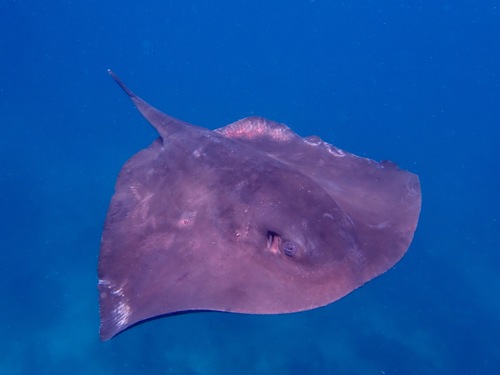
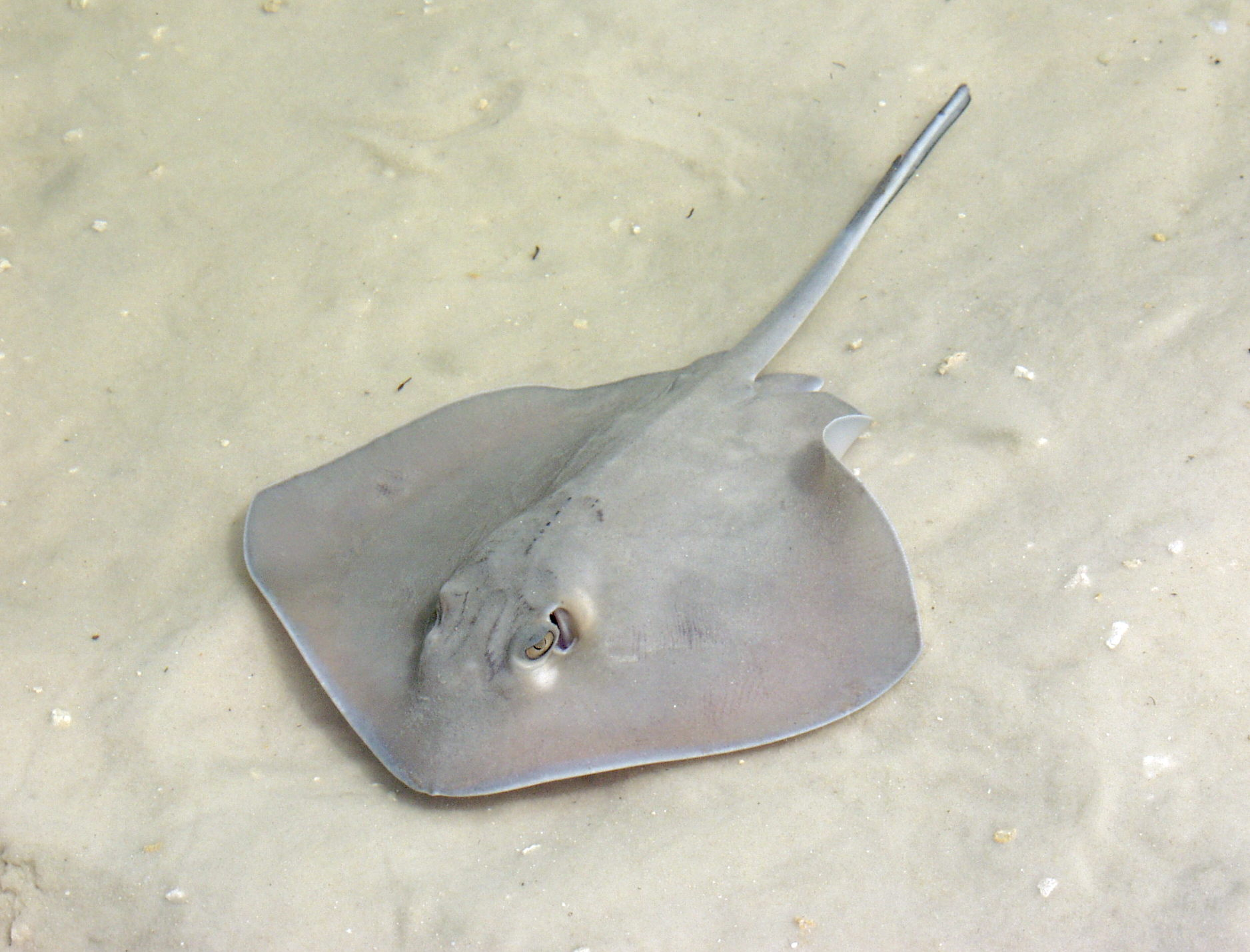
Stingrays are a group of rays, a type of cartilaginous fish. They are classified in the suborder Myliobatoidei of the order Myliobatiformes and consist of eleven families: Hexatrygonidae (sixgill stingrays), Gymnuridae (butterfly rays), Plesiobatidae (deepwater stingrays), Urolophidae (round stingrays), Myliobatidae (eagle rays), Aetobatidae (pelagic eagle rays), Mobulidae (manta and devil rays), Rhinopteridae (cownose rays), Dasyatidae (whiptail stingrays), Potamotrygonidae (river stingrays), and Urotrygonidae (American round stingrays).

There are about 220 known stingray species organized into 29 genera.

Stingrays are common in coastal tropical and subtropical marine waters throughout the world. Some species, such as the thorntail stingray (Dasyatis thetidis), are found in warmer temperate oceans and others, such as the deepwater stingray (Plesiobatis daviesi), are found in the deep ocean. The river stingrays and a number of whiptail stingrays (such as the Niger stingray (Fontitrygon garouaensis)) are restricted to fresh water. Most myliobatoids are demersal (inhabiting the next-to-lowest zone in the water column), but some, such as the pelagic stingray and the eagle rays, are pelagic.

Stingray species are progressively becoming threatened or vulnerable to extinction, particularly as a consequence of unregulated fishing. As of 2013, 45 species have been listed as vulnerable or endangered by the IUCN. The status of some other species is poorly known, leading to their being listed as data deficient.

Appearance

The mouth of the stingray is located on the ventral side of the vertebrate. Stingrays exhibit hyostylic jaw suspension, which means that the mandibular arch is only suspended by an articulation with the hyomandibula. This type of suspensions allows for the upper jaw to have high mobility and protrude outward. The teeth are modified placoid scales that are regularly shed and replaced. In general, the teeth have a root implanted within the connective tissue and a visible portion of the tooth, is large and flat, allowing them to crush the bodies of hard shelled prey. Male stingrays display sexual dimorphism by developing cusps, or pointed ends, to some of their teeth. During mating season, some stingray species fully change their tooth morphology which then returns to baseline during non-mating seasons.
Diet

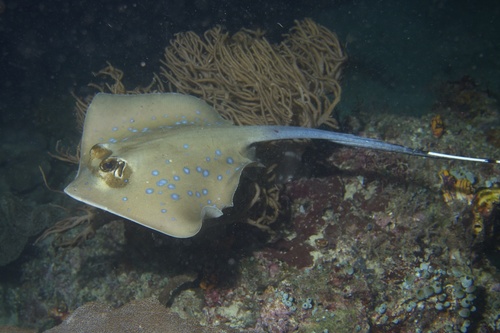
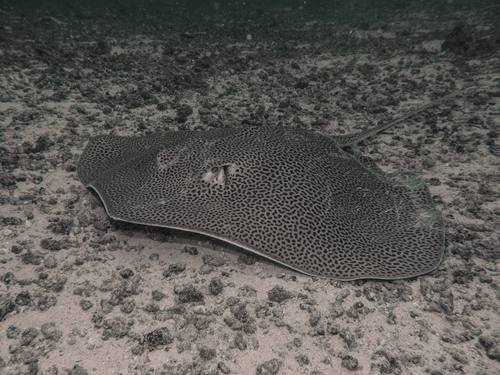
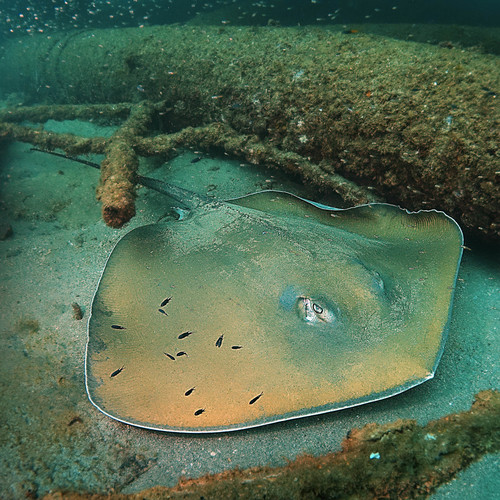
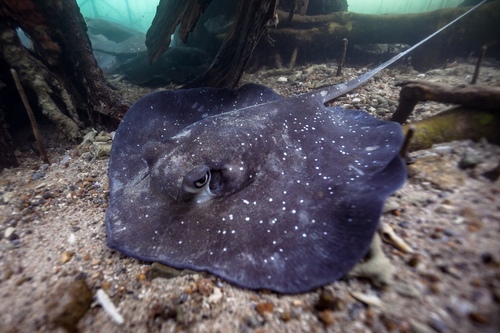
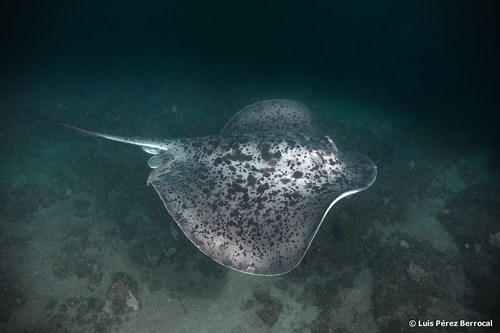
Stingrays use a wide range of feeding strategies. Some have specialized jaws that allow them to crush hard mollusk shells, whereas others use external mouth structures called cephalic lobes to guide plankton into their oral cavity. Benthic stingrays (those that reside on the sea floor) are ambush hunters. They wait until prey comes near, then use a strategy called "tenting". With pectoral fins pressed against the substrate, the ray raises its head, generating a suction force that pulls the prey underneath the body. This form of whole-body suction is analogous to the buccal suction feeding performed by ray-finned fish. Stingrays exhibit a wide range of colors and patterns on their dorsal surface to help them camouflage with the sandy bottom. Some stingrays can even change color over the course of several days to adjust to new habitats.

Behaviour

During the breeding season, males of various stingray species, such as the round stingray (Urobatis halleri), may rely on their ampullae of Lorenzini to sense certain electrical signals given off by mature females before potential copulation. When a male is courting a female, he follows her closely, biting at her pectoral disc. He then places one of his two claspers into her valve.

Humans & conservation

Rays are edible, and may be caught as food using fishing lines or spears. Stingray recipes can be found in many coastal areas worldwide. For example, in Malaysia and Singapore, stingray is commonly grilled over charcoal, then served with spicy sambal sauce. In Goa, and other Indian states, it is sometimes used as part of spicy curries.

Generally, the most prized parts of the stingray are the wings, the "cheek" (the area surrounding the eyes), and the liver. The rest of the ray is considered too rubbery to have any culinary uses.

Species in this group

Where to see it

Top-rated dive sites where divers have spotted Stingray.

Shaab Marsa Alam

Shaab Marsa Alam

⭐ 5.0 (1)
Vibrant drift dive with coral gardens and a small wreck.
🚤 Boat intermediate
Pointe Venus

Pointe Venus

⭐ 5.0 (1)
Explore a historic black sand beach and snorkel a unique aquatic trail.
👣 Shore Beginner
Kurnell

Kurnell

⭐ 4.5 (2)
Shallow Botany Bay site, diverse macro life, seahorses, seagrass.
👣 Shore Beginner
Blairgowrie Pier

Blairgowrie Pier

⭐ 1.0 (1)
Australia, Victoria, Mornington Peninsula Port Phillip Heads Marine National Park
Sheltered Blairgowrie Pier (2-7m) boasts vibrant pier life, seahorses, nudibranchs, and anglerfish. Great for macro, especially during the May-June spider crab march.
👣 Shore All levels
Kaan Reef

Kaan Reef

⭐ 5.0 Scout Score
Maldives reef with variable currents, abundant sharks, rays, and pinnacles.
🚤 Boat Intermediate
Caneel Bay

Caneel Bay

⭐ 4.0 Scout Score
Shallow bay, diverse ecosystems, ideal for snorkeling, turtles, stingrays.
🚤 Boat Beginner
Mahurangi Island

Mahurangi Island

⭐ 4.0 Scout Score
New Zealand, Coromandel Peninsula Te-Whanganui-A-Hei Marine Reserve
Protected marine reserve dive with abundant fish and rays.
🚤 Boat beginner
Sithananne Reef

Sithananne Reef

⭐ 4.0 Scout Score
Vibrant rock formation reef with diverse fish and mild currents.
🚤 Boat intermediate
Observatory

Observatory

⭐ 4.0 Scout Score
Australia, Queensland, Great Keppel Island Great Barrier Reef Marine Park
Shallow dive on an abandoned observatory teeming with fish.
🚤 Boat beginner
Thin Thila

Thin Thila

⭐ 5.0 Scout Score
Channel thila with strong currents, pelagics, and macro life.
🚤 Boat Intermediate
Fateixa - São Vicente, Cabo Verde
Sheltered, beginner-friendly dive with abundant marine life.
🚤 Boat beginner
S.S Rita/Suzys Wreck

S.S Rita/Suzys Wreck

⭐ 4.0 Scout Score
Beginner-friendly shallow wreck, teeming with diverse fish life.
🚤 Boat All levels
Cacique

Cacique

⭐ 4.0 Scout Score
Shallow rocky site ideal for beginners and training dives.
🚤 Boat Beginner
Fenfushi South

Fenfushi South

⭐ 5.0 Scout Score
Maldives channel drift dive with big fish and vibrant soft corals.
🚤 Boat Advanced
Plage du Souffleur

Plage du Souffleur

⭐ 3.0 Scout Score
Calm, clear beach, perfect for snorkeling and spotting small marine life.
👣 Shore Beginner
Three Rocks

Three Rocks

⭐ 4.0 Scout Score
Shallow site with pinnacles, swim-throughs, and diverse marine life.
🚤 Boat Beginner
Marine de Negru

Marine de Negru

⭐ 3.0 Scout Score
Steep Cap Corse wall dive with clear water and marine life.
👣 Shore Intermediate
Kurumba House Reef

Kurumba House Reef

⭐ 4.0 Scout Score
Gentle slope reef with abundant marine life and variable currents.
👣 Shore Intermediate
Kuramathi Housereef

Kuramathi Housereef

⭐ 4.0 Scout Score
Maldives house reef, shallow, abundant fish, sharks, turtles, rays.
👣 Shore All levels
Kisite Marine Park

Kisite Marine Park

⭐ 5.0 Scout Score
Kenya, Wasini Island Kisite Marine Park
Kenya's most beautiful snorkeling spot with healthy, colorful reef drop-off.
🚤 Boat Beginner

Sources

  • Wikipedia — licensed CC BY-SA 4.0 · Text adapted from the Wikipedia article; modifications by WikiBubbles are shared under the same license.