← All marine life
Sea Lion
Group

Sea Lion

Otariidae, Gray, 1825

marine
Where to see it

About Sea Lion

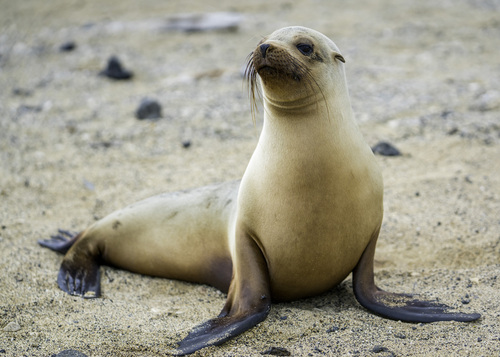
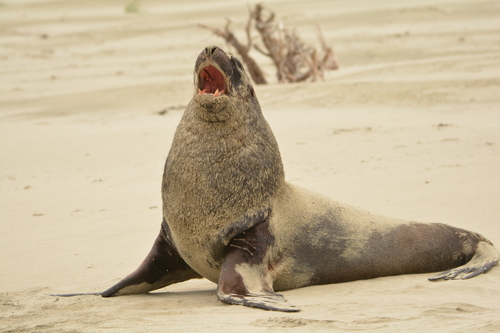
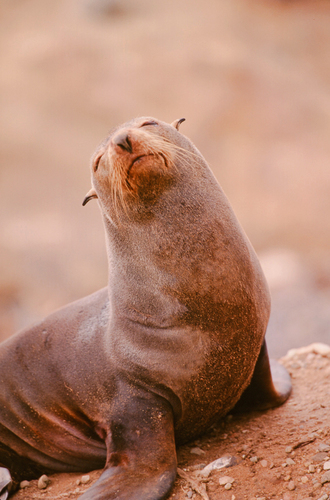
An eared seal, otariid, or otary, is any member of the marine mammal family Otariidae, one of three groupings of pinnipeds. They comprise 15 extant species in seven genera (another species became extinct in the 1950s) and are commonly known either as sea lions or fur seals, distinct from true seals (phocids) and the walrus (odobenids). Otariids are adapted to a semiaquatic lifestyle, feeding and migrating in the water, but breeding and resting on land or ice. They reside in subpolar, temperate, and equatorial waters throughout the Pacific and Southern Oceans, the southern Indian, and Atlantic Oceans. They are conspicuously absent in the north Atlantic.

The words "otariid" and "otary" come from the Ancient Greek ὠτάριον (ōtárion), meaning "little ear", referring to the small but visible external ear flaps (pinnae), which distinguishes them from the phocids.

Appearance

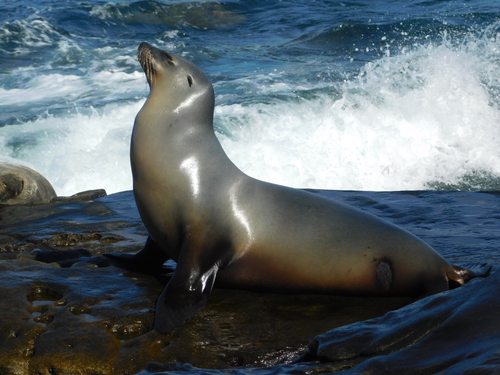
Otariids have proportionately much larger fore-flippers and pectoral muscles than true seals (phocids), and have the ability to turn their hind limbs forward and walk on all fours, making them far more maneuverable on land. They are generally considered to be less adapted to an aquatic lifestyle than phocids, since they breed primarily on land and haul out more frequently than true seals. However, they can attain higher bursts of speed and have greater maneuverability in the water. Their swimming power derives from the use of flippers more so than the sinuous whole-body movements typical of phocids and walruses.

Otariids are further distinguished by a more dog-like head, sharp, well-developed canines, and the aforementioned visible external pinnae. Their postcanine teeth are generally simple and conical in shape. The dental formula for eared seals is: 3.1.4.1-32.1.4.1.

Behaviour

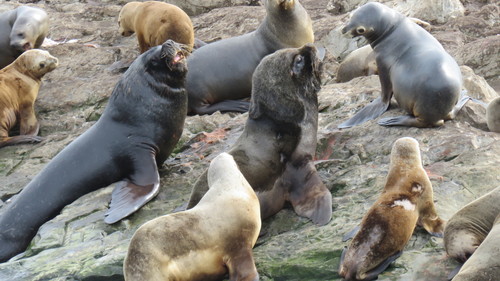
All otariids breed on land during well-defined breeding seasons. Except for the Australian sea lion, which has an atypical 17.5 month breeding cycle, they form strictly annual aggregations on beaches or rocky substrates, often on islands. All species are polygynous; i.e. successful males breed with several females. In most species, males arrive at breeding sites first and establish and maintain territories through vocal and visual displays and occasional fighting. Females typically arrive on shore a day or so before giving birth. While considered social animals, no permanent hierarchies or statuses are established on the colonies. The extent to which males control females or territories varies between species.

Species in this group

Where to see it

Top-rated dive sites where divers have spotted Sea Lion.

Darwin Bay

Darwin Bay

⭐ 5.0 Scout Score
Ecuador, San Cristbal Galápagos Marine Reserve
Shallow, scenic bay with iconic marine life, accessible without guide.
👣 Shore Beginner
Tagus Cove

Tagus Cove

⭐ 4.0 Scout Score
Ecuador, Puerto Villamil Galapagos Marine Reserve
Sheltered bay for unique Galapagos wildlife, ideal for beginners.
🚤 Boat Beginner
Punta Espinoza

Punta Espinoza

⭐ 4.0 Scout Score
Ecuador, Unknown Galápagos Marine Reserve
Unique shallow site for marine iguana encounters in Galápagos.
🚤 Boat Beginner