← All marine life
Grouper
Group

Grouper

Epinephelidae, Bleeker, 1874

marinebrackish
Where to see it

About Grouper

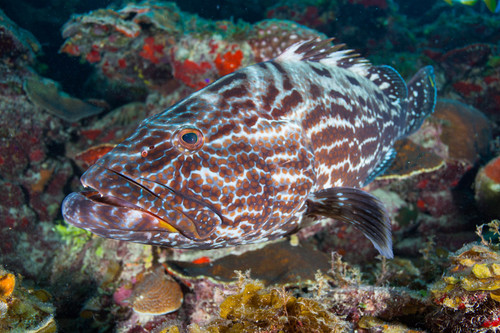
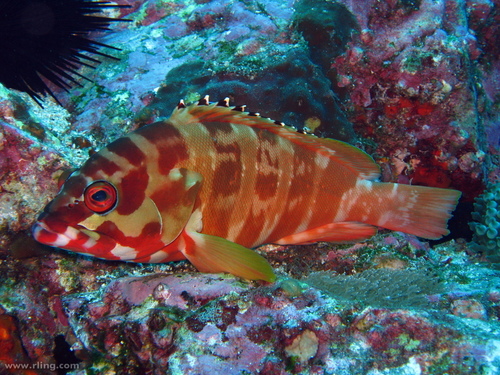
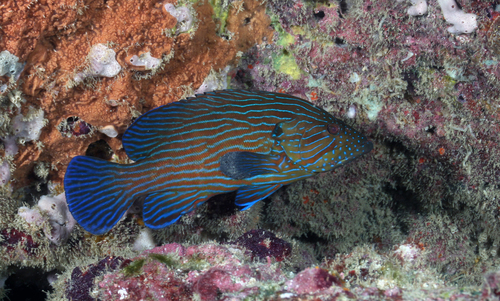
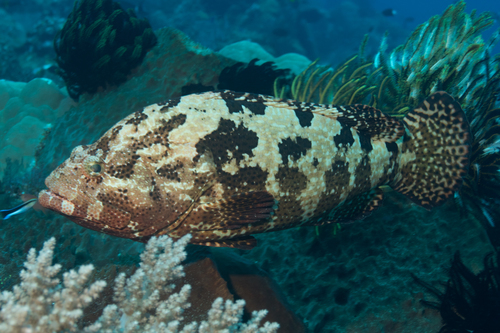
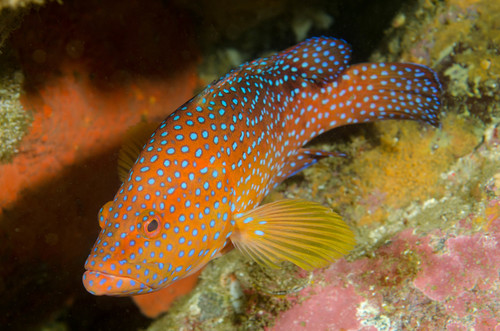
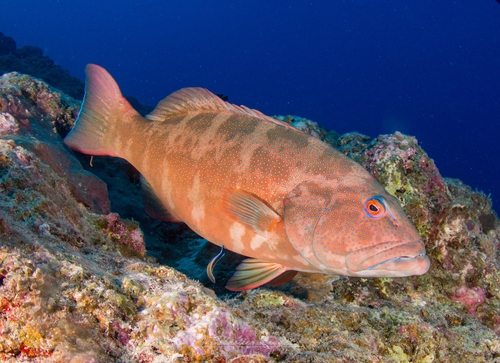
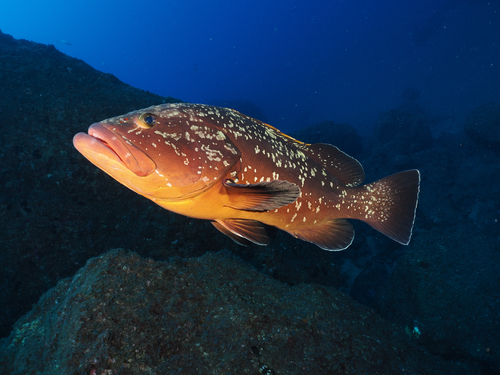
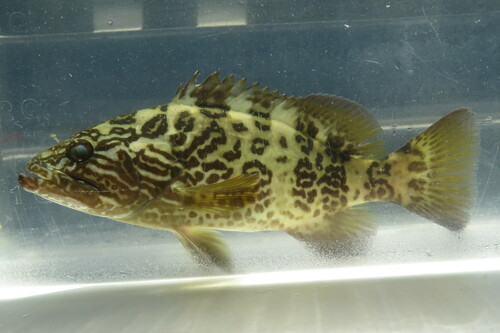
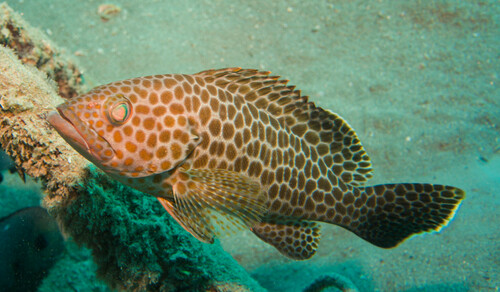
Groupers are a diverse group of marine ray-finned fish in the family Epinephelidae, in the order Perciformes.

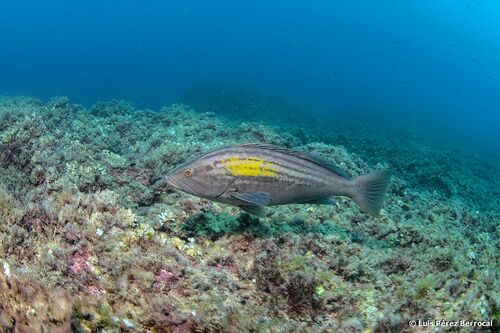
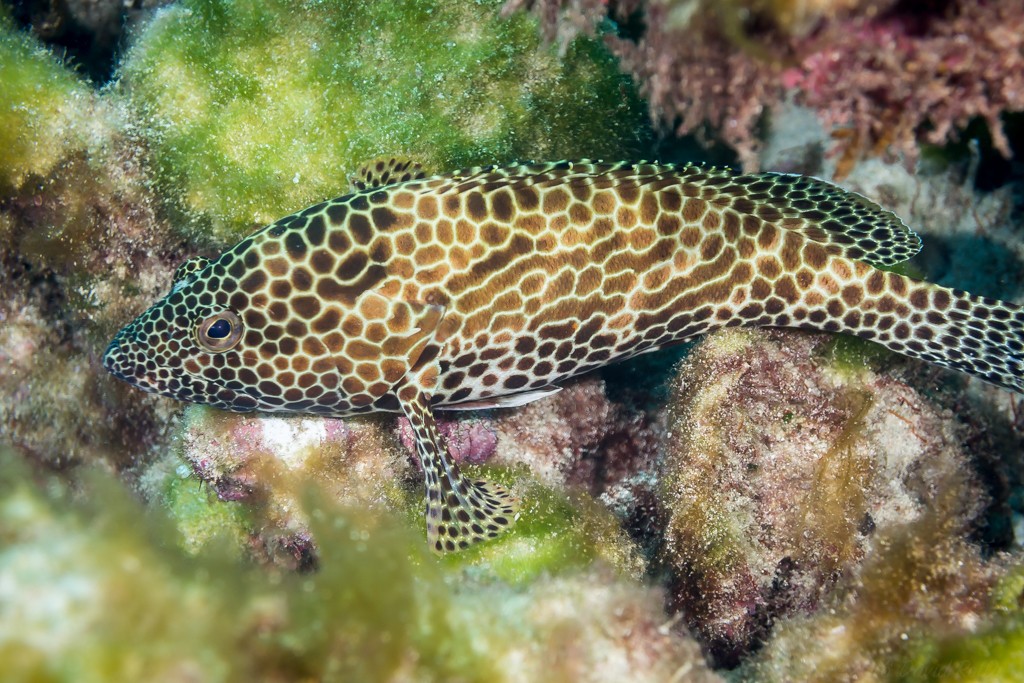
Groupers were long considered a subfamily of the seabasses in Serranidae, but are now treated as distinct. Not all members of this family are called "groupers". The common name "grouper" is usually given to fish in one of two large genera: Epinephelus and Mycteroperca. In addition, the species classified in the small genera Anyperidon, Chromileptes, Dermatolepis, Graciela, Saloptia, and Triso are also called "groupers". Fish in the genus Plectropomus are referred to as "coral groupers". These genera are all classified in the subfamily Epiphelinae. However, some of the hamlets (genus Alphestes), the hinds (genus Cephalopholis), the lyretails (genus Variola), and some other small genera (Gonioplectrus, Niphon, Paranthias) are also in this subfamily, and occasional species in other serranid genera have common names involving the word "grouper". Nonetheless, the word "grouper" on its own is usually taken as meaning the family Epinephelidae.

Appearance

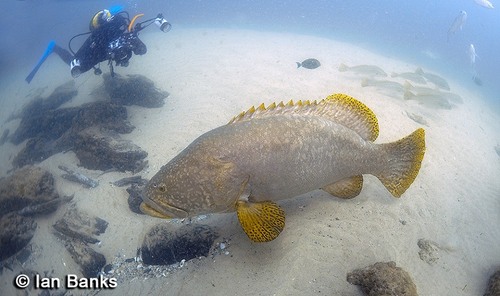
Groupers are teleosts, typically having a stout body and a large mouth. They are not built for long-distance, fast swimming. They can be quite large: in length, over a meter. The largest is the Atlantic goliath grouper (Epinephelus itajara) which has been weighed at 399 kilograms (880 pounds) and a length of 2.43 m (7 ft 11+1⁄2 in), though in such a large group, species vary considerably. They swallow prey rather than biting pieces off of them. They do not have many teeth on the edges of their jaws, but they have heavy crushing tooth plates inside the pharynx. They habitually eat fish, octopuses, and crustaceans. Some species prefer to ambush their prey, while others are active predators. Reports of fatal attacks on humans by the largest species, such as the giant grouper (Epinephelus lanceolatus), are unconfirmed.

Reproduction

Groupers are mostly monandric, protogynous hermaphrodites, i.e., they mature only as females and can change sex after sexual maturity. Some species of groupers grow about a kilogram per year and are generally adolescents until they reach 3 kg (6.6 lb) when they become female. The largest males often control harems containing up to 15 females. Groupers often pair spawn, which enables large males to competitively exclude smaller males from reproducing. As such, if a small female grouper were to change sex before it could control a harem as a male, its fitness would decrease. If no male is available, the largest female that can increase fitness by changing sex will do so.

Species in this group

Where to see it

11 dive sites where divers have spotted Grouper.

Sort by
Masía Blanca Marine Reserve
Spain, Coma Ruga Masía Blanca Marine Reserve
Marine reserve protecting rocky reef with diverse shallow life.
🚤 Boat Beginner
Brayka Bay

Brayka Bay

⭐ 4.0 (1)
Sheltered Marsa Alam reef with abundant big fish.
👣 Shore Beginner
Cala del Bolete Grande
Secluded cove in Cabo Tiñoso, perfect for snorkeling and shallow diving.
👣 Shore Beginner
Capu Sagru

Capu Sagru

⭐ 4.0 (1)
Scenic shallow rocky dive and snorkel site with diverse marine life.
👣 Shore All levels
Eagles Bay

Eagles Bay

⭐ 4.0 (1)
Accessible shallow bay with diverse marine life and corals near Mirbat.
👣 Shore Beginner
Plage du Cap Rousset
France, Carry Le Rouet Marine Preserve
Sheltered marine preserve, excellent snorkeling, abundant fish, very shallow.
👣 Shore Beginner
Seven Sisters & The Tank
Famous Red Sea spot with coral pillars and a C-130 wreck.
👣 Shore Beginner
Mackeral Bay

Mackeral Bay

⭐ 3.0 (1)
Australia, Airlie Beach Great Barrier Reef Marine Park
Popular Whitsundays snorkeling spot with recovering coral and diverse marine life.
🚤 Boat All levels
Playa Magallanes

Playa Magallanes

⭐ 3.0 (1)
Shallow Bayahibe site with caves, rock overhangs, and marine life.
👣 Shore Beginner
Saba Bay

Saba Bay

⭐ 3.0 (1)
Australia, Airlie Beach Australia Great Barrier Reef Marine Park
Shallow, recovering coral reef popular for snorkeling, diverse fish.
🚤 Boat Beginner
Sai Daeng Beach

Sai Daeng Beach

⭐ 3.0 (1)
Shallow Koh Tao reef, easy access, diverse marine life for all.
👣 Shore Beginner