Appearance
For each of the seven species of sea turtles, females and males are the same size. As adults, it is possible to tell male turtles from female turtles by their long tails with a cloacal opening near the tip. Adult female sea turtles have shorter tails, with a cloacal opening near the base. Hatchling and sub-adult turtles do not exhibit sexual dimorphism; it is not possible to determine their sex by looking at them.
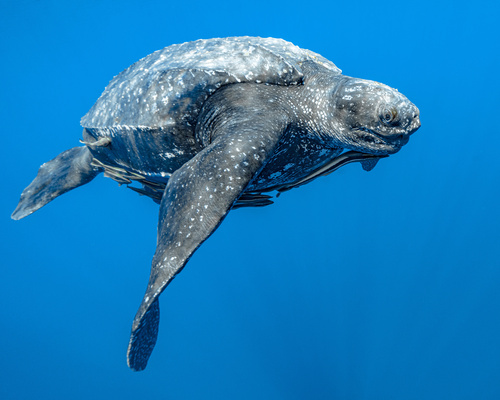
In general, sea turtles have a more fusiform body plan than their terrestrial or freshwater counterparts. This tapering at both ends reduces volume and means that sea turtles cannot retract their head and limbs into their shells for protection, unlike many other turtles and tortoises. However, the streamlined body plan reduces friction and drag in the water and allows sea turtles to swim more easily and swiftly.