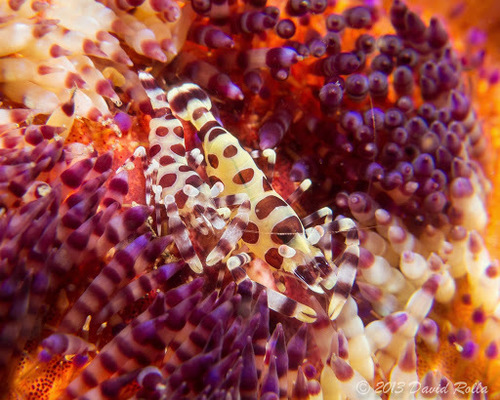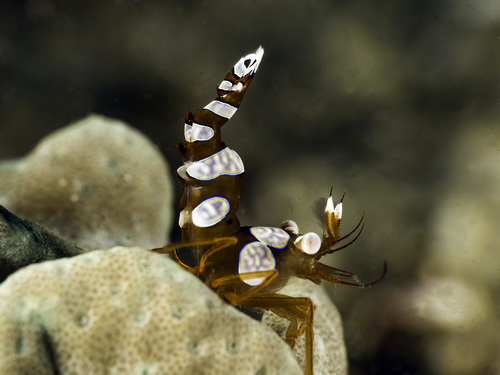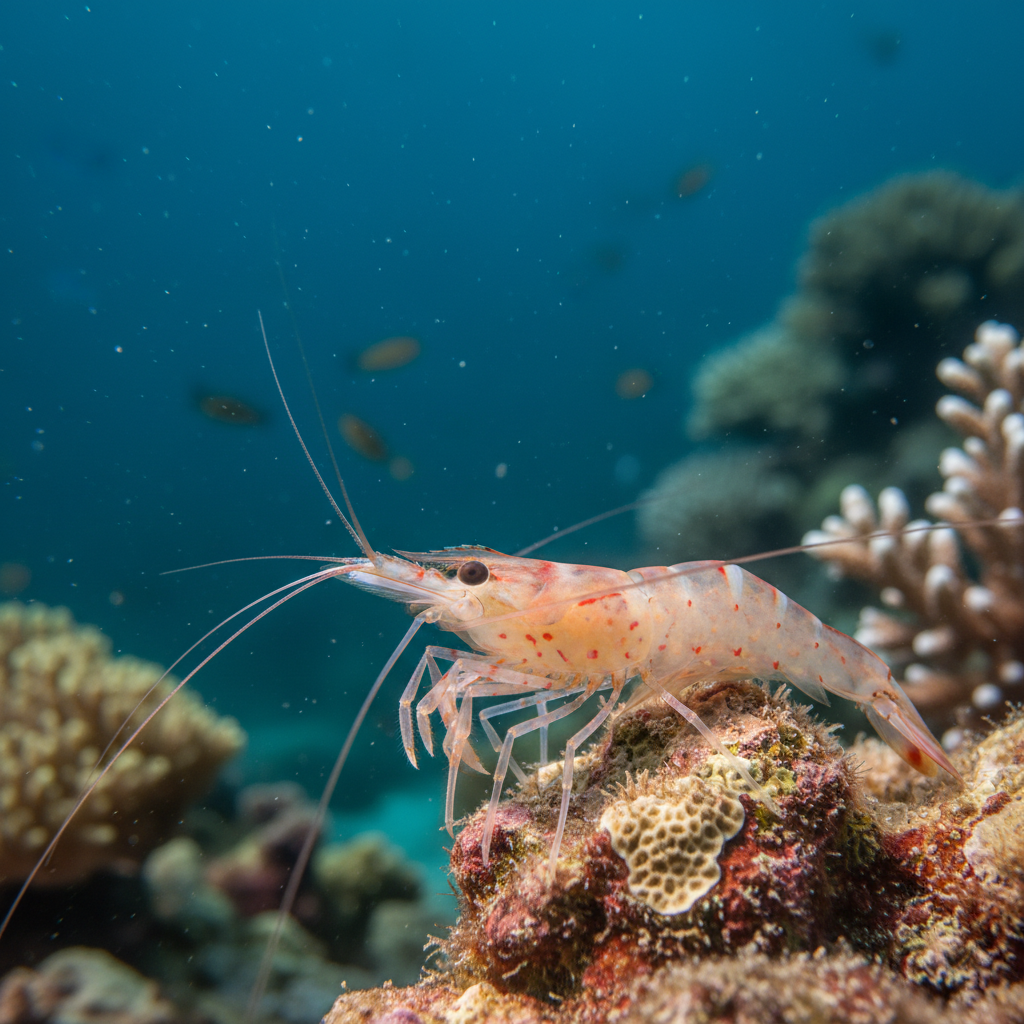
Appearance
The following description refers mainly to the external anatomy of the common European shrimp, Crangon crangon, as a typical example of a decapod shrimp. The body of the shrimp is divided into two main parts: the head and thorax which are fused together to form the cephalothorax, and a long narrow abdomen. The shell which protects the cephalothorax is harder and thicker than the shell elsewhere on the shrimp and is called the carapace. The carapace typically surrounds the gills, through which water is pumped by the action of the mouthparts. The rostrum, eyes, whiskers and legs also issue from the carapace. The rostrum, from the Latin rōstrum meaning beak, looks like a beak or pointed nose at the front of the shrimp's head. It is a rigid forward extension of the carapace and can be used for attack or defense. It may also stabilize the shrimp when it swims backward.