About Lobster

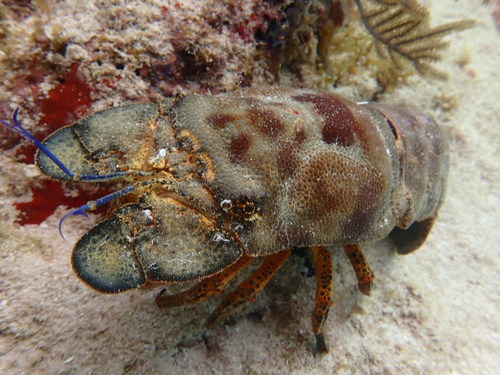
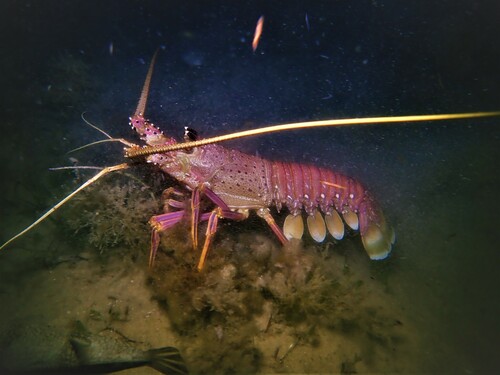
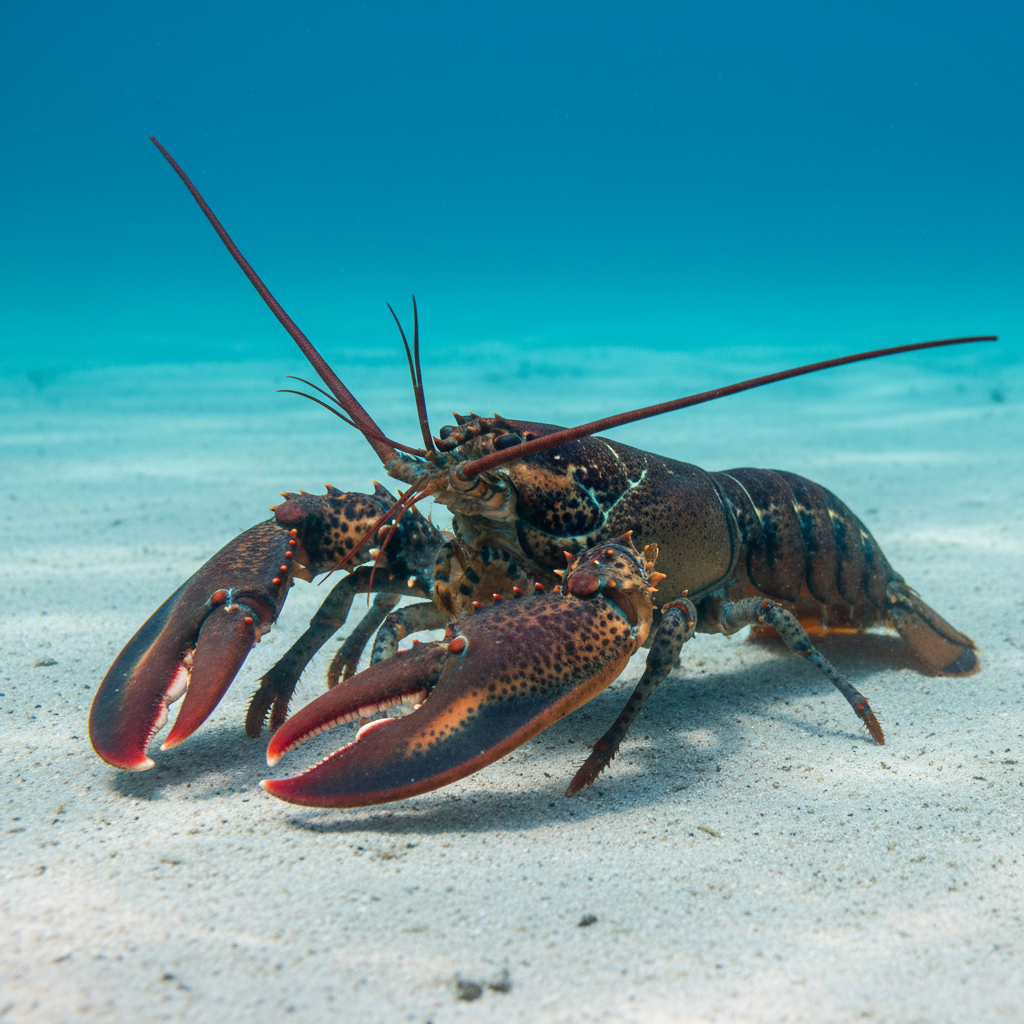
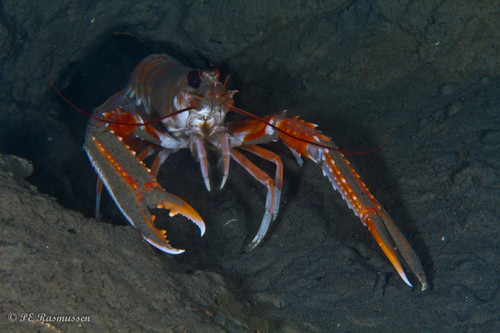
Lobsters are malacostracan decapod crustaceans of the family Nephropidae or its synonym Homaridae. They have long bodies with muscular tails and live in crevices or burrows on the sea floor. Three of their five pairs of legs have claws, including the first pair, which are usually much larger than the others. Highly prized as seafood, lobsters are economically important and are often one of the most profitable commodities in the coastal areas they populate.

Commercially important species include two species of Homarus from the northern Atlantic Ocean; the smaller Nephrops norvegicus, known as true scampi, Norway lobster, or langoustine; and multiple small species in the genus Metanephrops, commonly called Pacific scampi.

Appearance

Lobsters are invertebrates with a hard protective exoskeleton. Like most arthropods, lobsters must shed to grow, which leaves them vulnerable. During the shedding process, several species change color. Lobsters have eight walking legs; the front three pairs bear claws, the first of which are larger than the others. The front pincers are also biologically considered legs, so they belong in the order Decapods ("ten-footed"). Although lobsters are largely bilaterally symmetrical like most other arthropods, some genera possess unequal, specialized claws.

Diet

Lobster is commonly served boiled or steamed in the shell. Diners crack the shell with lobster crackers and fish out the meat with lobster picks. The meat is often eaten with melted butter and lemon juice. Lobster is also used in soup, bisque, lobster rolls, cappon magro, and dishes such as lobster Newberg and lobster Thermidor.

Cooks primarily boil or steam live lobsters. When a lobster is cooked, its shell's color changes from brown to orange because the heat from cooking breaks down a protein called crustacyanin, which suppresses the orange hue of the chemical astaxanthin, which is also found in the shell.

According to the United States Food and Drug Administration (FDA), the mean level of mercury in American lobster between 2005 and 2007 was 0.107 ppm. (The FDA has set a maximum permissible level of

Behaviour

Lobsters live in all oceans, on rocky, sandy, or muddy bottoms from the shoreline to beyond the edge of the continental shelf, contingent largely on size and age. Smaller, younger lobsters are typically found in crevices or in burrows under rocks and do not typically migrate. Larger, older lobsters are more likely to be found in deeper seas, migrating back to shallow waters seasonally.

Humans & conservation

Norway, Austria, New Zealand and some Australian territories also place restrictions on the inhumane treatment of lobsters. Cities in Germany and Italy also have explicitly banned the practice of boiling lobsters alive.

In 2018, Switzerland was the first country to ban the live boiling of lobsters. In Switzerland lobsters need to be knocked out, or killed instantly, before they are boiled. They also receive other forms of protection while in transit.

Species in this group

Where to see it

Top-rated dive sites where divers have spotted Lobster.

Buraco do Inferno

Buraco do Inferno

⭐ 3.0 (1)
Spectacular rock formations, diverse marine life
🚤 Boat Intermediate
Lladó Sur

Lladó Sur

⭐ 4.0 Scout Score
Island tunnel dive, macro life, all levels
🚤 Boat All levels
Wall Reef

Wall Reef

⭐ 5.0 Scout Score
Maldives wall reef with diverse macro life and vibrant corals.
🚤 Boat All levels
Le danger de la Vacca

Le danger de la Vacca

⭐ 4.0 Scout Score
Corsican drop-offs, reefs, diverse marine life
🚤 Boat Intermediate
Biotops

Biotops

⭐ 4.0 Scout Score
Mediterranean reef dive with diverse marine life
🚤 Boat Intermediate
Piedra Solitaria

Piedra Solitaria

⭐ 4.0 Scout Score
Dramatic offshore pinnacle with swim-throughs and pelagic life.
🚤 Boat advanced
Lhohi Paradise

Lhohi Paradise

⭐ 4.0 Scout Score
Accessible reef with coral blocks, sharks, and turtles.
all levels
Black Forest - Grenada

Black Forest - Grenada

⭐ 4.0 Scout Score
Black Gorgonians, sponges, and diverse marine life
🚤 Boat Intermediate
Pedra da Lagoa

Pedra da Lagoa

⭐ 4.0 Scout Score
Experienced divers explore rocky canyons teeming with marine life.
🚤 Boat Advanced
Le Chameau

Le Chameau

⭐ 4.0 Scout Score
Le Chameau: Two-humped rock, diverse marine life
🚤 Boat Intermediate
IHI THILA

IHI THILA

⭐ 5.0 Scout Score
Maldives macro haven with beautiful overhangs and diverse small marine life.
🚤 Boat Intermediate
El Morro Tec

El Morro Tec

⭐ 4.0 Scout Score
Colombia, Taganga Tayrona National Natural Park
Advanced deep pinnacle dive with impressive rocky underwater landscapes.
🚤 Boat Advanced
Les Amas de Leucate

Les Amas de Leucate

⭐ 4.0 Scout Score
Fish-rich artificial reef near Leucate, France
🚤 Boat Beginner
Porthkerris Beach

Porthkerris Beach

⭐ 4.0 Scout Score
United Kingdom, Cornwall The Manacles Marine Conservation Zone (MCZ)
Sheltered UK shore dive with rich reef and seals.
All levels
Montiell / Conger Reef

Montiell / Conger Reef

⭐ 4.0 Scout Score
Easy reef dive with diverse marine life
🚤 Boat Beginner
Pandora

Pandora

⭐ 4.0 Scout Score
Panama, Bocas Del Toro Parque Nacional Marino Isla Bastimentos
Vibrant coral reef with a sailboat wreck and rich marine life.
🚤 Boat All levels
Quebra-mar

Quebra-mar

⭐ 4.0 Scout Score
Shallow coral wall teeming with reef life
🚤 Boat Beginner
Ilha do Frade

Ilha do Frade

⭐ 4.0 Scout Score
Ilha do Frade: diverse marine life, shallow reef
🚤 Boat Beginner
Morro de Toix

Morro de Toix

⭐ 4.0 Scout Score
Morro de Toix cliff face dive, diverse marine life
🚤 Boat Beginner
Mariner's Cave

Mariner's Cave

Not yet rated
Intermediate

Sources

  • Wikipedia — licensed CC BY-SA 4.0 · Text adapted from the Wikipedia article; modifications by WikiBubbles are shared under the same license.