About Dolphin

A dolphin is any one of the 40 extant species of aquatic mammal from the cetacean families Delphinidae (the oceanic dolphins), Platanistidae (the Indian river dolphins), Iniidae (the New World river dolphins), Pontoporiidae (the brackish dolphins), and the possibly extinct Lipotidae (baiji or Chinese river dolphin). All these families belong to the parvorder Odontoceti, i.e., toothed whales, which also include the closely related families Monodontidae (beluga and narwhal) and Phocoenidae (porpoises), as well as the more distant families Physeteroidea (sperm whales) and Ziphiidae (beaked whales).

Appearance

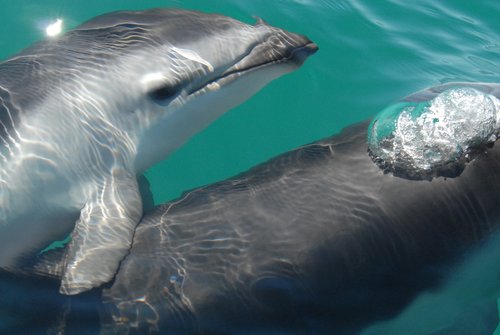
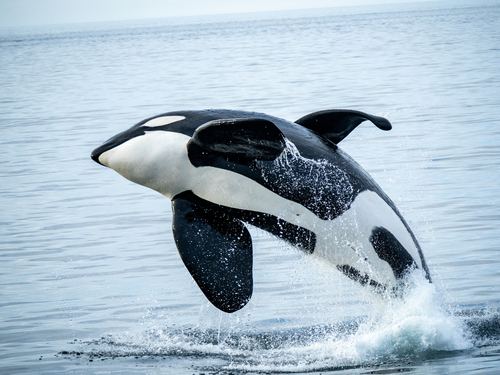
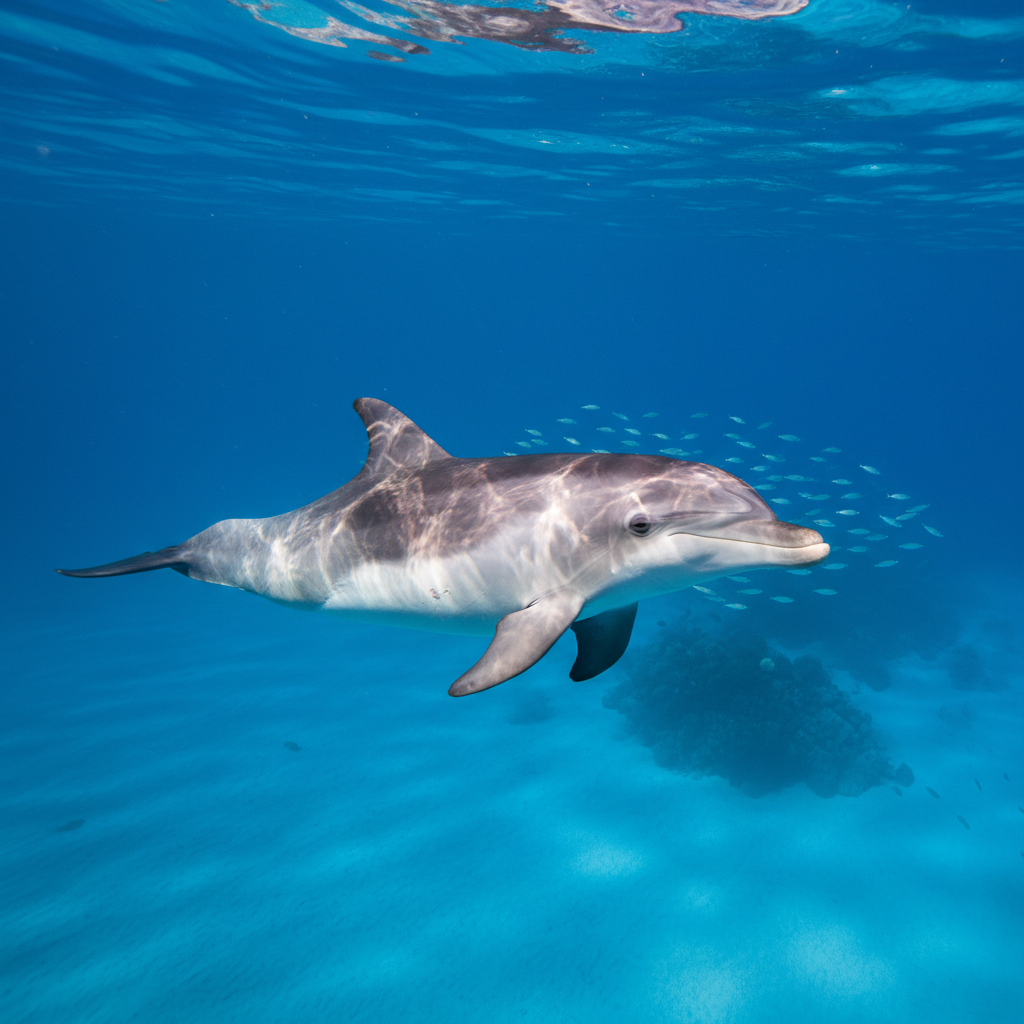
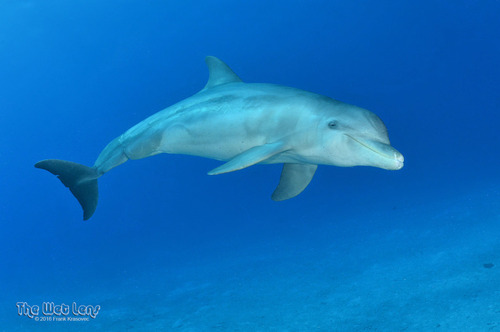
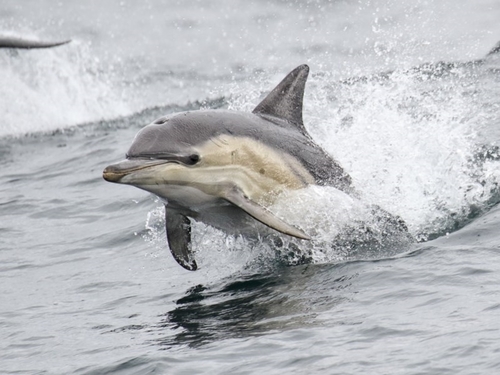
Dolphins have torpedo-shaped bodies with generally non-flexible necks, limbs modified into flippers, a tail fin, and bulbous heads. Dolphin skulls have small eye orbits, long snouts, and eyes placed on the sides of its head; they lack external ear flaps. Dolphins range in size from the 1.7 m (5 ft 7 in) long and 50 kg (110 lb) Maui's dolphin to the 9.5 m (31 ft 2 in) and 10 t (11 short tons) orca. Overall, they tend to be dwarfed by other Cetartiodactyls. Several species have female-biased sexual dimorphism, with the females being larger than the males.

Dolphins have conical teeth, as opposed to porpoises' spade-shaped teeth. These conical teeth are used to catch swift prey such as fish, squid or large mammals, such as seals.
Diet

There are various feeding methods among and within species, some apparently exclusive to a single population. Fish and squid are the main food, but the false killer whale and the orca also feed on other marine mammals. Orcas on occasion also hunt whale species larger than themselves. Different breeds of dolphins vary widely in the number of teeth they possess. The orca usually carries 40–56 teeth while the popular bottlenose dolphin has anywhere from 72 to 116 conical teeth and its smaller cousin the common dolphin has 188–268 teeth: the number of teeth that an individual carries varies widely between within a single species. Hybrids between common and bottlenose bred in captivity had a number of teeth intermediate between that of their parents.

Behaviour

Dolphins are highly social animals, often living in pods of up to a dozen individuals, though pod sizes and structures vary greatly between species and locations. In places with a high abundance of food, pods can merge temporarily, forming a superpod; such groupings may exceed 1,000 dolphins. Membership in pods is not rigid; interchange is common. They establish strong social bonds, and will stay with injured or ill members, helping them to breathe by bringing them to the surface if needed. This altruism does not appear to be limited to their own species. The dolphin Moko in New Zealand has been observed guiding a female pygmy sperm whale together with her calf out of shallow water where they had stranded several times. They have also been seen protecting swimmers from sharks by swimming circles around the swimmers or charging the sharks to make them go away.

Reproduction

Dolphin copulation happens belly to belly; though many species engage in lengthy foreplay, the actual act is usually brief, but may be repeated several times within a short timespan. The gestation period varies with species; for the small tucuxi dolphin, this period is around 11 to 12 months, while for the orca, the gestation period is around 17 months. Typically dolphins give birth to a single calf, which is, unlike most other mammals, born tail first in most cases. They usually become sexually active at a young age, even before reaching sexual maturity. The age of sexual maturity varies by species and sex.

Dolphins are known to display non-reproductive sexual behavior, engaging in masturbation, stimulation of the genital area of other individuals using the rostrum or flippers, and homosexual contact.

Humans & conservation

Dolphins have few marine enemies. Some species or specific populations have none, making them apex predators. For most of the smaller species of dolphins, only a few of the larger sharks, such as the bull shark, dusky shark, tiger shark and great white shark, are a potential risk, especially for calves. Some of the larger dolphin species, especially orcas, may also prey on smaller dolphins, but this seems rare. Dolphins also suffer from a wide variety of diseases and parasites. The Cetacean morbillivirus in particular has been known to cause regional epizootics often leaving hundreds of animals of various species dead. Symptoms of infection are often a severe combination of pneumonia, encephalitis and damage to the immune system, which greatly impair the cetacean's ability to swim and stay afloat unassisted. A study at the U.S.

Species in this group

Where to see it

Top-rated dive sites where divers have spotted Dolphin.

Soug Bohar Nord

Soug Bohar Nord

⭐ 5.0 (1)
Vibrant reef with canyon, pinnacles, and diverse marine life.
👣 Shore Intermediate
Tiputa Pass

Tiputa Pass

⭐ 5.0 Scout Score
World-renowned pass for dolphins, sharks, manta rays, and drift diving.
🚤 Boat Advanced
Mai Thon

Mai Thon

⭐ 3.0 Scout Score
Shallow reef known for frequent but shy dolphin encounters.
🚤 Boat beginner
Cabo San Antonio

Cabo San Antonio

⭐ 4.0 Scout Score
Spain, Jávea Dénia Reserva Marina del Cabo de San Antonio
Dramatic wall dive in a marine reserve with cetaceans.
🚤 Boat intermediate
Trinta Réis

Trinta Réis

⭐ 5.0 Scout Score
Brazil, Fernando De Noronha Parque Nacional Marinho de Fernando de Noronha
Famous Fernando de Noronha site with spectacular volcanic rock formations.
🚤 Boat intermediate
Oberoi House Reed

Oberoi House Reed

⭐ 4.0 Scout Score
Exclusive house reef with an impressive wall and coral gardens.
👣 Shore all levels
Flamenco Beach Resort

Flamenco Beach Resort

⭐ 4.0 Scout Score
Egypt reef dive with big pelagic sightings
👣 Shore Intermediate
Siyul Kebira

Siyul Kebira

⭐ 4.0 Scout Score
Diverse site with impressive walls and vibrant coral gardens.
🚤 Boat All levels
Marsa Mubarak

Marsa Mubarak

⭐ 4.0 Scout Score
Shallow bay with seagrass famous for turtles and dugongs.
🚤 Boat All levels
Lhohifushi Kandu

Lhohifushi Kandu

⭐ 5.0 Scout Score
Advanced channel dive with strong currents and abundant pelagic life.
🚤 Boat Advanced
The Pinicale: 14 to 18 Mts

The Pinicale: 14 to 18 Mts

⭐ 4.0 Scout Score
Dramatic gully wall dive with abundant marine life.
🚤 Boat Intermediate
Villa Koraffi

Villa Koraffi

⭐ 4.0 Scout Score
Easy coastal dive with diverse marine life
🚤 Boat Beginner
Johnny's Gorge

Johnny's Gorge

⭐ 4.0 Scout Score
Deep rocky gorge with abundant sharks, rays, and fish.
🚤 Boat Advanced
Rasfari Corner

Rasfari Corner

⭐ 4.0 Scout Score
Maldives drift dive with sharks, rays, dolphins, and strong currents.
🚤 Boat Intermediate
Abo Almadafee أبو المدافع
Abu Almadafee: Sharks, dolphins, caves, good visibility
🚤 Boat Intermediate
Tulip Resort House Reef

Tulip Resort House Reef

⭐ 4.0 Scout Score
Tulip Resort reef: Coral wall, diverse marine life
👣 Shore Beginner
Big Brother

Big Brother

⭐ 4.0 Scout Score
Cocos Keeling Islands Cocos (Keeling) Islands Marine Park
Challenging drift dive over unique volcanic landscape.
🚤 Boat Advanced
Dolphins Reefדולפין ריף
Dolphin encounters, coral, and fish in shallow reef.
👣 Shore Beginner
Marsa Nakari House Reef South

Marsa Nakari House Reef South

⭐ 4.0 Scout Score
Calm bay, beginner-friendly, Red Sea marine life
👣 Shore All levels
Anar Dive Center House Reef

Anar Dive Center House Reef

⭐ 4.0 Scout Score
Shore dive with dramatic walls and vibrant pink soft corals.
👣 Shore All levels

Sources

  • Wikipedia — licensed CC BY-SA 4.0 · Text adapted from the Wikipedia article; modifications by WikiBubbles are shared under the same license.