
← All marine life
Common Bottlenose Dolphin
Species IUCN · Least Concern (LC)

Common Bottlenose Dolphin

Tursiops truncatus, (Montagu, 1821)

marinebrackish

About Common Bottlenose Dolphin

The common bottlenose dolphin or Atlantic bottlenose dolphin (Tursiops truncatus) is one of three species of bottlenose dolphin in the genus Tursiops. While formerly known simply as the bottlenose dolphin, this term is now applied to the genus Tursiops as a whole. As considerable genetic variation has been described within this species, even between neighboring populations, many experts think additional species may be recognized and split out.

The common bottlenose dolphin is a very familiar dolphin due to the wide exposure it receives in captivity in marine parks and dolphinariums, and in movies and television programs. Common bottlenose dolphins inhabit temperate and tropical oceans throughout the world, absent only from polar waters.

Appearance

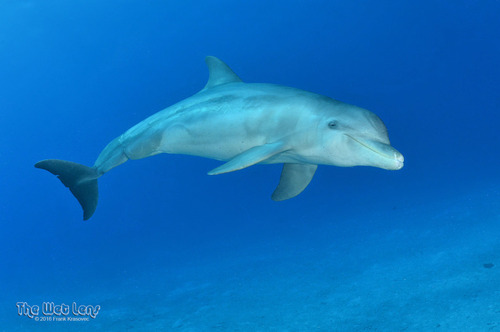
Common bottlenose dolphins have a grey coloration, a short beak, a single blowhole, and a hooked dorsal fin. The bottlenose is between 2 and 4 m (6.6 and 13.1 ft) long, and weighs between 150 and 650 kg (330 and 1,430 lb). Males are generally larger and heavier than females. In most parts of the world, adult length is between 2.5 and 3.5 m (8.2 and 11.5 ft); weight ranges between 200 and 500 kg (440 and 1,100 lb). Like the other bottlenose dolphins, they have a short and well-defined snout, which is the source for their common name.

Their necks are more flexible than other dolphins' due to five of their seven vertebrae not being fused together like in other dolphins.
Habitat

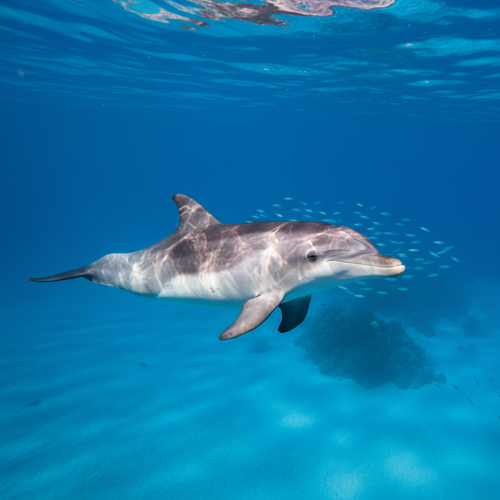
Although dolphins inhabit every ocean of the planet including some rivers and other ecosystems, the common bottlenose dolphin can be found in the warmer oceanic regions specifically in temperate, subtropical, and tropical oceans around the world. The global population has been estimated at 600,000. Some bottlenose populations live closer to the shore (inshore populations) and others live further out to sea (offshore populations). Generally, offshore populations are larger, darker, and have proportionally shorter fins and beaks. Offshore populations can migrate up to 4,200 km (2,600 mi) in a season, but inshore populations tend to move less. However, some inshore populations make long migrations in response to El Niño events. The species has occurred as far as 50° north in eastern Pacific waters, possibly as a result of warm water events.

Diet

Its diet consists mainly of eels, squid, shrimp and a wide variety of fishes. It does not chew its food, instead swallowing it whole. Dolphin pods often work as a team to harvest schools of fish, though they also hunt individually. Dolphins search for prey primarily using echolocation, which is a form of sonar.

Behaviour

As a very social species, the common bottlenose dolphin lives in groups called pods that typically number about 15 individuals, but group size varies from pairs of dolphins to over 100 or even occasionally over 1,000 animals for short periods of time. Group structure depends on the sex and age of the dolphins, but may change depending on the group. Their geographic range dictates a lot of their behaviors including the densities of dolphins while traveling. The types of groups include: nursery groups, juvenile groups, and groups of adult males. Male dolphins tend to form pair bonds, which are the strongest of dolphin bonds, while females stay with their calves for 3-8 years and then tend to stay in social groups. Typically, common bottlenose dolphins are more social after they have eaten in the mid-day or evening.

Reproduction

Mating behavior of the bottlenose dolphin is polygamous. Although they can breed throughout the year, it mostly occurs in spring, and with a 12 month gestation period mating season and birthing season overlap. Males form alliances, or pair bonds, to seek an estrous female and they attempt to breed the most while keeping other males away from viable females. For a chance to mate with the female, males separate the female from her home range. Females bear a calf every three to six years. After a year-long gestation period, females bear a single calf. Newborn calves are between 0.8 and 1.4 m (2 ft 7 in and 4 ft 7 in) long and weigh between 15 and 30 kg (33 and 66 lb). The calf's suckling lasts between 18 and 20 months and they are weaned between three and eight years of age.

Humans & conservation

Some interactions with humans are harmful to the dolphins. Dolphin hunting industry exists in multiple countries including Japan, where common bottlenose dolphins are hunted for food annually in the town of Taiji, and the Faroe Islands. Also, dolphins are sometimes killed inadvertently as a bycatch of tuna fishing.

Tião was a well-known solitary male bottlenose dolphin that was first spotted in the town of São Sebastião in Brazil around 1994 and frequently allowed humans to interact with him. The dolphin later became infamous for killing a swimmer and injuring many others, which earned it the nickname of killer dolphin.

Fungie was another solitary male bottlenose, living in close contact with humans in Dingle Harbour, Ireland, from 1983 until his disappearance in 2020. He became a symbol of the town, although some doubt exists over whether he was a single dolphin.

Part of

Where to see it

No dive sites list Common Bottlenose Dolphin yet. Explore the map to find sites near you.