
← All marine life
Indo-Pacific Bottlenose Dolphin
Species IUCN · Near Threatened (NT)

Indo-Pacific Bottlenose Dolphin

Tursiops aduncus, (Ehrenberg, 1832 [1833])

marine

About Indo-Pacific Bottlenose Dolphin

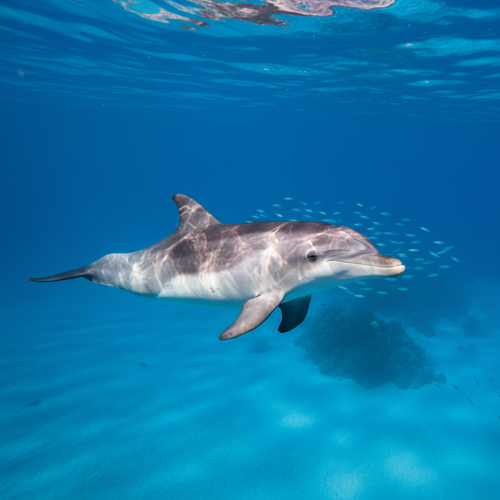
The Indo-Pacific bottlenose dolphin (Tursiops aduncus) is a species of bottlenose dolphin. This dolphin grows to 2.6 m (8.5 ft) long, and weighs up to 230 kg (510 lb). It lives in the waters around India, northern Australia, South China, the Red Sea, and the eastern coast of Africa. Its back is dark grey and its belly is lighter grey or nearly white with grey spots.

The Indo-Pacific bottlenose dolphin is generally smaller than the common bottlenose dolphin, has a proportionately longer rostrum, and has spots on its belly and lower sides. It also has more teeth than the common bottlenose dolphin — 23 to 29 teeth on each side of each jaw compared to 21 to 24 for the common bottlenose dolphin.

Much of the old scientific data in the field combine data about the Indo-Pacific bottlenose dolphin and the common bottlenose dolphin into a single group, making it effectively useless in determining the structural differences between the two species. The IUCN lists the Indo-Pacific bottlenose dolphin as "near threatened" in their Red List of endangered species.

Appearance

Indo-Pacific bottlenose dolphins are very similar to common bottlenose dolphins in appearance. Common bottlenose dolphins have a reasonably strong body, moderate-length beak, and tall, curved dorsal fins; whereas Indo-Pacific bottlenose dolphins have a more slender body build and their beak is longer and more slender. The Indo-Pacific population also tends to have a somewhat lighter blue colour and the cape is generally more distinct, with a light spinal blaze extending to below the dorsal fin. However, although not always present, the most obvious distinction can be made with the presence of black spots or flecks on the bellies of adults of Indo-Pacific bottlenose dolphins, which are very rare in common bottlenose dolphins. Their teeth can number between 23 and 29 in each upper and lower jaw, and are more slender than those of common bottlenose dolphins.
Diet

Indo-Pacific bottlenose dolphins feed on a wide variety of fish and cephalopods (particularly squid).

Behaviour

Indo-Pacific bottlenose dolphins live in groups that can number in the hundreds, but groups of five to 15 dolphins are most common. In some parts of their range, they associate with the common bottlenose dolphin and other dolphin species, such as the humpback dolphin.

The peak mating and calving seasons are in the spring and summer, although mating and calving occur throughout the year in some regions. The gestation period is about 12 months. Calves are between 0.84 and 1.5 m (2.8 and 4.9 ft) long, and weigh between 9 and 21 kg (20 and 46 lb). The calves are weaned between 1.5 and 2.0 years, but can remain with their mothers for up to 5 years. The interbirth interval for females is typically 4.5 to 6 years.

In some parts of its range, this dolphin is subject to predation by sharks; its lifespan is more than 40 years.

Humans & conservation

The species is not considered to be endangered; its near-shore distribution, though, makes it vulnerable to environmental degradation, direct exploitation, and problems associated with local fisheries.

Part of

Where to see it

No dive sites list Indo-Pacific Bottlenose Dolphin yet. Explore the map to find sites near you.