
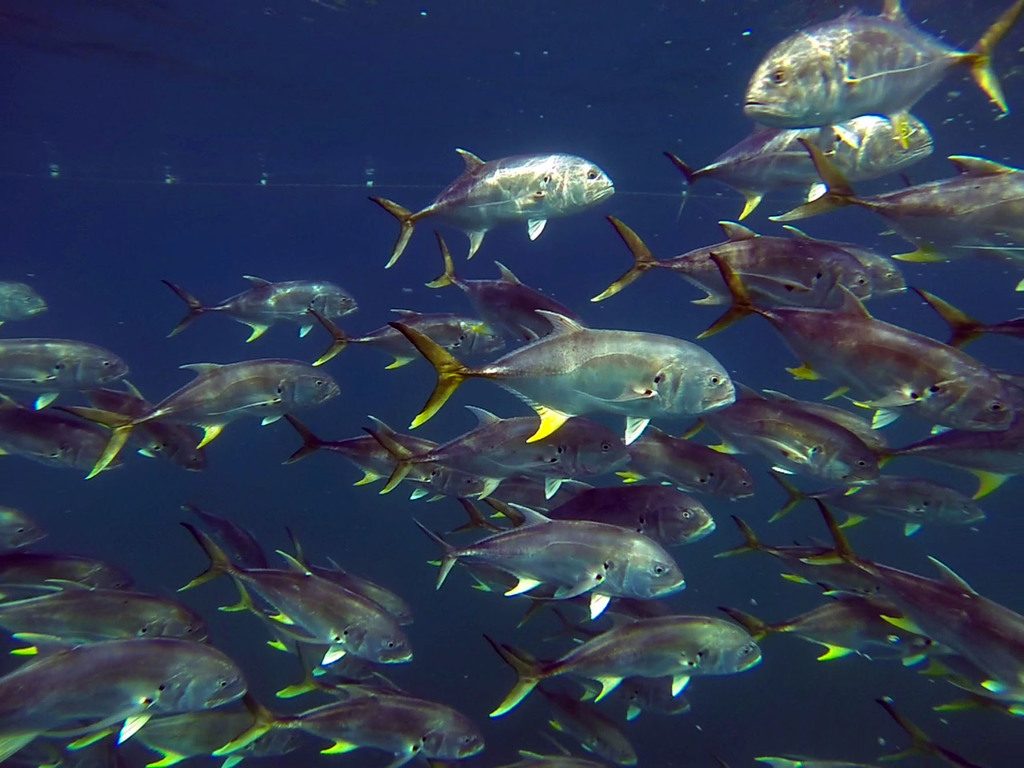
Jack
Carangidae, Rafinesque, 1815
About Jack
The Carangidae are a family of ray-finned fish that includes the jacks, jack mackerels, runners, trevallies, and scads. It is one of the five families in the suborder Carangoidei.
They are found in the Atlantic, Indian and Pacific Oceans. Most species are fast-swimming predatory fishes that hunt in the waters above reefs and in the open sea; some dig in the sea floor for invertebrates.
The largest fish in the family, the greater amberjack, Seriola dumerili, grows up to 2 m (6 ft 7 in) in length; most fish in the family reach a maximum length of 25–100 cm (9.8–39 in).
The family contains many important commercial and game fish, notably the Pacific jack mackerel, Trachurus symmetricus, and the other jack mackerels in the genus Trachurus.
Many genera have fairly extensive fossil records, particularly Caranx and Seriola, which extend into the early Paleogene (late Thanetian), and are known from whole and incomplete specimens, skeletal fragments, and otoliths. The several extinct genera include Archaeus, Pseudovomer, and Eastmanalepes.
Species in this group
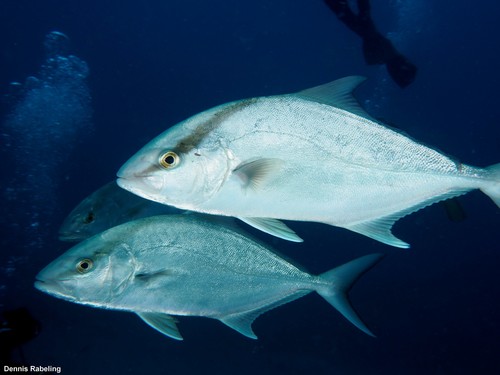
Almaco Jack
Seriola rivoliana
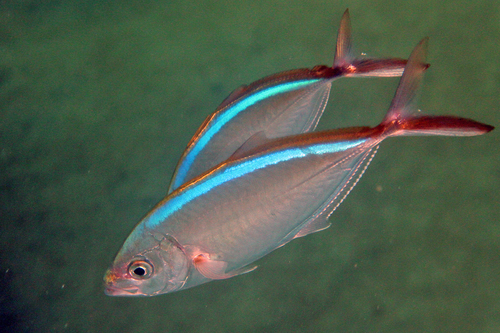
Bar Jack
Caranx ruber
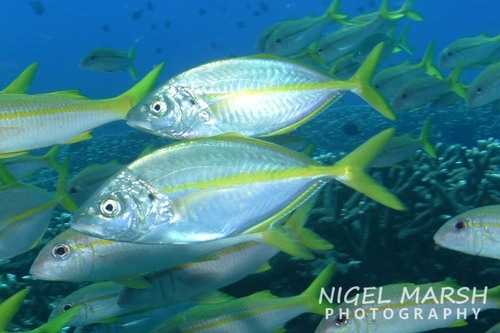
Guelly Jack
Pseudocaranx dentex
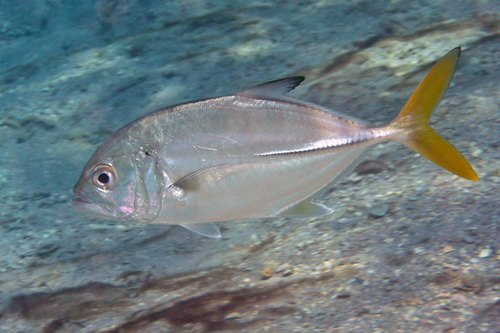
Horse-Eye Jack
Caranx latus

Japanese Jack Mackerel
Trachurus japonicus

Lookdown
Selene vomer

Palometa
Trachinotus goodei
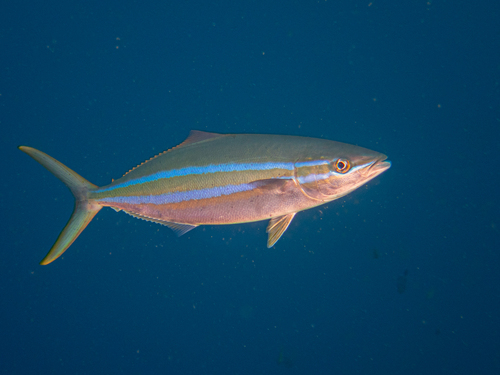
Rainbow Runner
Elagatis bipinnulata

Torpedo Scad
Megalaspis cordyla
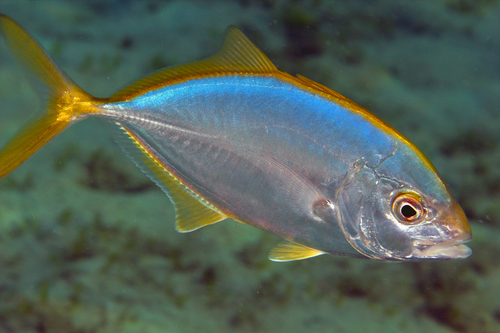
Yellow Jack
Carangoides bartholomaei
Yellowfin Jack
Carangoides bartholomaei
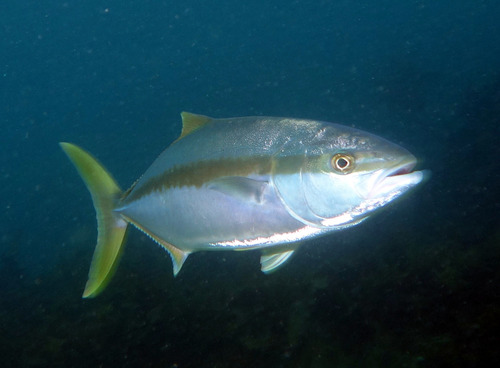
Yellowtail Amberjack
Seriola lalandi
Where to see it
No dive sites list Jack yet. Explore the map to find sites near you.