Divers typically enter from a natural coral reef channel on the right side of Flower Vase Rock. For safety, it’s recommended to snorkel out to deeper water before descending. Underwater, the terrain is simple and beginner-friendly, consisting mainly of sandy bottoms scattered with reef blocks. There’s no need to swim far offshore—beyond the main area lies mostly open sand.
The ideal dive profile keeps depth between 8–12 m, heading northwest. A thick rope laid along the sand serves as a key underwater landmark for entry and exit navigation.
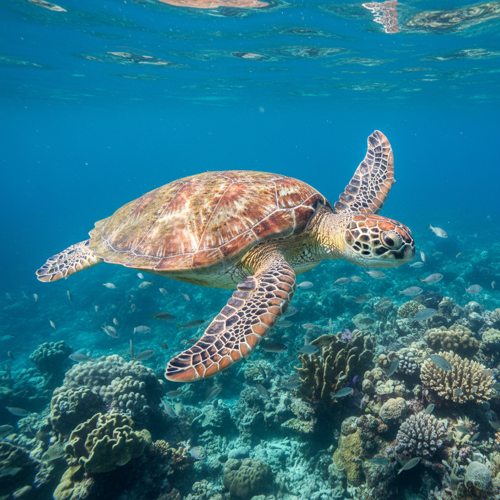
Past the rope, a large reef block on the right is covered with finger soft corals and schools of golden cardinalfish. Sea turtles are frequently seen resting on top of the reef and are comfortable around divers, making this an excellent spot for photography. Divers may also spot stingrays and flounders camouflaged in the sand.
From November to April, there’s a chance to encounter large barracuda schools, sometimes numbering in the hundreds—an impressive seasonal highlight. While the turtles here are generally calm and sizable, divers should always avoid touching or startling them.
Currents at Flower Vase Rock are highly variable:
Morning: Stronger currents but excellent visibility
Afternoon: Calmer water with more plankton and reduced visibility
When conditions align, experienced guides may arrange a drift dive starting from Beauty Cave (美人洞) and finishing at Flower Vase Rock—offering a drift-diving experience without the need for a boat.