← All marine life
Sea Slug
Group

Sea Slug

Sacoglossa

marinebrackish
Where to see it

About Sea Slug

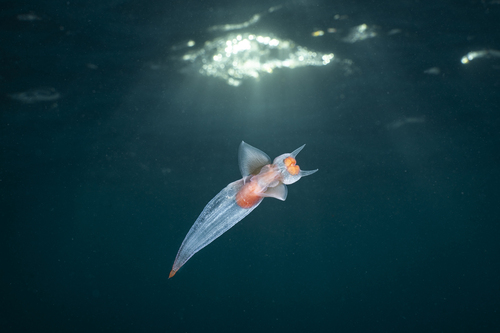
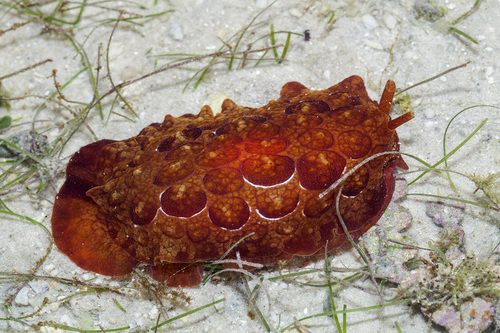
Sacoglossa is a superorder of small sea slugs and sea snails, marine gastropod mollusks, belonging to the clade Heterobranchia, whose members are known as sacoglossans. There are 284 valid species recognized within this superorder. Sacoglossans live by ingesting the cellular contents of algae, hence they are sometimes called "sap-sucking sea slugs". Some sacoglossans simply digest the fluid which they suck from the algae, but in some other species, the slugs sequester and use within their own tissues living chloroplasts from the algae they eat, a very unusual phenomenon known as kleptoplasty, for the "stolen" plastids. This earns them the title of the "solar-powered sea slugs", and makes them unique among metazoan organisms, for otherwise kleptoplasty is known only among other euthyneurans and single-celled protists.

The Sacoglossa are divided into two clades - the shelled families (Oxynoacea) and the shell-less families (Plakobranchacea).

The four families of shelled species are Cylindrobullidae, Volvatellidae, Oxynoidae, and Juliidae, the bivalved gastropods. The shell-less Plakobranchacea are grouped in six families, divided between two clades ("superfamilies"), the Plakobranchoidea and the Limapontioidea. All sacoglossans are distinguished from related groups by the presence of a single row of teeth on the radula. The teeth are adapted for the suctorial feeding habits of the group.

Appearance

Many of these gastropods (e.g. Elysia spp.) resemble winged slugs with a pair of cephalic tentacles. In photosynthetic members of the group, the wings, or parapodia, can be unfurled to maximise the area of the organism that is struck by sunlight. In others (e.g. Placida spp.), cylindrical cerata extend from the dorsal surface. The majority of sacoglossans are 1–3 cm in length; they are typically uniform in color because the chloroplasts they ingest end up installed in their own cells.

Habitat

Sacoglossa species are found worldwide in tropical and temperate oceans, but most live in the central Pacific Ocean, where they frequent the shorelines of tropical islands; diverse tracts of species are also known in the Caribbean and Indo-Pacific. These three areas have distinct ranges of species, indicating a high degree of biogeographic separation. Where sacoglossans are present further from the equator, in places such as Australia or Japan, diversity is lower, and the species present are typically tropical species that have a higher tolerance for temperature variation. Their temperate distribution closely corresponds to the distribution of their important food source, Caulerpa spp. They typically live at very low population densities, making scientific study of the group difficult.

Species in this group

Where to see it

Top-rated dive sites where divers have spotted Sea Slug.

Pamilacan 帕米拉坎島
🚤 Boat Intermediate
Snake Island 蛇島

Snake Island 蛇島

Not yet rated
🚤 Boat Advanced