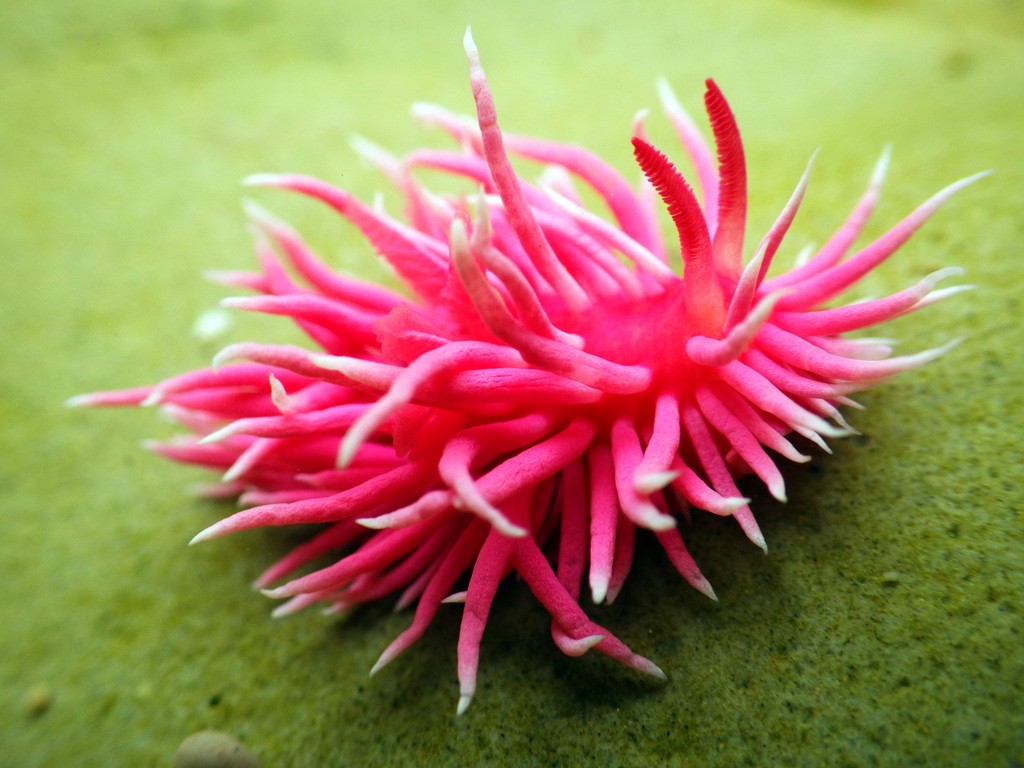
About Nudibranch

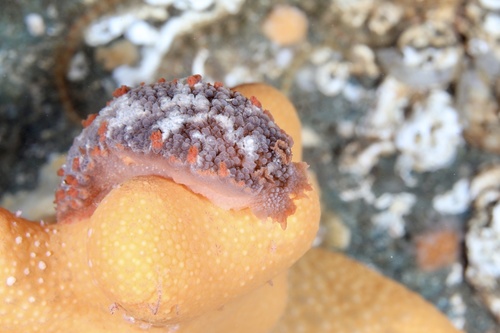
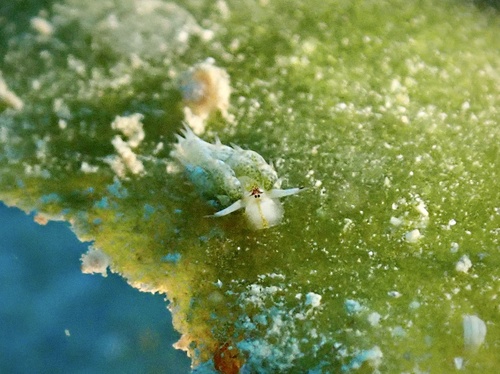
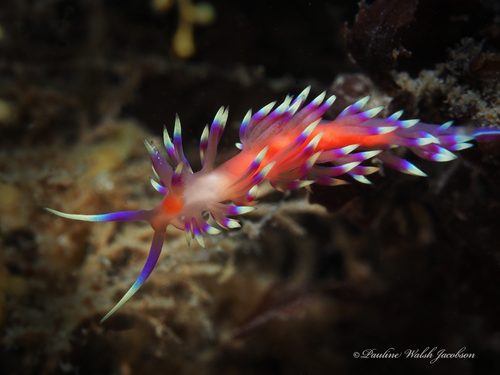
Nudibranchs are a group of soft-bodied marine gastropod molluscs, belonging to the order Nudibranchia, that shed their shells after their larval stage. They are noted for their often extraordinary colours and striking forms, and they have been given colourful nicknames to match, such as "clown", "marigold", "splendid", "dancer", "dragon", and "sea rabbit". About 3,000 species of nudibranchs are known.

The word nudibranch comes from the Latin nudus 'naked' and the Ancient Greek βράγχια (bránkhia) 'gills'.

Nudibranchs are often casually called sea slugs, as they are a family of opisthobranchs (sea slugs), within the phylum Mollusca (molluscs), but many sea slugs belong to several taxonomic groups that are not closely related to nudibranchs. A number of these other sea slugs, such as the photosynthetic Sacoglossa and the colourful Aglajidae, are often confused with nudibranchs.

Appearance

The body forms of nudibranchs vary greatly. Because they are opisthobranchs, unlike most other gastropods, they are apparently bilaterally symmetrical externally (but not internally) because they have undergone secondary detorsion. In all nudibranchs, the male and female sexual openings are on the right side of the body, reflecting their asymmetrical origins. They lack a mantle cavity. Some species have venomous appendages (cerata) on their sides, which deter predators. Many also have a simple gut and a mouth with a radula.

The eyes in nudibranchs are simple and able to discern little more than light and dark. The eyes are set into the body, are about a quarter of a millimeter in diameter, and consist of a lens and five photoreceptors.

Nudibranchs vary in adult size from 4 to 600 mm (0.16 to 23.62 in).

Habitat

Nudibranchs occur in seas worldwide, ranging from the Arctic, through temperate and tropical regions, to the Southern Ocean around Antarctica. They are almost entirely restricted to salt water, although a few species are known to inhabit lower salinities in brackish water.

Nudibranchs live at virtually all depths, from the intertidal zone to depths well over 700 m (2,300 ft). The greatest diversity of nudibranchs is seen in warm, shallow reefs, although one nudibranch species was discovered at a depth near 2,500 m (8,200 ft). This nudibranch, described in 2024 as Bathydevius, is the only known nudibranch with a bathypelagic lifestyle and is one of the very few to be bioluminescent.

Diet

All known nudibranchs are carnivorous. Some feed on sponges, others on hydroids (e.g. Cuthona), others on bryozoans (phanerobranchs such as Tambja, Limacia, Plocamopherus and Triopha), and some eat other sea slugs or their eggs (e.g. Favorinus) or, on some occasions, are cannibals and prey on members of their own species. Other groups feed on tunicates (e.g. Nembrotha, Goniodoris), other nudibranchs (Roboastra, which are descended from tunicate-feeding species), barnacles (e.g. Onchidoris bilamellata), and anemones (e.g. the Aeolidiidae and other Cladobranchia).

Reproduction

Nudibranchs are hermaphroditic, thus having a set of reproductive organs for both sexes, but they cannot fertilize themselves. Mating usually takes a few minutes and involves a dance-like courtship. Nudibranchs typically deposit their eggs within a gelatinous spiral, which is often described as looking like a ribbon. The number of eggs varies greatly; it can be as few as just 1 or 2 eggs (Vayssierea felis) or as many as several thousand. The eggs contain toxins from sea sponges as a means of deterring predators. The appearance and physiology of larvae after hatching differs between species; some resemble smaller versions of the adult with fewer cerata, while others hatch as planktonic veligers. The lifespan of nudibranchs can range from a few weeks to a year, depending on the species.

Species in this group

Where to see it

989 dive sites where divers have spotted Nudibranch.

Sort by
Anchor Wall

Anchor Wall

⭐ 5.0 (1)
Croatia, Vis Island Geopark Vis Archipelago
Dramatic deep wall dive featuring a large ancient anchor.
🚤 Boat Intermediate
Balicasag Island

Balicasag Island

⭐ 5.0 (1)
Philippines, Bohol Balicasag Island Marine Sanctuary
Pristine walls, vibrant reefs, turtles, and schooling fish.
🚤 Boat All levels
Blue Maomao Arch

Blue Maomao Arch

⭐ 5.0 (1)
New Zealand, Poor Knights Islands Poor Knights Islands Marine Reserve
World-famous archway dive with immense schools of blue maomao.
🚤 Boat advanced
Buyuk

Buyuk

⭐ 5.0 (1)
Indonesia, Bali, Nusa Penida Nusa Penida Marine Protected Area (MPA)
Easy drift dive with rich corals, macro and pelagics.
🚤 Boat all levels
Cannibal Rock

Cannibal Rock

⭐ 5.0 (1)
Indonesia, Komodo National Park Komodo National Park
World-class pinnacle with staggering biodiversity and vibrant soft corals.
🚤 Boat Intermediate
Cape Banks

Cape Banks

⭐ 5.0 (1)
Australia, Sydney Not in marine park
Sydney's premier boat dive for caves and Weedy Seadragons.
🚤 Boat Advanced
Cape Mansuar

Cape Mansuar

⭐ 5.0 (1)
Indonesia, Raja Ampat Raja Ampat Marine Park
Wall to slope drift dive with schooling fish, macro.
🚤 Boat Intermediate
Cathedral

Cathedral

⭐ 5.0 (1)
South Africa, Aliwal Shoal Aliwal Shoal Marine Protected Area
Spectacular amphitheater dive famous for ragged tooth sharks.
🚤 Boat Intermediate
Chapati

Chapati

⭐ 5.0 (1)
Vibrant Thila with soft corals, sharks, rays, caverns, and macro life.
🚤 Boat Intermediate
Cocoa Outside

Cocoa Outside

⭐ 5.0 (1)
Relaxed outer reef dive with vibrant corals and diverse marine life.
🚤 Boat All levels
Farukolhu Kandu

Farukolhu Kandu

⭐ 5.0 (1)
Maldivian channel drift dive with rich big and small marine life.
🚤 Boat All levels
Fihalhohi Beyru Thila
Beautiful thila with diverse marine life, currents, and overhangs.
🚤 Boat Intermediate
Goemmaru

Goemmaru

⭐ 5.0 (1)
Beautiful reef with gentle slope, diverse marine life and corals.
🚤 Boat All levels
Gold Coast Seaway Pipes
Popular shore dive with strong currents and diverse marine life.
👣 Shore Intermediate
Grott 1

Grott 1

⭐ 5.0 (1)
Ise-Shima's Blue Cave with tuna schools and rich marine life.
🚤 Boat All levels
Hamayu Beach

Hamayu Beach

⭐ 5.0 (1)
Calm, shallow beach dive for beginners with diverse macro life.
👣 Shore Beginner
Hin Daeng

Hin Daeng

⭐ 5.0 (1)
Thailand, Andaman Sea Mu Koh Lanta National Park
Vibrant red coral pinnacle, a magnet for pelagic life.
🚤 Boat Advanced
IHI THILA

IHI THILA

⭐ 5.0 (1)
Maldives macro haven with beautiful overhangs and diverse small marine life.
🚤 Boat Intermediate
Kamigu

Kamigu

⭐ 5.0 (1)
Japan, Tokashiki Keramashoto National Park
Kamigu, Tokashiki: clear waters, diverse corals, gentle tides, all levels.
🚤 Boat All levels
Kamiyama Labyrinth

Kamiyama Labyrinth

⭐ 5.0 (1)
Labyrinthine topography, swim-throughs, caves, turtles, and reef sharks.
🚤 Boat All levels

Sources

  • Wikipedia — licensed CC BY-SA 4.0 · Text adapted from the Wikipedia article; modifications by WikiBubbles are shared under the same license.