Appearance
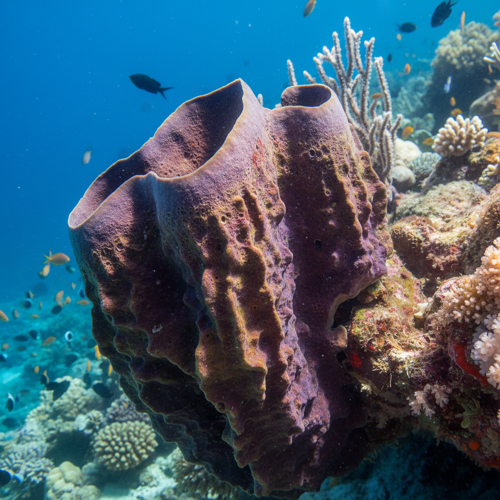
Aplysina cavernicola forms clumps that may be up to 30 cm (12 in) across. It has a base that adheres to a rock or other hard surface, out of which project a number of finger-like processes up to 6 cm (2.4 in) long and 2 cm (0.8 in) in diameter. The surface is sparsely covered with small conical protrusions, which are caused by the tips of horny fibres embedded in the tissues. There are no spicules, structural support being provided by a mesh of spongin fibres. Water is drawn in through pores known as ostia at the base of the sponge and ejected from the oscuili which are situated in slight depressions at the tips of the processes. The body colour is yellowish.