← All marine life
Southern River Otter
Species IUCN · Endangered (EN)

Southern River Otter

Lontra provocax, (Thomas, 1908)

marine

About Southern River Otter

The southern river otter (Lontra provocax), or South American river otter, is an otter species that lives in much of Patagonia. It is listed by the International Union for Conservation of Nature as an endangered species.

Appearance

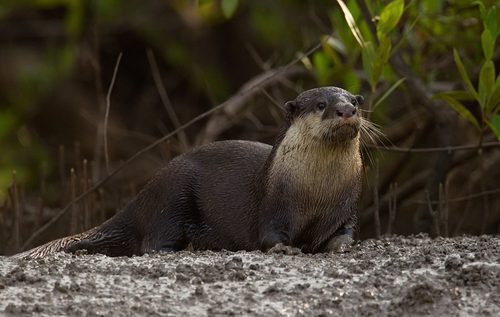
A medium-sized otter, the southern river otter's body can grow up to 70 cm (28 in) long, with the tail adding about 40 cm (16 in). Body weight averages about 5–10 kg (11–22 lb). Its fur is dark brown on the upper parts and a lighter cinnamon color or can be almost white on the underside.

Habitat

The southern river otter can be found in marine, freshwater, and terrestrial habitats, but are mostly found in freshwater lakes and rivers having a significant amount of dense vegetation, especially along the shorelines, which must be present to use as cover. Their habitats also need the root systems of mature trees, as well as fallen tree debris.

Although referred to as a "river" (freshwater) otter, the southern river otter is equally adapted to venturing into more brackish (even fully marine) waters to forage and hunt. This trait is similar to the South American marine otter (L. felina), a nearly fully marine, coast-inhabiting otter.

Behaviour

Family groups usually consist only of a female and her young, as males are usually solitary except for the breeding season. Litter sizes average one to two pups, but up to four can be born at a time. They are piscivorous, and their natural prey includes many types of fish, crustaceans, mollusks, and occasionally birds or their eggs, particularly of ground-nesting species found near water. Occasional reptiles or amphibians may be hunted as well, including frogs, smaller turtles, lizards and even some snakes.

Humans & conservation

Southern river otters were vigorously hunted for their pelts throughout the last 100 years. This is the major cause of their current low population numbers and endangered conservation status. Since then, they have not been able to recover due to a number of other threats. At this point, only seven known populations of this species are found throughout Chile and Argentina, and all of the populations are isolated from each other.

The riparian forests and rivers in which these otters are mostly found have been disturbed by human presence. Dam and road construction, as well as stream canalization and drainage for agriculture destroy many acres of what could be habitat for this species. Though Argentina began passing legislation in 1960 to outlaw the hunting of the southern river otter, hunting still does occur because of the lack of enforcement. Hunting is legal and does occur in Chile.

Part of

Where to see it

No dive sites list Southern River Otter yet. Explore the map to find sites near you.