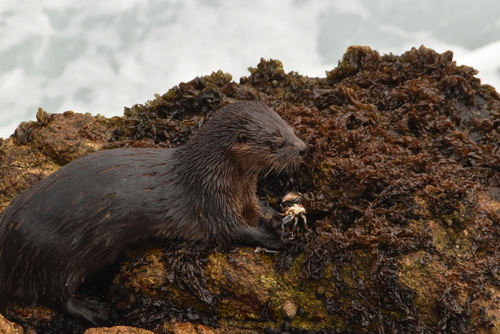
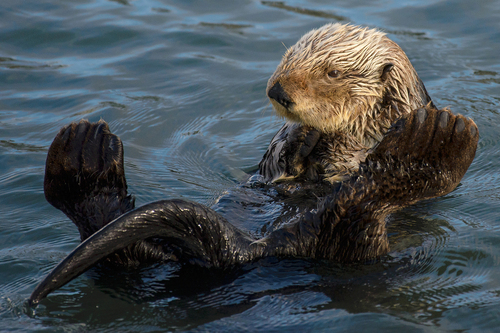
← All marine life
Otter
Group

Otter

Lutrinae, Bonaparte, 1838

marinefreshwater

About Otter

Otters are carnivorous mammals in the subfamily Lutrinae. The 14 extant otter species are all semiaquatic, both freshwater and marine. Lutrinae is a branch of the Mustelidae family, which includes weasels, badgers, mink, and wolverines, among other animals.

Otters are distinguished by their long, slim bodies, powerful webbed feet for swimming, and their dense fur, which keeps them warm and buoyant in water. They are playful animals, engaging in activities like sliding into water on natural slides and playing with stones.

Otters exhibit a varied life cycle with a gestation period of about 60–86 days, and offspring typically stay with their family for a year. They can live up to 16 years, with their diet mainly consisting of fish and sometimes frogs, birds, or shellfish, depending on the species.

There are 14 known species of otters, ranging in size and habitat preferences, with some species adapted to cold waters requiring a high metabolic rate for warmth. Otter-human interactions have varied over time, with otters being hunted for their pelts, used in fishing practices in southern Bangladesh, and occasionally attacking humans, though such incidents are rare and often a result of provocation. Otters hold a place in various cultures' mythology and religion, symbolizing different attributes and stories, from Norse mythology to Native American totems and Asian folklore, where they are sometimes believed to possess shapeshifting abilities.

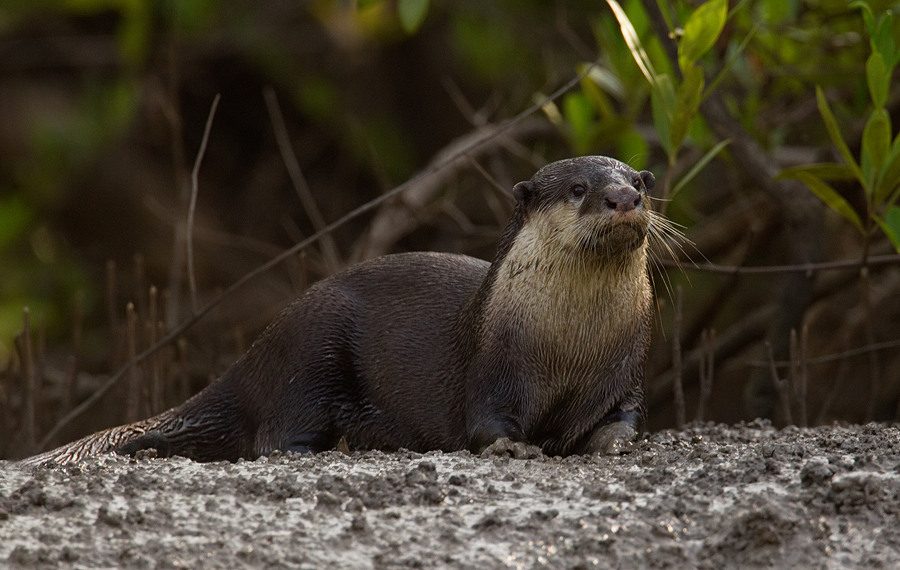
Appearance

Otters have long, slim bodies and relatively short limbs. Their most striking anatomical features are the powerful webbed feet used to swim, and their seal-like abilities for holding breath underwater. Most have sharp claws on their feet and all except the sea otter have long, muscular tails. The 13 species range in adult size from 0.6 to 1.8 m (2.0 to 5.9 ft) in length and 1 to 45 kg (2.2 to 99.2 lb) in weight. The Asian small-clawed otter is the smallest otter species and the giant otter and sea otter are the largest. They have very soft, insulated underfur, which is protected by an outer layer of long guard hairs. This traps a layer of air which keeps them dry, warm, and somewhat buoyant under water.

Diet

For most otters, fish is the staple of their diet. This is often supplemented by frogs, crayfish and crabs. Some otters are experts at opening shellfish, and others will feed on available small mammals or birds. Prey-dependence leaves otters very vulnerable to prey depletion. Sea otters are hunters of clams, sea urchins and other shelled creatures. They are notable for their ability to use stones to break open shellfish on their bellies. This skill must be learned by the young.

Otters are active hunters, chasing prey in the water or searching the beds of rivers, lakes or the seas. Most species live beside water, but river otters usually enter it only to hunt or travel, otherwise spending much of their time on land to prevent their fur becoming waterlogged. Sea otters are considerably more aquatic and live in the ocean for most of their lives.

Behaviour

Otters are playful animals and appear to engage in various behaviors for sheer enjoyment, such as making waterslides and sliding on them into the water. They may also find and play with small stones.

In 1990, an otter was observed belly-sliding in Singapore, likely as a form of amusement.

Different species vary in their social structure, some being largely solitary, while others live in groups – in a few species these groups may be fairly large.

Reproduction

The gestation period in otters is about 60 to 86 days. The newborn pup is cared for by the female, male, and older offspring. Females reach sexual maturity at approximately two years of age, and males at approximately three years. The den or "holt" is built under tree roots or a rocky cairn, more common in Scotland. It is lined with moss and grass.

After one month, the pup can leave the den, and after two months, it can swim. The pup lives with its family for approximately one year. Otters live up to 16 years; they are by nature playful and frolic in the water with their pups. Its usual food is fish, and further downriver, eels, but it may also sample frogs and birds.

Humans & conservation

Otters have been hunted for their pelts from at least the 1700s, although it may have begun well before then. Early hunting methods included darts, arrows, nets and snares but later, traps were set on land and guns used.

There has been a long history of otter pelts being worn around the world. In China it was standard for the royalty to wear robes made from them. People that were financially high in status also wore them. The tails of otters were often made into items for men to wear. These included hats and belts. Even some types of mittens for children have been made from the fur of otters.

Species in this group

Where to see it

No dive sites list Otter yet. Explore the map to find sites near you.