
← All marine life
Smelt
Group

Smelt

Sillaginidae, Richardson, 1846

marinebrackishfreshwater

About Smelt

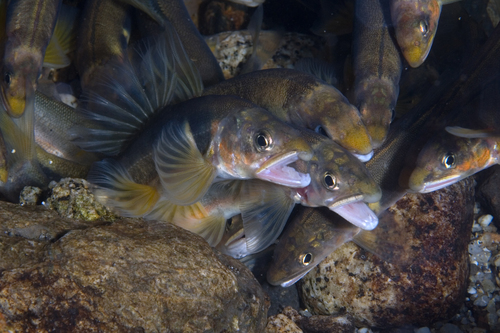
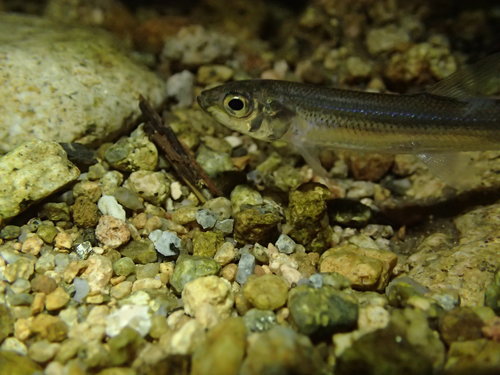
The Sillaginidae, commonly known as the smelt-whitings, whitings, sillaginids, sand borers and sand-smelts, are a family of benthic coastal marine fish historically classified in the order Perciformes, although the 5th edition of Fishes of the World places the family in the Spariformes. The smelt-whitings inhabit a wide region covering much of the Indo-Pacific, from the west coast of Africa east to Japan and south to Australia. The family comprises only five genera and 35 species, of which a number are dubious, with the last major revision of the family in 1992 unable to confirm the validity of a number of species. They are elongated, slightly compressed fish, often light brown to silver in colour, with a variety of markings and patterns on their upper bodies. The Sillaginidae are not related to a number of fishes commonly called 'whiting' in the Northern Hemisphere, including the fish originally called whiting, Merlangius merlangus.

The smelt-whitings are mostly inshore fishes that inhabit sandy, silty, and muddy substrates on both low- and high-energy environments ranging from protected tidal flats and estuaries to surf zones. A few species predominantly live offshore on deep sand shoals and reefs, although the larvae and juvenile phases of most species return to inshore grounds, where they spend the first few years of their lives. Smelt-whitings are benthic carnivores that prey predominantly on polychaetes, a variety of crustaceans, molluscs, and to a lesser extent echinoderms and fish, feeding by detecting vibrations emitted by their prey.

Appearance

The Sillaginidae are medium-sized fishes which grow to an average of around 20 cm and around 100 g, although the largest member of the family, the King George whiting is known to reach 72 cm and 4.8 kg in weight. The body shape and fin placement of the family is quite similar to most of the members of the order Perciformes. Their bodies are elongate, slightly compressed, with a head that tapers toward a terminal mouth. The mouth has a band of brush-like teeth with canine teeth present only in the upper jaw of Sillaginopsis. The cranial sensory system of the family is well developed above and laterally, with the lower jaw having a pair of small pores behind which is a median pit containing a pore on each side. On each side of the elongate head the operculum has a short sharp spine.
Habitat

The Sillaginidae are distributed throughout the Indo-Pacific region, ranging from the west coast of Africa to Japan and Taiwan in the east, as well occupying as a number of small islands including New Caledonia in the Pacific Ocean. While they have a fairly wide distribution, the highest species densities occur along the coasts of India, China, Taiwan, South East Asia, the Indonesian Archipelago and northern Australia. One species of sillaginid, Sillago sihama, has been declared an invasive species to the Mediterranean, passing through the Suez Canal from the Red Sea since 1977 as part of the Lessepsian migration, becoming widespread.

Diet

Smelt-whitings are a major link in the food chain of most systems, and frequently fall prey to a variety of aquatic and aerial predators. Their main aquatic predators are a wide variety of larger fish, including both teleosts and a variety of sharks and rays. Marine mammals including seals and dolphins have been reported to have taken sillaginids as a main food source. Seabirds are also another major predator of the family, with diving species such as Cormorants taking older fish in deeper waters while juvenile fish in shallow water fall prey to wading birds. Sillaginids are often called 'sandborers' due to their habit of burying themselves in the substrate to avoid predators, much in the same way as they forage, by ploughing their nose into the substrate. This defense is even used against human fishermen, who frequently wade barefoot to feel for buried fish.

Reproduction

The Sillaginidae are an oviparous, non guarding family, whose species tend to show similar reproductive patterns to one another. Each species reaches sexual maturity at a slightly different age, with each sex often showing a disparity in time of maturation. Each species also spawns over a different season and the spawning season often differs within a species, usually as a function of latitude; a feature not unique to sillaginids. The proximity to shore of spawning is also different between species, as each species usually does not migrate inshore to spawn, even if the juveniles require shallow water for protection, instead relying on currents. The fecundity of sillaginids is variable, with a normal range between 50 000 – 100 000. The eggs are small (0.6 to 0.8 mm), spherical and pelagic, hatching around 20 days after fertilisation.

Humans & conservation

The sillaginids are some of the most important commercial fishes in the Indo-Pacific region, with a few species making up the bulk of whiting catches. Their high numbers, coupled with their highly regarded flesh are the reason for this, and their inshore nature also has made them popular targets for recreational fishermen in a number of countries. With overfishing rife in some areas, sustainable aquaculture has allowed the commercial farming of a number of sillaginid species, as well as the use of farmed fish to restock depleted estuaries. At least one species, the Gangetic whiting, has occasionally been used in brackish water aquaria.

Species in this group

Where to see it

No dive sites list Smelt yet. Explore the map to find sites near you.