
Humans & conservation
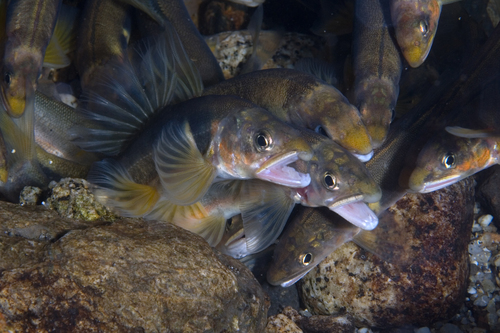
The ayu is highly prized for its flavour, mostly consumed in East Asia. Its flesh is distinctively sweet, with "melon and cucumber aromas". The main methods for obtaining ayu are by means of fly fishing, by using a fish trap, and by fishing with a decoy which is known as ayu-no-tomozuri in Japan. The decoy is a living ayu placed on a hook, which swims when immersed into water. It provokes the territorial behavior of other ayu, which assault the "intruder" and get caught.
The ayu is also caught by cormorant fishing. The practice on the Nagara River, where Japanese cormorants (Phalacrocorax capillatus) are used, draws visitors from all over the world. The Japanese cormorants, known in Japanese as umi-u (ウミウ, "sea-cormorant"), are domesticated birds trained for this purpose. The bird catches the ayu, stores it in its crop, and delivers it to the fishermen.
