← All marine life
Skate
Group

Skate

Rajidae, de Blainville, 1816

marinebrackish

About Skate

Skates are cartilaginous fish belonging to the family Rajidae in the superorder Batoidea of rays. More than 150 species have been described, in 17 genera. Softnose skates and pygmy skates were previously treated as subfamilies of Rajidae (Arhynchobatinae and Gurgesiellinae), but are now considered as distinct families. Alternatively, the name "skate" is used to refer to the entire order of Rajiformes (families Anacanthobatidae, Arhynchobatidae, Gurgesiellidae and Rajidae).

Members of Rajidae are distinguished by a stiff snout and a rostrum that is not reduced.

Appearance

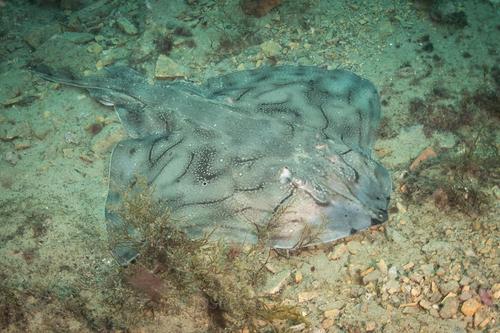
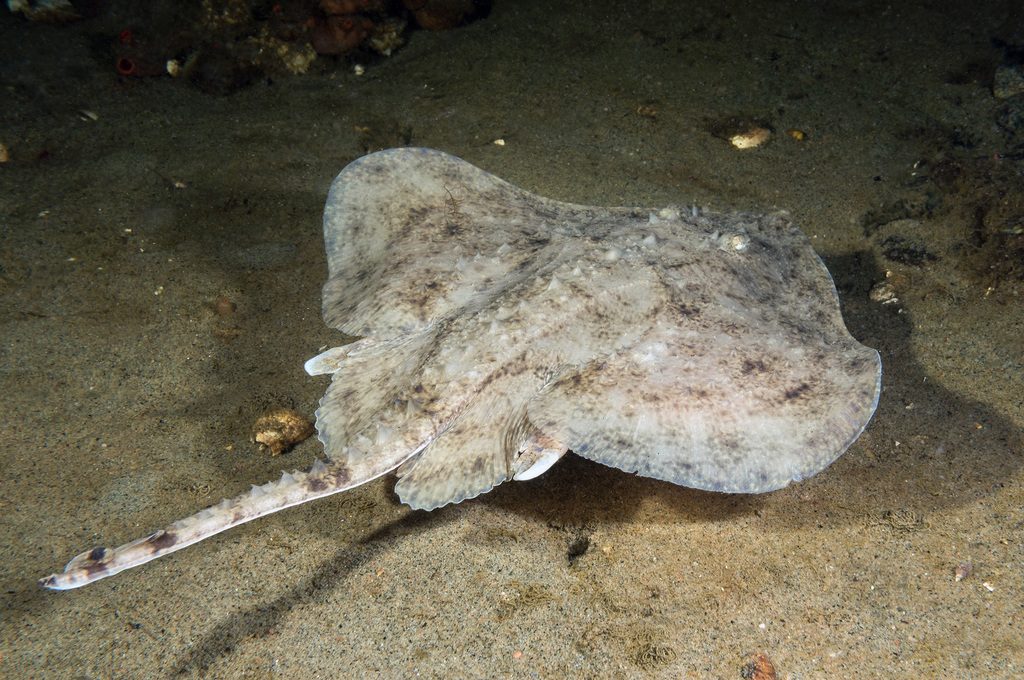
Skates are cartilaginous fishes like other Chondrichthyes, however, skates, like rays and other Rajiformes, have a flat body shape with flat pectoral fins that extend the length of their body. This structure creates power for forward propulsion, providing the emergence swimming capabilities that enabled skates to colonize the sea floor.

Habitat

Skates are primarily found from the intertidal down to depths greater than 3,000 m (9,843 ft). They are most commonly found along outer continental shelves and upper slopes. They are typically more diverse at higher latitudes and in deep-water. In fact, skates are the only cartilaginous fish taxon to exhibit more diversity of species at higher latitudes. A cool, temperate to polar water in the deep sea can be a favorable environment for skates. As the water becomes more shallow and warmer, skates are seen to be replaced by stingrays. Skates are absent from brackish and freshwater environments. However, there is a single estuarine species that has been found in Tasmania, Australia. Also, the Connecticut Department of Environmental Protection has caught and studied skates within the Long Island Sound estuary.

Diet

The majority of skates feed on bottom dwelling animals, such as shrimp, crab, oyster, clams, and other invertebrates. To feed on these animals they have grinding plates in their mouths. Skates are an influential part of the food webs of demersal marine communities. They utilize similar resources to those of other upper trophic-level marine predators, such as seabirds, marine mammals, and sharks. The flattened body shape, ventral eyes and well developed spiracles of the skate allows them to live benthically, buried in the sediment or using a longitudinal undulation of the pectoral fins known as Rajiform locomotion to glide along the water floor. Current research suggests that some species of skates, in addition to their Rajiform locomotion, use their pelvic fins to perform ambulatory locomotion.

Behaviour

Skates mate at the same nursery ground each year. In order to fertilize the egg, males use claspers, a structure attached to the pelvic fins. The claspers allow them to direct the flow of semen into the female's cloaca. Skates are oviparous, meaning they lay eggs with very little development in the mother. This is one major difference from rays, which are viviparous, meaning they give birth to live young. When a female skate is fertilized, a protected case forms around the embryo called an egg case, or more commonly mermaid's purse. This egg case is then deposited out of the mother's body onto the ocean floor where the skates develop for up to 15 months before they enter the external environment.

Humans & conservation

Skates have slow growth rates and, since they mature late, low reproductive rates. As a result, skates are vulnerable to overfishing and appear to have been overfished and are suffering reduced population levels in many parts of the world.

Species in this group

Where to see it

No dive sites list Skate yet. Explore the map to find sites near you.