Appearance
Discovered in 1993 off the coast of the Japanese island Kuroshima, Costasiella kuroshimae have been found in the waters near Japan, the Philippines, and Indonesia. They live in tropical climates. The type locality is Kuroshima, Taketomi, Okinawa, Ryukyu Islands.
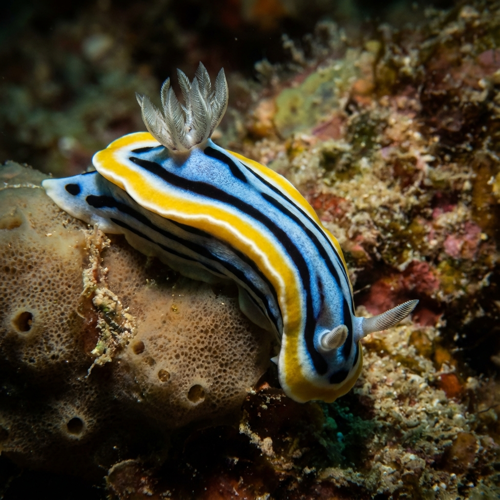
They have two dark eyes and two rhinophores that emerge from the tops of their heads that look similar to sheep's ears or insect antennae. They range in size from 5 to 10 mm (1⁄4 to 3⁄8 inch) in length. Their leaf-like appearance is credited to the cerata featured in rows across their body. These cerata contain digestive glands that assist the Costasiella kuroshimae in obtaining and storing food. They also aid in defense and respiration.
The species are simultaneous hermaphrodites having both male and female reproductive organs. They lay their eggs in tiny spiral ribbons on algae.