
← All marine life
Sardine
Group

Sardine

Clupeidae, Cuvier, 1816

marinebrackishfreshwater

About Sardine

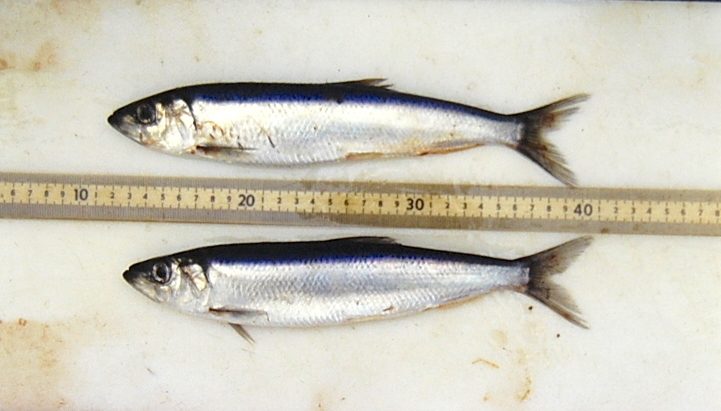
Clupeidae is a small family of clupeiform ray-finned fishes, comprising the true herrings and sprats, inhabiting temperate marine habitats in both hemispheres. Members of the family have a body protected with shiny cycloid (very smooth and uniform) scales, a single dorsal fin, and a fusiform body for quick, evasive swimming and pursuit of prey composed of small planktonic animals. Due to their small size and position in the lower trophic level of many marine food webs, the levels of methylmercury they bioaccumulate are very low, reducing the risk of mercury poisoning when consumed.

Appearance

Clupeids are mostly marine forage fish. The lateral line is short or absent, and the teeth are unusually small where they are present at all. Clupeids typically feed on plankton, and range from 2 to 75 cm (0.79 to 29.53 in) in length.

Clupeids spawn huge numbers of eggs (up to 200,000 in some species) near the surface of the water. After hatching, the larvae live among the plankton until they develop a swim bladder and transform into adults. These eggs and fry are not protected or tended to by parents. The adults typically live in large shoals, seeking protection from piscivorous predators such as birds, sharks and other predatory fish, toothed whales, marine mammals, and jellyfish. They also form bait balls.

Commercially important species of the Clupeidae include the Atlantic and Baltic herrings (Clupea harengus), and the Pacific herring (C. pallasii).

Diet

The Clupeidae family primarily feed on small planktonic organisms. The teeth of members of this family are either reduced or absent, reduced teeth are miniature teeth that would be barely visible and line the interior of the fish's mouth. The structure of these teeth indicate that these organisms do not need to cut or tear their prey items as they would need fully formed teeth to complete this process. They do, however, possess long gill rakers that are designed for sifting plankton and other small particles out of the water as it passes through their gills. Gill rakers are protrusions along the gill arch, opposing the gill filaments, that help aquatic organisms to trap food particles.

Species in this group

Where to see it

No dive sites list Sardine yet. Explore the map to find sites near you.