
← All marine life
Reaper Cuttlefish
Species IUCN · Least Concern (LC)

Reaper Cuttlefish

Ascarosepion mestus, (J. E. Gray, 1849)

marine

About Reaper Cuttlefish

Ascarosepion mestus, also known as the reaper cuttlefish or red cuttlefish, is a species of cuttlefish native to the southwestern Pacific Ocean, specifically Escape Reef off Queensland (15°47′S 145°47′E) to Murrays Beach off Jervis Bay (35°08′S 150°46′E). Reports of this species from China and Vietnam are now known to be misidentifications. A. mestus lives at a depth of between 0 and 22 m.

Ascarosepion mestus exhibits sexual dimorphism. Females grow to a mantle length (ML) of 124 millimetres (4.9 in), while males do not exceed 77 mm (3.0 in) ML.

The type specimen was collected off the Australian coast and is deposited at The Natural History Museum in London.

Ascarosepion was revived as a genus in 2023; as the genus was named using a specimen of this species, Sepia mestus is thus the type species of Ascarosepion.

Appearance

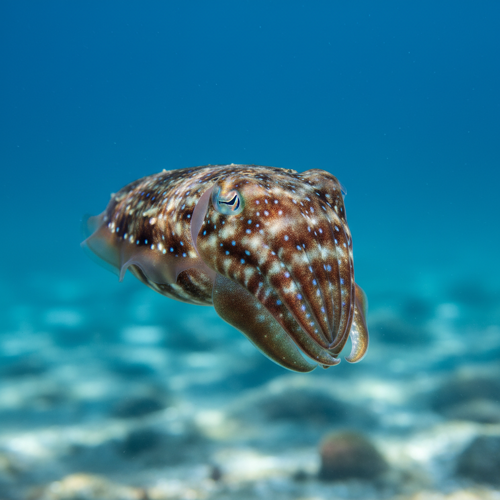
Cuttlefish generally share many similar anatomical structures and it can be hard to distinguish between different species in certain situations. Generally, cuttlefish can be diagnosed posthumously based on mantle shape and the structure of their tentacular clubs, which remain concealed in life. All cephalopods have a similar basic anatomical plan. Structures include a set of limbs that diverge from the head in a ring around the mouth. Major body parts such as reproductive systems, digestive organs and the gills are contained in the mantle (a muscular bag) at the posterior portion of the animal.
Habitat

A. mestus is endemic to Australia (Reid et al. 2005), ranging along the east coast from northern Queensland to Jervis Bay in New South Wales (Reid et al.2005).

A. mestus lives in depths up to 22 m (72 ft) and inhabits a tropical climate. They typically live on rocky reefs and are typically seen under ledges (Norman 2003).

Many of the world's cuttlefish species are found in Australian waters, including A. mestus.

Diet

Camouflage is a distinctive feature of cephalopods, including A. mestus. Coleoid cephalopods can change their colour and texture instantaneously to avoid detection.

Small organs in the skin called chromatophores allow for colour change. These chromatophores are very small expandable bags of dense pigment in which a spot of particular colour can be displayed.

A. mestus and most other species of cuttlefish can also alter skin texture to blend in with their environment. They push up specialized flaps of skin called papillae to match shapes of rock, coral, and seaweed. When a cuttlefish contracts the rings of muscle around the base of the papillae in different ways, the flaps rise accordingly, changing the appearance of the animal.

A. mestus can also bury itself under the sand to avoid predators.

Behaviour

Some common predators of A. mestus include bluefish, summer flounder, and black seabass.

Common prey of A. mestus and other cuttlefish include different species of shrimp, crab, and young fish.

Reproduction

To attract a potential mate, a male will perform various displays to catch the attention of a female. Once a male is successful in attracting a mate, the male will insert the hectocotylus into the female's mantle cavity to fertilize the female. The female will then lay her eggs nearby. All cuttlefish, including A. mestus, disperse their eggs by attachment to the sea floor, usually on or under hard surfaces such as rock and coral.

After spawning and brooding, male and female adults usually die shortly after. Like most members of the class Cephalopoda, A. mestus are gonochoric. After the embryos develop for about two months, they will hatch and remain in a planktonic stage briefly before developing into adults.

Humans & conservation

Increasing levels of carbon dioxide in the atmosphere cause ocean acidification and are potentially a threat to all cuttlefish species. In high CO2 concentrations, cuttlefishes tend to lay down a denser cuttlebone, which could impair cuttlefish buoyancy regulation (Gutowska et al. 2010). The species is currently considered of least concern.

Part of

Where to see it

No dive sites list Reaper Cuttlefish yet. Explore the map to find sites near you.