
← All marine life
Pacific Creolefish
Species IUCN · Least Concern (LC)

Pacific Creolefish

Cephalopholis colonus, (Valenciennes, 1846)

marine

About Pacific Creolefish

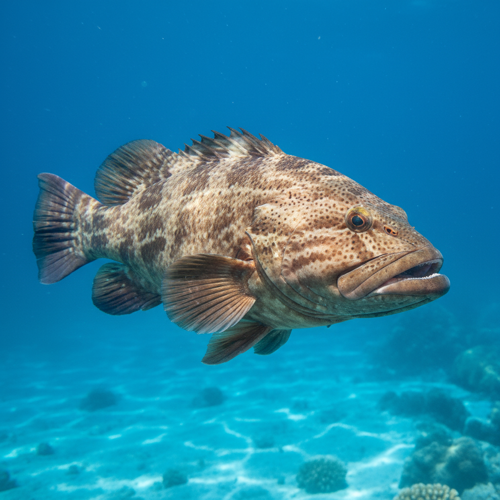
Cephalopholis colonus, commonly known as the Pacific creolefish, is a species of grouper found in the tropical Eastern Pacific Ocean. These schooling semi-pelagic marine fish feed on zooplankton, and large numbers of them are fished for human consumption in certain parts of its range.

Appearance

Pacific creolefish grow up to 38 centimetres (15 in) in length (TL), although they are most commonly found at a length of 30–32 centimetres (12–13 in). Males and females are approximately the same size.

There are 37–44 gill rakers. The dorsal fin has 9 spines and 18–21 rays, the anal fin has 3 spines and 9–11 rays, and the pectoral fin has 19–23 rays. The caudal fin is deeply forked.

The colouration is reddish or reddish grey, with 4–5 bright spots across the body of the fish. Juveniles are pinkish yellow.
Habitat

The Pacific creolefish occurs in the Eastern Pacific Ocean, from as far north as the Gulf of California to as far south as Peru. This includes the Revillagigedo, Galapagos, Clipperton, Cocos Island, and Malpelo islands.

Part of

Where to see it

No dive sites list Pacific Creolefish yet. Explore the map to find sites near you.