
← All marine life
Jellyfish
Group

Jellyfish

Scyphozoa, Goette, 1887

marinebrackish

About Jellyfish

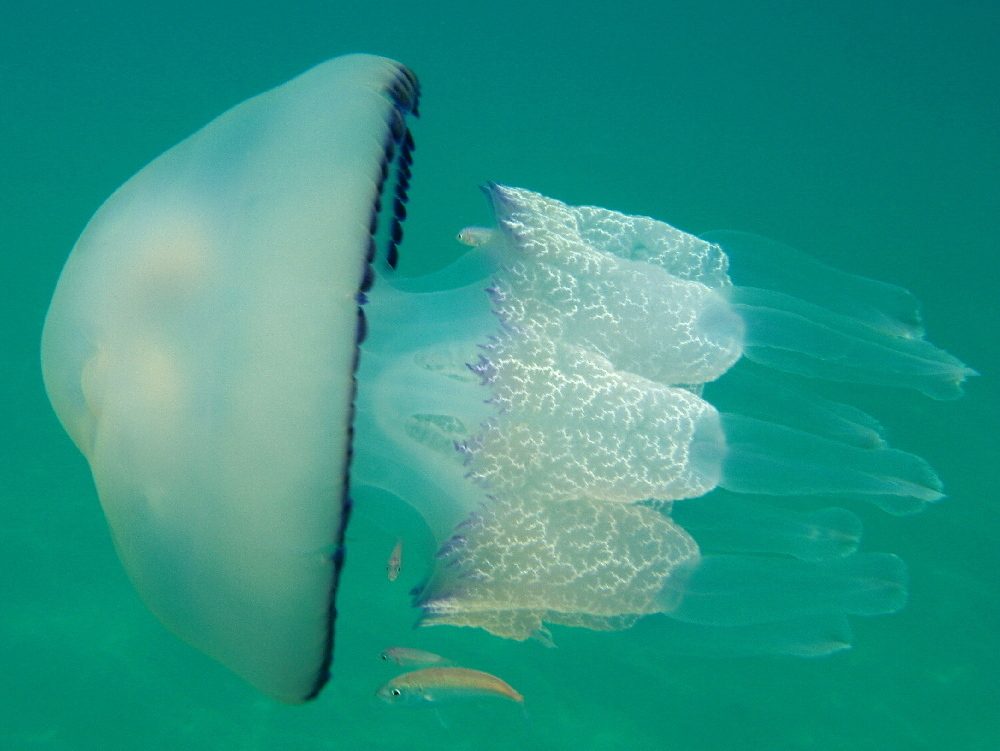
The Scyphozoa are an exclusively marine class of the phylum Cnidaria, referred to as the true jellyfish (or "true jellies").

The class name Scyphozoa comes from the Greek word skyphos (σκύφος), denoting a kind of drinking cup and alluding to the cup shape of the organism.

Scyphozoans have existed from the earliest Cambrian to the present.

Appearance

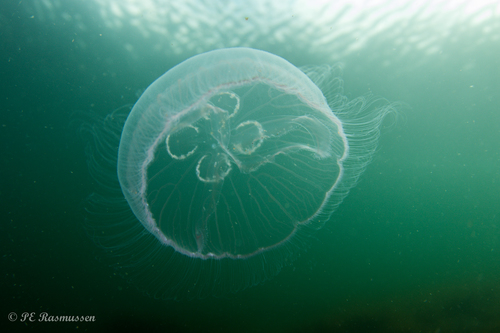
Scyphozoans usually display a four-part symmetry and have an internal gelatinous material called mesoglea, which provides the same structural integrity as a skeleton. The mesoglea includes mobile amoeboid cells originating from the epidermis.

Scyphozoans have no durable hard parts, including no head, no skeleton, and no specialized organs for respiration or excretion. Marine jellyfish can consist of as much as 98% water, so are rarely found in fossil form.
Reproduction

Most species appear to be gonochorists, with separate male and female individuals. The gonads are located in the stomach lining, and the mature gametes are expelled through the mouth. After fertilization, some species brood their young in pouches on the oral arms, but they are more commonly planktonic.

Species in this group

Where to see it

No dive sites list Jellyfish yet. Explore the map to find sites near you.