← All marine life
Hapuku
Species

Hapuku

Polyprion oxygeneios, (Schneider & Forster, 1801)

marine

About Hapuku

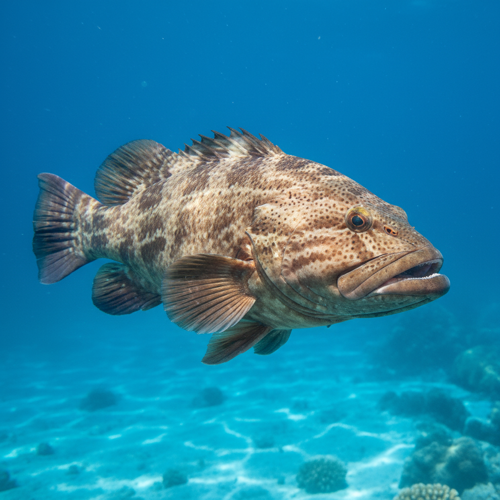
The hāpuku, hapuka or whapuku (Polyprion oxygeneios), also known as groper, is a wreckfish of the family Polyprionidae, found around southern Australia, southern South America, South Africa, Tristan da Cunha and New Zealand at depths between 30 and 800 m. Its length is between 60 and 180 cm, and it can weigh up to 100 kg. It is sometimes described locally as cod, although that properly refers to other fish.

Appearance

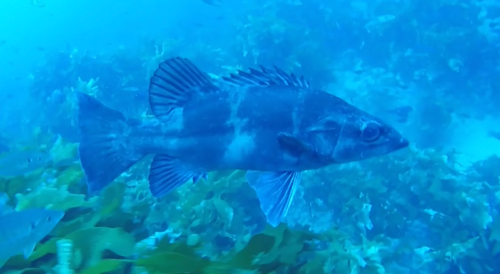
Hāpuku are grey in colour with silvery white underbellies, with juveniles generally being blue in colour. They have 10 dorsal spines running along their back, a rounded anal fin and rounded pectoral fins, and a large, powerful, square-shaped tail. Its lower jaw protrudes from the top, and their very large eyes are adapted for hunting and inhabiting low-light conditions.

Habitat

Juveniles are thought to be pelagic, switching to demersal when they are about 50 cm in length. They inhabit temperate and subtropical waters of the southern Indian Ocean and Pacific Ocean, being found in Chile, southeastern Australia and New Zealand. They can be found in waters between 10 m and 800 m deep, but generally prefer waters deeper than 50 m. They are usually found living in cracks, caverns, or caves when found in shallow waters. They are voracious predators, feeding on a large range of other fish species, invertebrates and crustaceans, including red cod and blue cod, hoki, crabs and crayfish. The fish has an overlapping range with the Atlantic wreckfish, its closest known relative.

In the 19th century, the fish was found around the shores of New Zealand, but by the 20th century it was found almost exclusively in deeper waters.

Humans & conservation

The hāpuku is a traditional food for Māori, considered one of the most prestigious fish. The name hāpuku originated in Polynesian languages, typically used to refer to fish in the Epinephelus genus, and in Māori the word hāpuku became a verb, meaning to cram food into your mouth. The name hapuka appears to be a corruption of the fish's Māori language name by early European settlers. Hāpuku fisheries were passed down through generations, and the best locations were thought to be far off-shore. Traditionally, the hāpuku was thought to be able to tell when its name was being used, so the name rarawai was used in its place during fishing expeditions.

Part of

Where to see it

No dive sites list Hapuku yet. Explore the map to find sites near you.