This dive site, the Great Blue Hole, is located just off Lighthouse Reef in Belize and is globally recognized as one of the most famous marine sinkholes. Formed during the last ice age, when sea levels were much lower, the hole features incredible ancient stalactite formations that now lie submerged, offering a unique geological spectacle. Dives here primarily focus on exploring these massive stalactites found at depths between 30-40 meters. Navigation is relatively straightforward along the wall, but extreme caution with depth is essential as it's easy to descend too rapidly in this deep, cavernous environment.
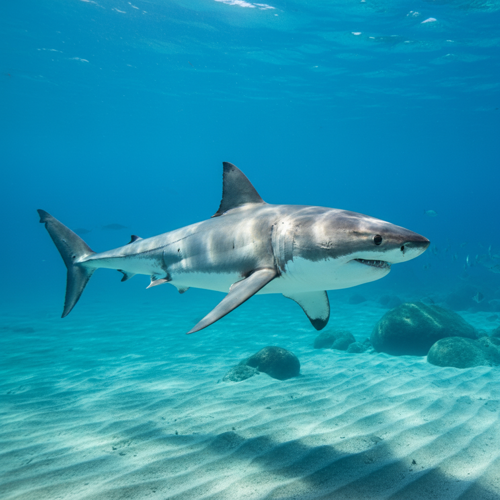
While the Great Blue Hole is celebrated more for its unique topography than its vibrant marine ecosystems, divers can expect encounters with pelagic species. The site is known for its resident shark population, including grey reef sharks and blacktip reef sharks, often seen patrolling the deeper ledges and openings. However, the dive description explicitly states that there aren't many fish to be seen, and it is not a site rich in small marine life or extensive coral formations.
The optimal time to visit the Great Blue Hole and dive in Belize is typically during the dry season, which runs from November to May, offering the best conditions with calmer seas and excellent visibility. Due to its significant maximum depth of 40 meters and the nature of the dive, it is strictly recommended for advanced divers who possess experience with deep diving and maintaining precise buoyancy control. It is not suitable for snorkeling or recreational freediving, as the primary attractions are far beyond typical surface or breath-hold depths.