Appearance
The Dhufish has a moderately compressed body shape measuring as an adult around 80 cm though have been reported to measure from 50-122cm and weighing typically 32kg though some reports mention 26 kg.

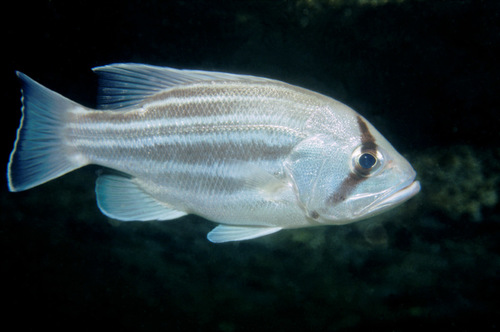
Glaucosoma hebraicum, Richardson, 1845
Glaucosoma hebraicum, also commonly known as the West Australian dhufish, Westralian jewfish, West Australian pearl perch, Dhuie, Jewie, and Dhufish amongst the locals, is a species of fish in the family Glaucosomatidae, 'the Pearl Perches'. First recorded in 1845 by a scientist known as Richardson, in Western Australia this species also has synonyms including Glaucosoma burger and Glaucosoma lineata. Endearingly also referred to as the "Jewel of the Crown", it is known for its delicious taste and great size. Glaucosoma hebraicum is popular among recreational and angler fishers, a victim to aggregate fishing most especially during spawning season, as well as being a great model for fish hatchery research.
The Dhufish has a moderately compressed body shape measuring as an adult around 80 cm though have been reported to measure from 50-122cm and weighing typically 32kg though some reports mention 26 kg.
It is native to Western Australia, and its home range stretches from the base of Shark Bay passing through Augusta reaching Esperance, shaded in grey in Figure 6. It is endemic to the waters around Western Australia from Shark Bay to the Archipelago of the Recherche at depths to 200 m (660 ft) passing through Augusta reaching Esperance, shaded in grey in Figure 6. The Dhufish has been seen occurring at depths of 20–50 m (66–164 ft). Dhufish are found in coastal waters, but more commonly in deeply submerged reefs and rough bottoms, in caves and wreckage. It has been seen socially with schools of fish as well as roaming independently. This species is important to local commercial fisheries, recreational fishing as well as in research for fish hatcheries and high commercial importance.
It is also common for Dhufish to become territorial in caves. Dhufish school during the day and are mostly nocturnal feeders. They have been known to feed on mollusks, crustaceans, and small reef fish. The study 'Identification of critical habitats for juvenile Dhufish (Glaucosoma hebraicum) NRM Project 09038 – Protecting Inshore and Demersal Finfish' in 2012, concluded that critical habitat for juvenile Dhufish, from eleven to fifteen months old, show preference to habitats with mixtures of sand with light seagrass, reefs with sponges, macroalgae, sessile invertebrates. This same study concluded that juveniles fed on mysids, gadiform cod, confirming that from a young age they are also piscivorous. In captivity, they are fed a mixture of copepods, small crustaceans such as nauplii and rotifers.
The peak breeding season is between December and March with its spawning season in Spring. They are broadcast spawners, with floating eggs developing into plankton-feeding pelagic larvae. Spawning happens from early Winter through early Spring, between 40-50m in rocky bottoms. Males will move from deep waters to the spawning ground first and females follow shortly after. During spawning season, males will appear to showcase an elongate filament on the end of the dorsal fin, whereas the female dorsal fin will appear more rounded. Adults occur in various inshore habitats, from hard flat shelf areas to rocky reefs, wrecks, underwater caverns, and deep waters. Fecundity increases with size and age, with some females carrying up to eight million eggs in between with an average total length of 84 cm.
This is species is particularly vulnerable to overfishing in small reefs. It can take up to three years for a full recovery as this is a 'slow growing' species, especially with the introduction and use of sonar equipment targeting small reefs in deeper waters. Dhufish, like other fish, are aged using the number of growth zones in whole otoliths, which is thought to slightly underage fish.
No dive sites list West Australian Dhufish yet. Explore the map to find sites near you.