
← All marine life
Turtle Barnacle
Species

Turtle Barnacle

Chelonibia testudinaria, (Linnaeus, 1758)

marine

About Turtle Barnacle

Chelonibia testudinaria is a species of barnacle in the family Chelonibiidae. It is native to the Atlantic Ocean, Mediterranean Sea and Gulf of Mexico where it lives as a symbiont on sea turtles, being particularly abundant on the loggerhead sea turtle.

Appearance

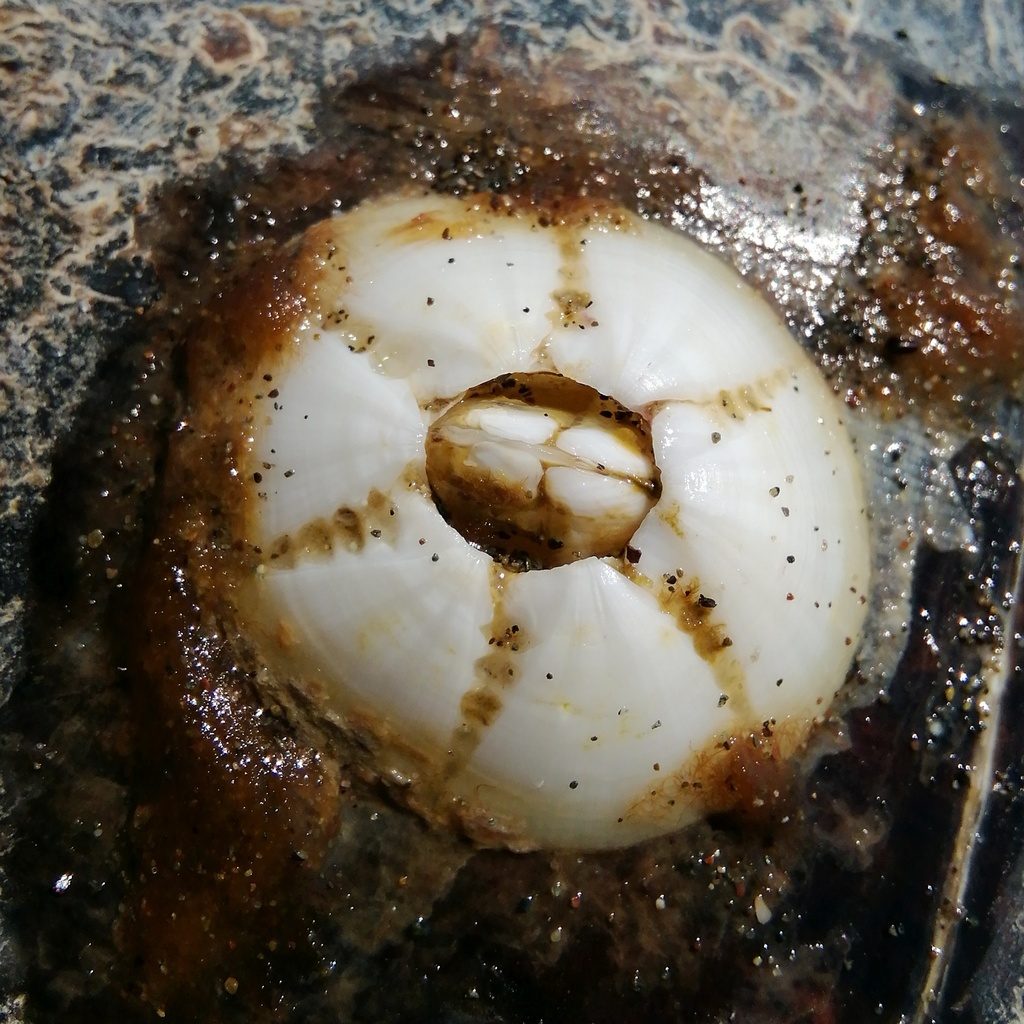
C. patula has a conical shaped shell with smooth plates, with long cirri IV, V and VI. Dwarf males often settle on the plates and are distributed randomly. In contrast, C. testudinaria has a flatter, less conical shape, the cirri IV, V and VI are short, and there are shallow oval depressions on the radii at the junctions of the plates. Dwarf males commonly settle in these depressions.

Behaviour

Chelonibia testudinaria are found to attach themselves to shells/objects of the larger organisms from each region of the host's body. C. testudinaria preferentially behaviorally select green turtles as hosts compared to Chelonibia caretta, which select Hawksbill sea turtles as hosts. On a turtle's shell, the greatest water flow is over the front central portion. It has been shown that C. testudinaria can relocate on the turtle's shell, usually towards the optimal position with maximum water flow and thus the greatest filter feeding opportunities. The movement is around 1.4 mm (0.06 in) or less per day and is probably achieved by advancing the shell forward with each increment of growth. Over several months, several scutes can be crossed by these means.

Where to see it

No dive sites list Turtle Barnacle yet. Explore the map to find sites near you.