Appearance
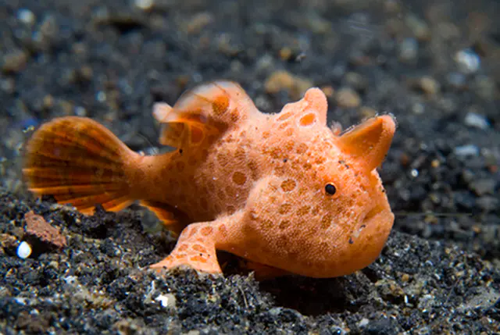
Antennatus tuberosus has a long illicium, which is 50 to 100% longer than the second dorsal spine, which tapers to a simple filamentous esca, or lure. The second dorsal spine is a cylinder while the third spine is enclosed in a bump in the skin. There is no caudal peduncle. There are no scales in the skin but the skin is thick and firm and has a dense covering of bifurcated spinules. The limb-like pectoral fins has a joint resembling an elbow. The rear of the dorsal and anal fins are connected to the upper rays of the caudal fin. The colour of the body varies but is normally cream, yellow, or slate grey, with dark-brown reticulations and marbling. The head has a whitish, crusty pattern on face. The anal and caudal fins have an obvious dark-brown band and dark bands on the marguins. This species has a maximum published standard length of 9 cm (3.5 in).