
← All marine life
Toothfish
Group

Toothfish

Dissostichus, Smitt, 1898

marine

About Toothfish

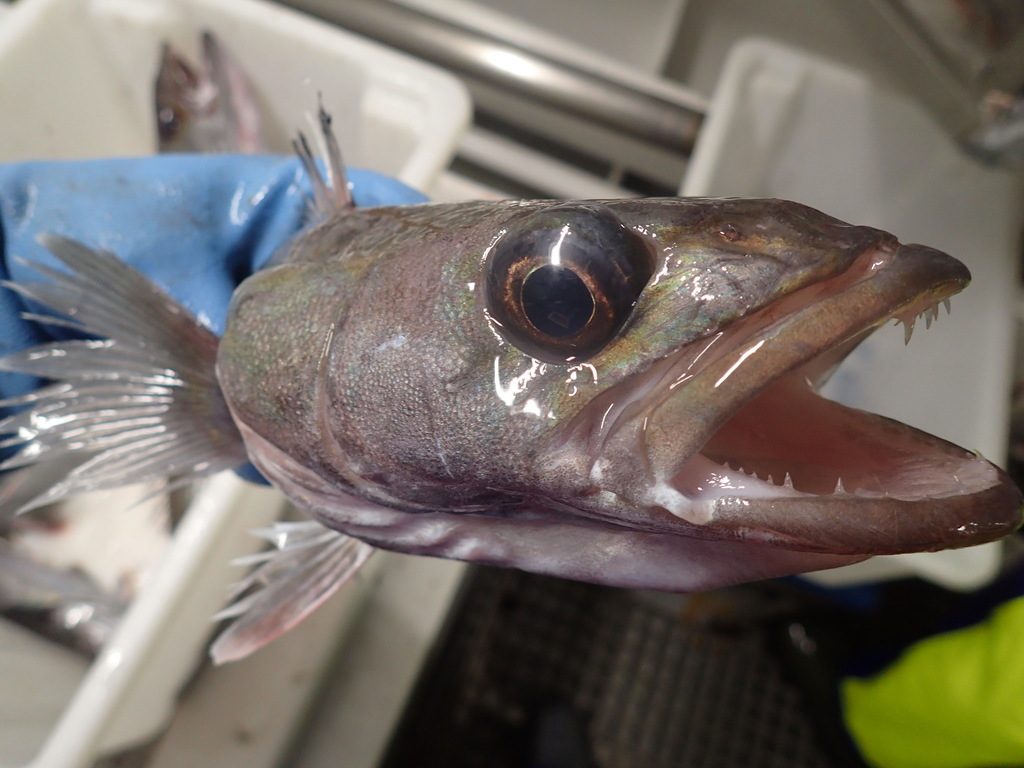
Dissostichus, the toothfish, is a genus of marine ray-finned fish belonging to the family Nototheniidae, the notothens or cod icefish. These fish are found in the Southern Hemisphere. Toothfish are marketed for consumption in the United States as Chilean sea bass (or Chilean seabass) or less frequently as white cod. "Chilean sea bass" is a marketing name coined in 1977 by Lee Lantz, a fish wholesaler who wanted a more attractive name for selling the Patagonian toothfish to Americans. In 1994, the U.S. Food and Drug Administration (FDA) accepted "Chilean sea bass" as an "alternative market name" for Patagonian toothfish. The toothfish was remarkably successful in the United States, Europe and Asia, and earned the nickname "white gold" within the market. Toothfish are vital to the ecological structure of Southern Ocean ecosystems. For this reason, on 4 September a national day is dedicated to the toothfish in South Georgia.

Appearance

The Patagonian toothfish and the Antarctic toothfish are markedly similar in appearance, but can be identified via several morphological features. The Patagonian toothfish has a characteristic scaleless patch between the eyes and a longer visible lateral line.

Toothfishes are large in size, with both species reaching maximum sizes exceeding 100 kg. This trait distinguishes the toothfishes from other notothenioids.

Habitat

The Patagonian toothfish is distributed circumpolarly near the Antarctic Convergence, spanning the Atlantic, Pacific and Indian sectors of the Southern Ocean, with a few populations near the Antarctic Peninsula as well as the coasts of Chile and Argentina. The Antarctic toothfish is distributed around the Antarctic continental shelf and in the Ross Sea, generally south of 60°S.

Both species are benthopelagic as adults. The Patagonian toothfish has been found at depths between 600 and 1500 m, and the Antarctic toothfish tends to be found at depths between 1300 and 1900 m. The Patagonian and Antarctic toothfish populations overlap geographically in the southern Indian Ocean, north of the Ross Sea and several south Atlantic islands. Since the Southern Ocean has not yet been fully sampled, both species may extend further throughout the region.

Behaviour

Much remains unknown regarding the life cycles of both toothfish species, particularly the Antarctic toothfish. Much of the existing data has been collected by reports from commercial fishing vessels. Current research suggests that both the Patagonian and Antarctic toothfishes tend to form discontinuous populations, meaning that little gene flow exists between populations.

Humans & conservation

The Patagonian toothfish was initially captured in the 1970s as bycatch via trawl fishing vessels around South Georgia Island and off the coast of South America. Most of the individuals caught using this method were juveniles. In 1987, the Patagonian toothfish was caught as bycatch via longline fishing, a technique that captured the larger adults. The fish, marketed as "Chilean Sea Bass," became widely successful in restaurants due to its large size and white, oily flesh, which can be cooked in numerous ways.

Where to see it

No dive sites list Toothfish yet. Explore the map to find sites near you.