
← All marine life
Tiger Snapping Shrimp
Species

Tiger Snapping Shrimp

Alpheus bellulus, Miya & Miyake, 1969

marine

About Tiger Snapping Shrimp

The tiger pistol shrimp (Alpheus bellulus) is a species of shrimp belonging to the family Alpheidae, which are commonly known as snapping shrimp.

The Alpheidae family is incredibly diverse with over 500 unique species across the world. Alpheus bellulus shares a translocation and inversion event of trnE in its mitogenome with several other Alpheus species but there is not enough evidence to say this is a shared commonality among the entire genus. Phylogeny suggests Alpheus randalli and Alpheus bellulus belong to the same taxon within a monophyletic group. Amino acid composition of the cytochrome b protein in A. bellulus was also similar to those of A. randali and A. lobidens, two other species of snapping shrimp.

Appearance

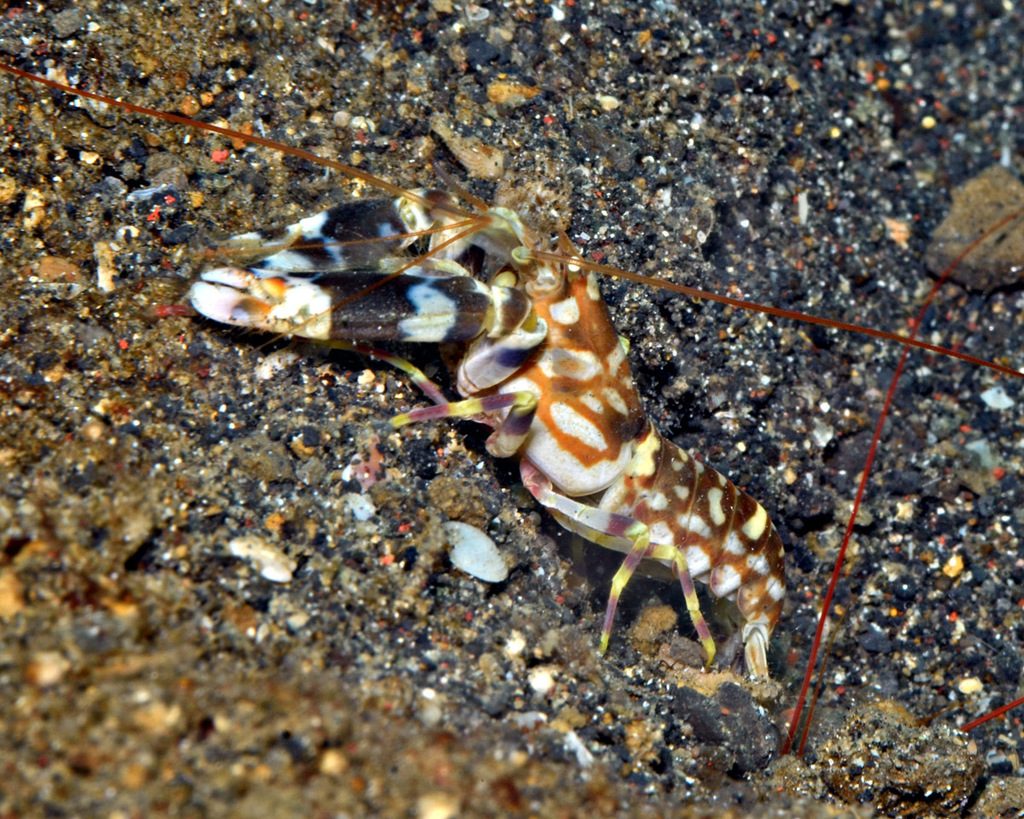
The tiger pistol shrimp can grow to a size of up to 4 to 5 cm (1.6 to 2.0 in), not including antennae. The body is stout and opaque. The background color of the body is yellowish white or plain yellow. The patterns drawn on the cephalothorax, abdomen and tail are irregular but symmetric; their coloration varies from light brown, brownish purple to brownish orange. The legs are banded with the same colors as the body and are covered with short bristles. The antennae are red. The chelipeds are also banded, with the right being bigger and modified into a powerful weapon. By closing at extreme speed, the cheliped expels an air bubble at more than 100 kilometres per hour (62 mph) towards the prey. This action is accompanied by a loud bang.

Habitat

The tiger pistol shrimp can be found in the tropical waters of the Indo-West Pacific area.

Diet

The tiger pistol shrimp primarily feeds on small invertebrates, but may also consume detritus, macroalgae and animal carcasses found near its burrow. In symbiotic pairs, gobies have also been observed bringing food to the shrimp. Although tiger pistol shrimp are sometimes blamed for the deaths of fish in aquariums, they are generally considered unlikely to attack fish for food. In captivity, they readily accept a variety of prepared foods commonly given to aquarium shrimp, including flakes, pellets, frozen mysis shrimp, brine shrimp and finely chopped seafood.

Behaviour

The tiger pistol shrimp lives in burrows in symbiosis with certain goby species such as Cryptocentrus cinctus, Amblyeleotris guttata, and Stonogobiops yasha. The shrimp digs and maintains the burrows used as dens by both animals, while the goby acts as a lookout and warns of danger the shrimp cannot easily detect because of its poor eyesight.

A study of goby fish and tiger pistol shrimp kept together in a tank found that when no other food source was available, the shrimp survived by eating the feces of the goby fish from within the burrow. This behaviour provides another example of the close partnership between the two species.

Where to see it

No dive sites list Tiger Snapping Shrimp yet. Explore the map to find sites near you.