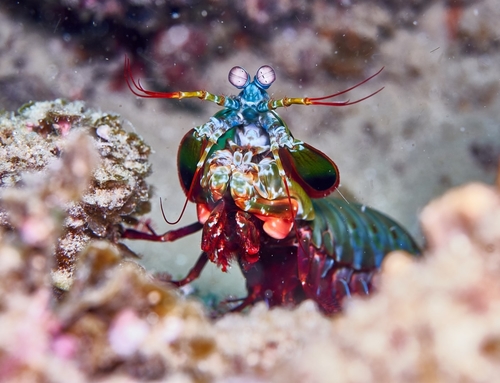
Diet
By hiding in sandy burrows, L. maculata strike soft-bodied evasive prey that swim by, such as small fish and malacostracans. In order to create high attack speeds, they have a spring and latch structure at the base of their raptorial appendages that allows them to create a spring-loaded strike. This strike system consists of a four-bar linkage mechanism and a coupled lever. By storing energy in this spring-like system, a faster strike is created than would be possible solely from muscle action.
Prior to attacking prey, L. maculata only peeks its eyes above the entrance to the burrow. As soon as the prey move within striking distance of the burrows, the mantis shrimp lunges out and snares the prey with both of its raptorial appendages.