
← All marine life
Surfperch
Group

Surfperch

Embiotocidae, Agassiz, 1853

marinebrackishfreshwater

About Surfperch

The surfperches are a family of viviparous ray-finned fishes, the Embiotocidae. Most species are marine, inhabiting coastal waters from Baja California to Alaska, with a few found in Asian Pacific coasts. The only freshwater species, the tule perch (Hysterocarpus traski), is endemic to California, United States.

Appearance

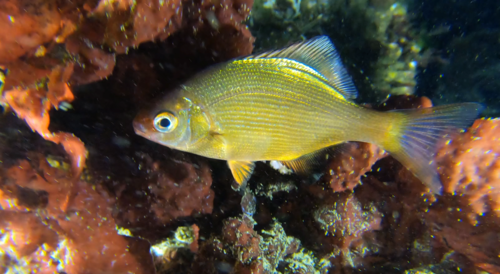
Surfperches are characterized by deep, laterally compressed bodies and a scaled ridge along the base of the dorsal fin. In all species, males can be visibly distinguished from females by the presence of the distinct reproductive organ on the anal fin.

Reproduction

Surfperches are viviparous, an uncommon trait among marine fishes. Eggs are internally fertilized, and females carry developing embryos for several months. Embryos develop inside the ovary, and are initially nourished by the yolk and surrounding ovarian fluid. Embryos have highly vascular dorsal and anal fins which lay against the vascular ovarian wall, absorbing nutrients and oxygen directly from the mother’s blood supply. Females give live birth to fully formed young instead of laying eggs.

Where to see it

No dive sites list Surfperch yet. Explore the map to find sites near you.