
← All marine life
Spinetail Devil Ray
Species IUCN · Critically Endangered (CR)

Spinetail Devil Ray

Mobula mobular, (Bonnaterre, 1788)

marine

About Spinetail Devil Ray

The devil fish, giant devil ray, or simply the devil ray (Mobula mobular) is a species of ray in the family Mobulidae. As of 2025, it is listed as critically endangered, mostly due to bycatch mortality in unrelated fisheries and a naturally slow reproductive rate.

Appearance

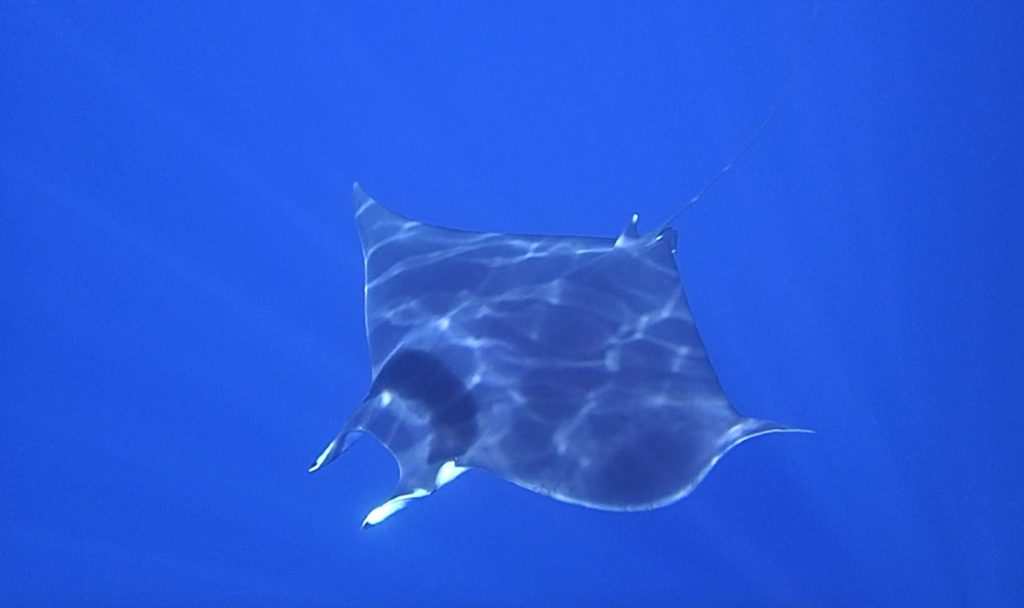
The devil fish is larger than its close relative, the lesser devil ray. It grows to a disk length of 3.5 metres (11 ft), making it one of the largest rays. It possesses a spiny tail. The devil fish is the third-largest species in the genus Mobula, after the oceanic and reef manta rays. It is the only mobulid species that lives in the Mediterranean Sea. The species has been observed to have a maximum recorded disk width of 5.2 m (roughly 17 ft). However, those data are unreliable and are allegedly misunderstood as giant oceanic manta rays that have strayed into the Mediterranean. It is also considered to be the only devil fish with a tail spine.

Habitat

The devil fish is most common in the Mediterranean Sea. It is also found in the Eastern Atlantic Ocean, off the southwest coast of Ireland and south of Portugal, as well as in the central and western Pacific Ocean. In the Mediterranean, the species has a basin-wide distribution and is most frequent in the eastern Mediterranean and the Adriatic Sea. The large aggregations observed in the Levantine basin could signal an important mating area.

Devil fish inhabit offshore areas to the neritic zone, their range as deep as several thousand meters. They are typically observed in small clusters, and may occasionally form larger groups.

Behaviour

The average lifespan of a giant devil ray is 20 years. It is an epipelagic species with a very low reproductive capacity; the species gives birth to a single offspring at unknown intervals. The species is ovoviviparous; the young hatch from their eggs inside the mother's body and emerge later, when they are more matured. The disc width of the pups born at the Osaka Aquarium was 1.03 m (3 ft 5 in).

At the rate that its population is declining now, the population is predicted to decline by at least 50% in the next 60 years, due to a number of threats, including the poor likelihood of recovering from declining populations.

Humans & conservation

The devil fish has a limited range and a low rate of reproduction, so is sensitive to environmental changes. Its population trend is decreasing. Most of the information on the giant devil ray has been gathered through bycatch data because the species has a high bycatch mortality. Giant devil ray mortalities are mostly reported as bycatch from swordfish nets, and occasionally reported as bycatch from longlines, purse seines, trawls, trammel nets, and tuna traps. The many threats against the giant devil ray include fishing, resource harvesting (being taken as bycatch in different fisheries), industrial garbage, and solid waste. The main threats to this species come from pollution in the Mediterranean and bycatch capture in various fishing equipment including trawls, tuna traps, and dragnets meant for swordfish.

Where to see it

No dive sites list Spinetail Devil Ray yet. Explore the map to find sites near you.