
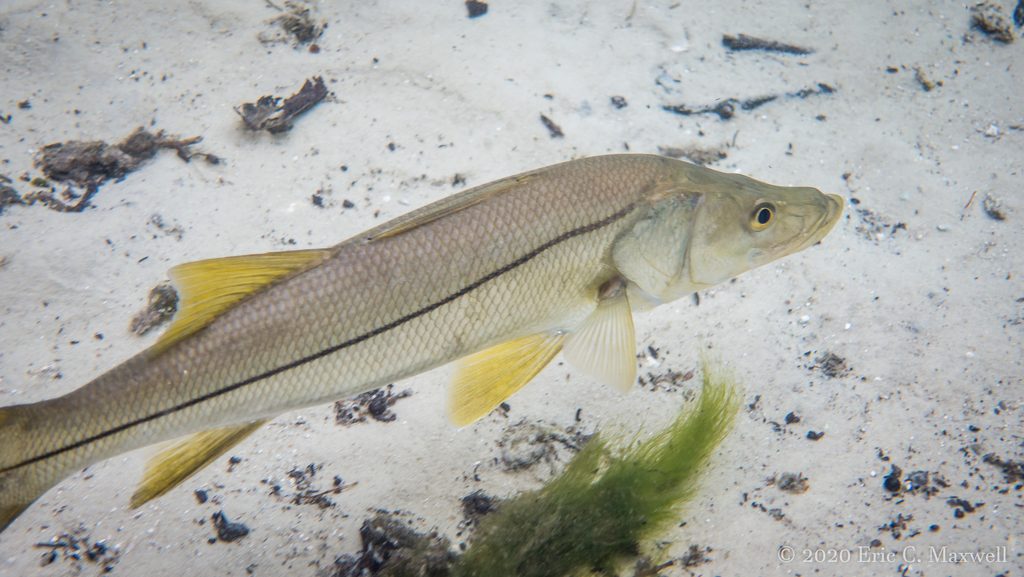
Snook
Centropomidae, Poey, 1967
About Snook
Centropomus is a genus of predominantly marine fish comprising the family Centropomidae. The type species is Centropomus undecimalis, the common snook. Commonly known as snooks or róbalos, the Centropomus species are native to tropical and subtropical waters of the western Atlantic and eastern Pacific Oceans.
Prior to 2004, the subfamily Latinae, which contained three genera, was placed within the Centropomidae; this has since been raised to the family level and renamed Latidae because a cladistic analysis showed the old Centropomidae to be paraphyletic. This has left Centropomus as the only remaining genus in this family. These are popular game and food fish.
Dating from the upper Cretaceous, the centropomids are of typical percoid shape, distinguished by having two-part dorsal fins, a lateral line that extends onto the tail, and frequently, a concave shape to the head. They range from 35 to 120 cm (14 to 47 in) in length and are found in tropical and subtropical waters.
The snook species range in maximum length from about 35 to 140 cm (1 ft 2 in to 4 ft 7 in), with maximum recorded weights of 1.0 – 26 kg (2.2 – 57 lb).
Occurring in a variety of habitats ranging from coral reefs to estuaries and mangrove swamps, the snooks are carnivorous, feeding primarily on crustaceans and other fishes.
Many of the snooks are important as commercial food fish and as game fish.
The generic name Centropomus derives from the Greek κέντρον (centre, in this sense "sting") and πώμα (cover, plug, operculum).
Where to see it
No dive sites list Snook yet. Explore the map to find sites near you.