
← All marine life
Shortfin Mako Shark
Species IUCN · Endangered (EN)

Shortfin Mako Shark

Isurus oxyrinchus, Rafinesque, 1810

marine

About Shortfin Mako Shark

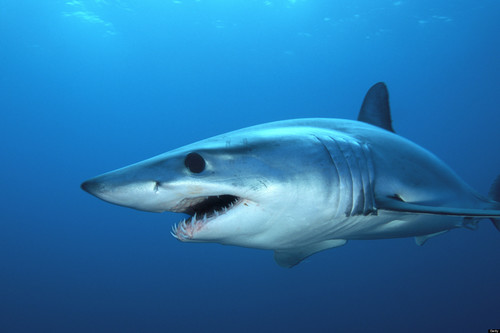
The shortfin mako shark (; Māori: [ˈmakɔ]; Isurus oxyrinchus), also known as the shortfin mako, blue pointer, or bonito shark, is a species of large mackerel shark. It is commonly referred to as the mako shark, as is the longfin mako shark (Isurus paucus). The fastest known shark species, able to reach speeds of 74 km/h (46 mph) in bursts, the shortfin mako can attain sizes of more than 4 m (13 ft) in length and weigh over 570 kg (1,260 lb). The species is classified as Endangered by the IUCN.

Appearance

The shortfin mako is a fairly large species of shark. Growth rates appear to be somewhat accelerated in comparison to other species in the lamnid family. A typical adult specimen measures around 2.5 to 3.2 m (8.2 to 10.5 ft) in length and weighs 60–140 kg (130–310 lb). The species is sexually dimorphic, with females typically larger than males. Large specimens are known, with a few large, mature females exceeding a length of 3.8 m (12 ft) and a weight of 550 kg (1,210 lb). The largest taken on hook-and-line was 600 kg (1,300 lb), caught off the coast of California on June 3, 2013, and the longest verified length was 4.45 m (14.6 ft) caught off the Mediterranean coast of France in September 1973. A specimen caught off the coast of Italy and examined in an Italian fish market in 1881 was reported to weigh an extraordinary 1,000 kg (2,200 lb) at a length of 4 m (13 ft).
Diet

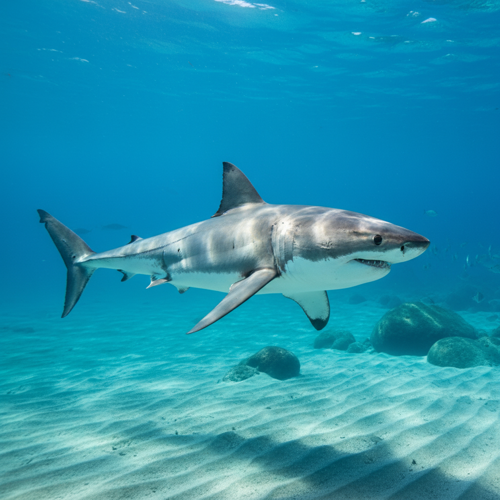
The shortfin mako shark primarily feeds upon squid (such as Loligo pealeii and Illex illecebrosus), other cephalopods, and bony fish including bluefish, mackerel, herring, tuna, bonito, saury, and billfish, but may also eat other sharks (such as blue and grey reef), porpoises, dolphins, sea turtles, seabirds, and crustaceans. They hunt by lunging vertically up and tearing off chunks of their preys' flanks and fins. Mako swim below their prey, so they can see what is above and have a high probability of reaching prey before it notices them. In Ganzirri and Isola Lipari, Sicily, shortfin mako have been found with amputated swordfish bills impaled into their head and gills, suggesting swordfish may sometimes fight back and seriously injure or even kill them.

Behaviour

The shortfin mako shark is a cosmopolitan species, inhabiting offshore temperate and tropical seas worldwide.

It is a pelagic species that can be found from the surface to depths of 150 m (490 ft), normally far from land, though occasionally closer to shore, around islands or inlets. The shortfin mako is one of the very few known endothermic sharks, although it is seldom found in waters colder than 16 °C (61 °F).

In the western Atlantic, it can be found from Argentina and the Gulf of Mexico to Browns Bank off of Nova Scotia. In Canadian waters, these sharks are neither abundant nor rare. Swordfish are good indicators of shortfin mako populations, as the former are a source of food and prefer similar environmental conditions. The shark is one of the most commonly found in the waters of New Zealand.

Reproduction

The shortfin mako shark is a yolk-sac ovoviviparous shark that gives birth to live young. Developing embryos feed on unfertilized eggs within the uterus during the 15 to 18 month long gestation period. Unlike the sand tiger shark, they are not known to cannibalize other embryos. The four to 18 surviving young are born in the late winter and early spring at a length of about 70 cm (28 in). Females may rest for 18 months after giving birth before mating again. On average, shortfin mako sharks bear young every three years.

A common mating strategy of shortfin mako sharks has been documented as using multiple paternity as a mating strategy, known as polyandry. This strategy is used to produce a single brood sired by multiple males (multiple paternity) and is a common strategy in many taxa, including invertebrates and vertebrates.

Humans & conservation

Mako fishing is a prominent activity around the world. As one of the fastest species in the ocean, they offer acrobatic flips, fast runs, and strong fights, which all greatly entertains anglers. Traditionally, the sharks are hooked through the use of chum and baitcasters; however, fly fishing for them has become more popular, particularly in San Diego, California, where one of the three known worldwide mako rookeries is located. A cottage industry of fishing in this rookery has emerged, specifically catch-and-release, with charter operations out of Mission Bay. For many years, many commercial boats hunted them for restaurant catch, but through the efforts of many local fishing companies and national organizations (such as Orvis), this has been curbed.

Part of

Where to see it

No dive sites list Shortfin Mako Shark yet. Explore the map to find sites near you.