
← All marine life
Sablefish
Species

Sablefish

Anoplopoma fimbria, (Pallas, 1814)

marine

About Sablefish

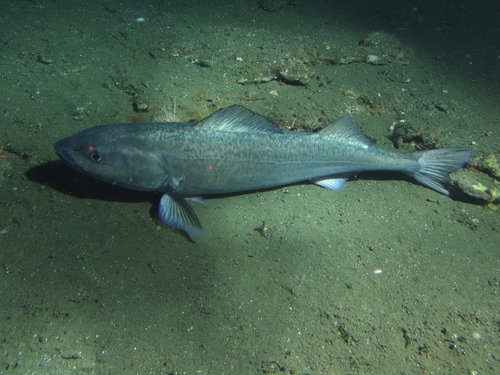
The sablefish (Anoplopoma fimbria) is one of two members of the fish family Anoplopomatidae and the only species in the genus Anoplopoma. In English, common names for it include sable (US), butterfish (US), black cod (US, UK, Canada), blue cod (UK), bluefish (UK), candlefish (UK), coal cod (UK), snowfish (ปลาหิมะ; Thailand), coalfish (Canada), beshow, and skil (Canada), although many of these names also refer to other, unrelated, species. The U.S. Food and Drug Administration accepts only "sablefish" as the acceptable market name in the United States; "black cod" is considered a vernacular (regional) name and should not be used as a statement of identity for this species. The sablefish is found in muddy sea beds in the North Pacific Ocean at depths of 300 to 2,700 m (980 to 8,860 ft) and is commercially important to Japan.

Appearance

The sablefish is a species of deep-sea fish common to the North Pacific Ocean. Adult sablefish are opportunistic piscivores, preying on Alaskan pollock, eulachon, capelin, herring, sandlance, and Pacific cod, as well as squid, euphausiids, and jellyfish. Sablefish are long-lived, with a maximum recorded age of 94 years although the majority of the commercial catch in many areas is less than 20 years old.

Sablefish growth varies regionally, with larger maximum sizes in Alaska, where total lengths up to 114 cm (3 ft 9 in) weights up to 25 kg (55 lb) have been recorded. However, average lengths are typically below 70 cm (2 ft 4 in) and 4 kg (8.8 lb).

Humans & conservation

Sablefish are typically caught in bottom trawl, longline and pot fisheries. In the Northeast Pacific, sablefish fisheries are managed separately in three areas: Alaska, the Canadian province of British Columbia, and the west coast of the contiguous United States (Washington, Oregon, and California). In all these areas catches peaked in the 1970s and 80s and have been lower since that time due to a combination of reduced populations and management restrictions. The sablefish longline fishery in Alaska has been certified as sustainable by the Marine Stewardship Council as is the US West Coast limited entry groundfish trawl fishery which includes sablefish.

Longline fisheries in Alaska frequently experience predation of sablefish by killer whales and sperm whales which remove the fish from the hooks during the process of retrieving the gear.

Where to see it

No dive sites list Sablefish yet. Explore the map to find sites near you.