← All marine life
Redfin Bully
Species IUCN · Near Threatened (NT)

Redfin Bully

Gobiomorphus huttoni, (Ogilby, 1894)

marinebrackishfreshwater

About Redfin Bully

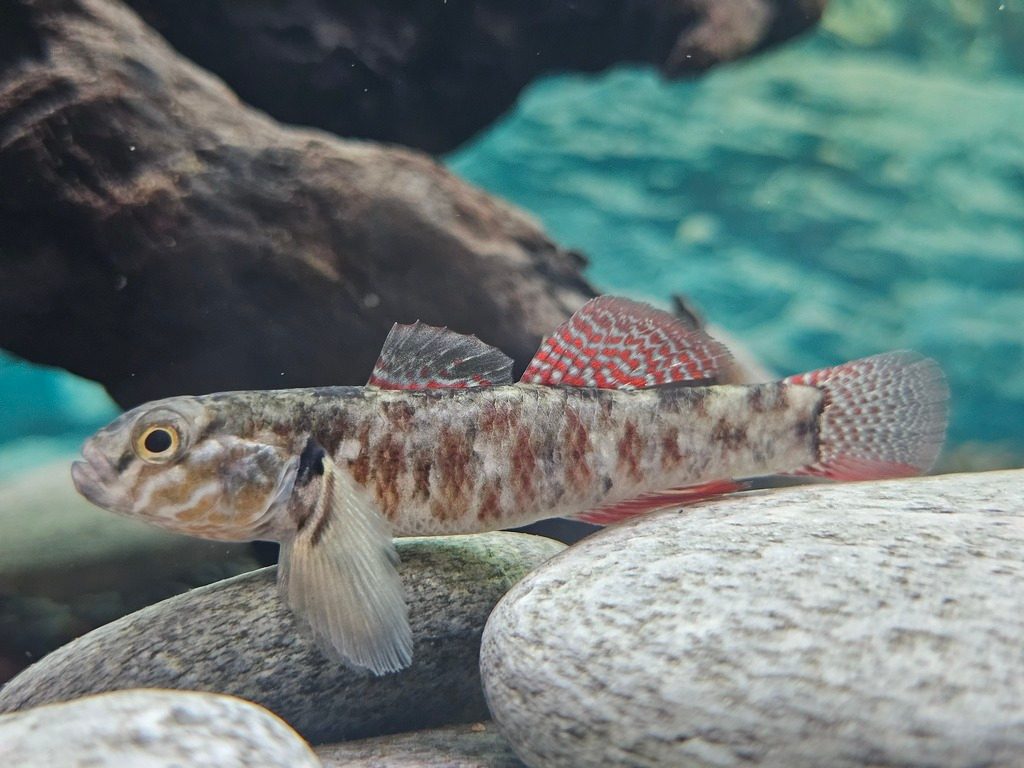
The redfin bully (Gobiomorphus huttoni) is a species of freshwater fish in the family Eleotridae endemic to New Zealand. Being amphidromous, it spends part of its life cycle at sea. Males have distinctive bright red patterns and stripes on their fins. Adults grow to an average of 80–100 mm (3.1–3.9 in) total length, with a maximum of 120 mm (4.7 in).

Appearance

G. huttoni was recognised as a distinct species in 1894, but has had many name changes. The current specific name "huttoni" refers to New Zealand biologist Sir Frederick W. Hutton. This is one of seven species of native bullies found in a range of freshwater habitats in New Zealand.

Habitat

G. huttoni is endemic to New Zealand, and found throughout the North Island, Stewart Island and the Chatham Islands. G. huttoni are quite rare along the east coast of the South Island north of Oamaru, with the exception of the Banks Peninsula area. G. huttoni are diadromous as they migrate between fresh and saltwater. They do not establish in landlocked waterways, and thus they tend to live near the coast with access to the ocean. They have the ability to climb upstream, resulting in populations being found well inland, including above 5m.

Diet

G. huttoni is an opportunistic feeder, eating the larvae of chironomid midges, mayflies, and caddisflies; small crustaceans; and aquatic snails.

G. huttoni are carnivorous and eat a variety of invertebrates. G. huttoni display non-random foraging patch selection, preferring patches with cobble and a high abundance of invertebrates. They feed on insects (refer to table below), with their diet dependent upon the species of invertebrates found in the stream they are inhabiting.

Behaviour

G. huttoni demonstrate territorial behaviour, which is promoted by the patchy stream environments they inhabit. This behaviour is mainly attributable to food competition, where dominant individuals will occupy high-quality patches, and as long as stable high-quality food sources are present in the patch, the territorial behaviour will persist. G. huttoni demonstrate a preference for habitat patches with both abundant food resources and a lower risk of predation.

Reproduction

Redfin bullies are amphidromous – they migrate between fresh water and the sea as part of their life cycle.

Humans & conservation

The main threats to G. huttoni are competition and predation from introduced salmonid fishes, mainly brown trout (Salmo trutta), and habitat loss. From 2004 to 2014, redfin bully numbers declined by 20%, and they are now classified as a near-threatened species.

The following species have overlapping habitat ranges with G. huttoni; however, there has been limited research undertaken to date to fully understand the scale of the predator-prey relationship.

White-faced heron (Notophyox novaehollandiae)

The mature adult G. huttoni exhibit secretive habits to make concerted predation by trout unlikely, but the more open-living juveniles traversing upstream are more likely to be predated by trout in large numbers. In addition to secretive habits, G. huttoni use short sharp darting movements to get away from disturbances and potential predators.

Where to see it

No dive sites list Redfin Bully yet. Explore the map to find sites near you.