
← All marine life
Plankton
Group

Plankton

Copepoda, Milne Edwards, 1840

marinebrackishfreshwater
Where to see it

About Plankton

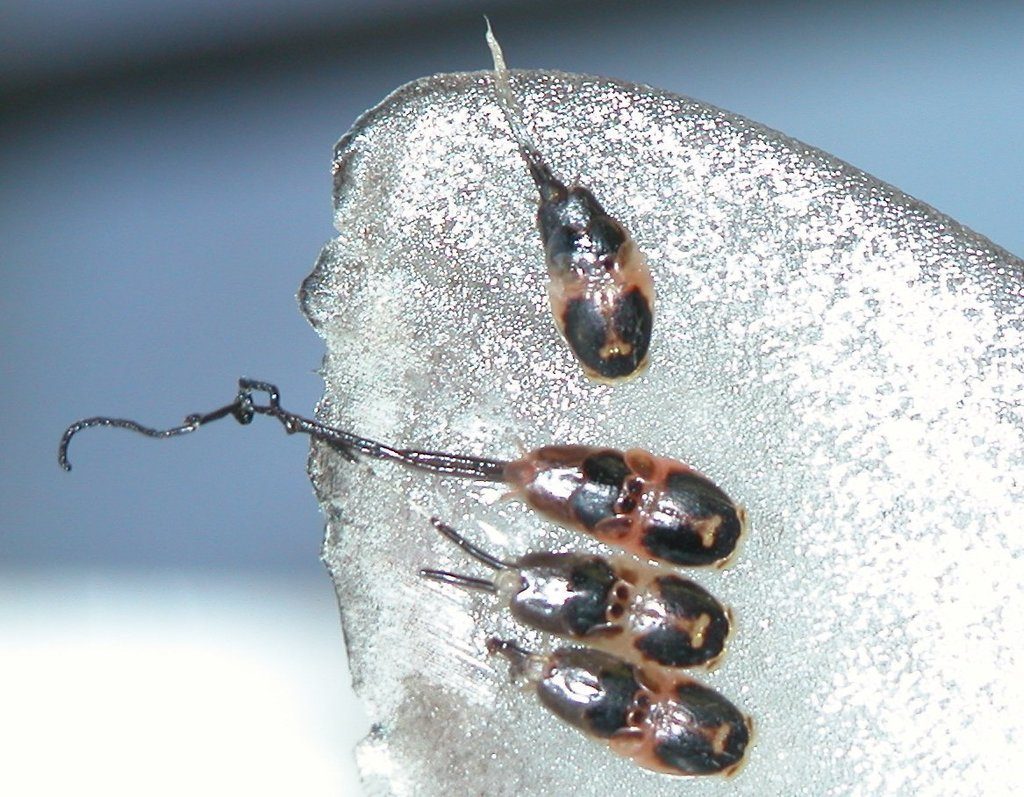
Copepods (; meaning 'oar-feet') are a group of small crustaceans found in nearly every freshwater and saltwater habitat. Some species are planktonic (living in the water column), some are benthic (living on the sediments), several species have parasitic phases, and some continental species may live in limnoterrestrial habitats and other wet terrestrial places, such as swamps, under leaf fall in wet forests, bogs, springs, ephemeral ponds, puddles, damp moss, or water-filled recesses of plants (phytotelmata) such as bromeliads and pitcher plants. Many live underground in marine and freshwater caves, sinkholes, or stream beds. Copepods are sometimes used as biodiversity indicators.

Appearance

Copepods vary considerably, but are typically 1 to 2 mm (1⁄32 to 3⁄32 in) long, with a teardrop-shaped body and large antennae. Like other crustaceans, they have an armoured exoskeleton, but they are so small that in most species, this thin armour and the entire body is almost totally transparent. Some polar copepods reach 1 cm (1⁄2 in). Most copepods have a single median compound eye, usually bright red and in the centre of the transparent head. Subterranean species may be eyeless, and members of the genera Copilia and Corycaeus possess two eyes, each of which has a large anterior cuticular lens paired with a posterior internal lens to form a telescope. Like other crustaceans, copepods possess two pairs of antennae; the first pair is often long and conspicuous.
Diet

Most free-living copepods feed directly on phytoplankton, catching cells individually. A single copepod can consume up to 373,000 phytoplankton per day. They generally have to clear the equivalent to about one million times their own body volume of water every day to cover their nutritional needs. Some of the larger species are predators of their smaller relatives. Many benthic copepods eat organic detritus or the bacteria that grow in it, and their mouth parts are adapted for scraping and biting. Herbivorous copepods, particularly those in rich, cold seas, store energy from their food as oil droplets while they feed in the spring and summer on plankton blooms. These droplets may take up over half of the volume of their bodies in polar species. Many copepods (e.g., fish lice like the Siphonostomatoida) are parasites, and feed on their host organisms.

Behaviour

The second pair of cephalic appendages in free-living copepods is usually the main time-averaged source of propulsion, beating like oars to pull the animal through the water. However, different groups have different modes of feeding and locomotion, ranging from almost immotile for several minutes (e.g. some harpacticoid copepods) to intermittent motion (e.g., some cyclopoid copepods) and continuous displacements with some escape reactions (e.g. most calanoid copepods).

Reproduction

Most nonparasitic copepods are holoplanktonic, meaning they stay planktonic for all of their lifecycles. Harpacticoids, although free-living, tend to be benthic rather than planktonic.

During mating, the male copepod grips the female with his first pair of antennae, which is sometimes modified for this purpose. The male then produces an adhesive package of sperm and transfers it to the female's genital opening with his thoracic limbs. Eggs are sometimes laid directly into the water, but many species enclose them within a sac attached to the female's body until they hatch. In some pond-dwelling species, the eggs have a tough shell and can lie dormant for extended periods if the pond dries out.

Where to see it

Top-rated dive sites where divers have spotted Plankton.

Snorkeling with Whale Sharks

Snorkeling with Whale Sharks

⭐ 5.0 Scout Score
World-class whale shark snorkeling in deep offshore waters.
🚤 Boat All levels