
← All marine life
Pacific Seahorse
Species IUCN · Vulnerable (VU)

Pacific Seahorse

Hippocampus ingens, Girard, 1858

marine

About Pacific Seahorse

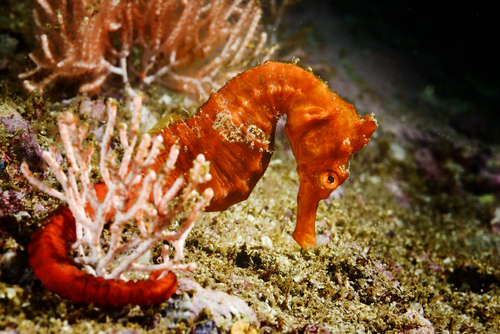
The Pacific seahorse, also known as the giant seahorse, (Hippocampus ingens) is a species of fish in the family Syngnathidae. Their genus name (Hippocampus) is derived from the Greek word hippos, which means "horse" and campus, which means "sea monster." This species is the only seahorse species found in the eastern Pacific Ocean.

Appearance

Hippocampus ingens are one of the largest seahorses, with adult pacific seahorses ranging in size from 12 to 19 centimetres (4.7 to 7.5 in) in height, with a maximum known size of 30 centimetres (12 in). Offspring are approximately 9 mm after birth. While large compared to others of their kind, their size hinders them in the conservation world. Minimum size limits are a common and favored conservation tool, usually starting at 10 cm. Thus, it is crucial that Pacific seahorses are accurately measured when they reach sexual maturity, for it determines if they will be protected or not.

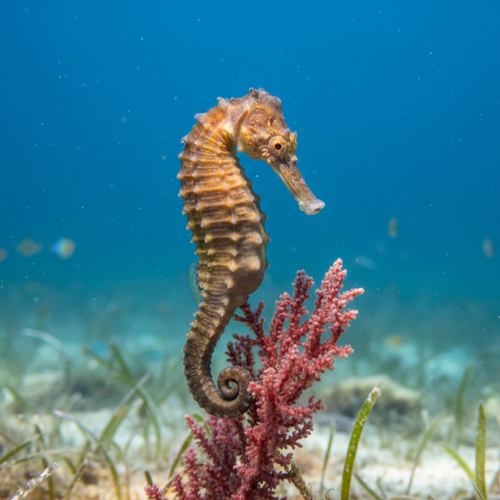
Pacific seahorses can be a variety of colors, including green, brown, maroon, grey, and yellow. Males can be distinguished from females by their prominent keel.
Habitat

The pacific seahorse is distributed in the Pacific Ocean from Baja California to Chile, with an additional transient population off of San Diego.The only known oceanic island population occurs around the Galapagos Islands with some additional populations also located in Northern Peru.

Pacific seahorses are nocturnal and known to inhabit a variety of sub-tidal habitats to a maximum depth of 60 metres (200 ft). Habitats include mangroves, seagrass meadows, rocky reefs, coral reefs and sponges. Other common habitats are sea kelp and eelgrass. They also camouflage around the branches of gorgonians and black corals.

Diet

Hippocampus ingens diet consists of small organisms that live on the bottom of the sea such as mysids, small crustaceans, and other plankton. Like most seahorses, Pacific seahorses are ambush predators, meaning that they camouflage in their habitats and wait for their prey to pass. They then suck their prey in and swallow it whole, for they do not have teeth.

Behaviour

Female pacific seahorses in captivity have been observed producing small broods at three months of age. Sexually mature females often develop a dark patch below the anal fin. Males reach sexual maturity at around 5.4 centimetres (2.1 in) in height. Unsuccessful reproductive activity in captivity has been noted at around three months of age, with successful pregnancies as early as six months of age.

Humans & conservation

Pacific seahorses face many of the same threats that other seahorses face; over 20 million seahorses are sold each year to be used in Chinese medicine, the aquarium trade, or dried as curios. Mexico and Peru are the largest exporter of pacific seahorses, selling more than 1 dry ton annually. Seahorses are particularly susceptible to over-harvesting due to characteristics such as low fecundity, monogamous mating, long development of embryos, low dispersal ability, and limited geographic distribution. Habitat degradation also poses a threat to Pacific seahorses as humans destroy and pollute their habitats. Commercial fishing also poses as threat to Pacific seahorses as fisherman often catch and kill them in their large fishing nets as bycatch.

Part of

Where to see it

No dive sites list Pacific Seahorse yet. Explore the map to find sites near you.