
← All marine life
Pacific Halibut
Species IUCN · Least Concern (LC)

Pacific Halibut

Hippoglossus stenolepis, Schmidt, 1904

marine

About Pacific Halibut

Hippoglossus stenolepis, the Pacific halibut, is a species of righteye flounder. This very large species of flatfish is native to the North Pacific and is fished by commercial fisheries, sport fishers, and subsistence fishers.

Appearance

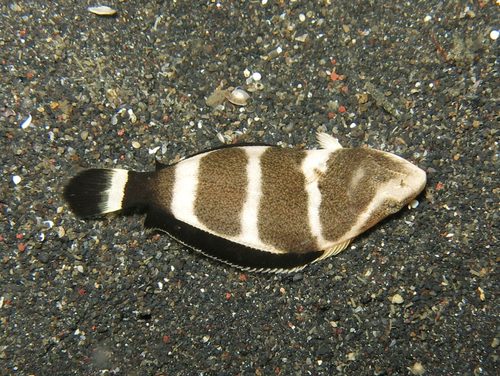
Pacific halibut have diamond-shaped bodies. They are more elongated than most flatfishes, their width being about one-third of their length. They have a high arch in the lateral line over the pectoral fin, and a lunate, or crescent-shaped tail, which is different from other flatfishes. Small scales are embedded in the skin. Halibut have both eyes on their dark upper sides. The color on the dark side varies, but tends to assume the coloration of the ocean bottom. The underside is lighter, appearing more like the sky from below. This color adaptation allows halibut to avoid detection by both prey and predator. They are one of the largest flatfish (only surpassed by the closely related Atlantic halibut), and females can weigh up to 230 kg (510 lb) and grow to over 8 ft (2.4 m) long.
Habitat

The Pacific halibut is found on the continental shelf of the North Pacific Ocean and Bering Sea. Fishing for the Pacific halibut is mostly concentrated in the Gulf of Alaska and the Bering Sea, off the west coast of Canada. Small halibut catches are reported in coastal Washington, Oregon, and California. Pacific halibut is broken up into 10 regularity management areas.

Halibut are demersal, living on or near the bottom of the water and prefer water temperatures ranging from 3 to 8 °C (37.4 to 46.4 °F). Pacific halibut belong to the family Pleuronectidae. From November to March, mature halibut concentrate annually on spawning grounds along the edge of the continental shelf at depths from 183 to 457 m (600 to 1,500 ft).

Diet

Being strong swimmers, halibut are able to eat a large variety of fishes, including cod, turbot, and pollock, and some invertebrates, such as octopus, crab, and shrimp. Sometimes, halibut leave the ocean bottom to feed on pelagic fish, such as salmon, sand lance, and herring, and even seal remains have been found in their stomachs.

Reproduction

Spawning takes place during the winter, with the peak of activity occurring from December through February. Most spawning takes place off the edge of the continental shelf in deep waters of 600 to 1,500 ft (183 to 457 m). Male halibut become sexually mature at 7–8 years of age, while females attain sexual maturity at 8–12 years. Females lay 0.5 to 4.0 million eggs annually, depending on the size of the fish.

Part of

Where to see it

No dive sites list Pacific Halibut yet. Explore the map to find sites near you.