
← All marine life
Ninespine Stickleback
Species IUCN · Least Concern (LC)

Ninespine Stickleback

Pungitius pungitius, (Linnaeus, 1758)

marinebrackishfreshwater

About Ninespine Stickleback

The ninespine stickleback (Pungitius pungitius), also called the ten-spined stickleback, is a freshwater species of fish in the family Gasterosteidae that inhabits temperate waters. It is widely but locally distributed throughout Eurasia and North America. Despite its name, the number of spines can vary from 8 to 12.

Appearance

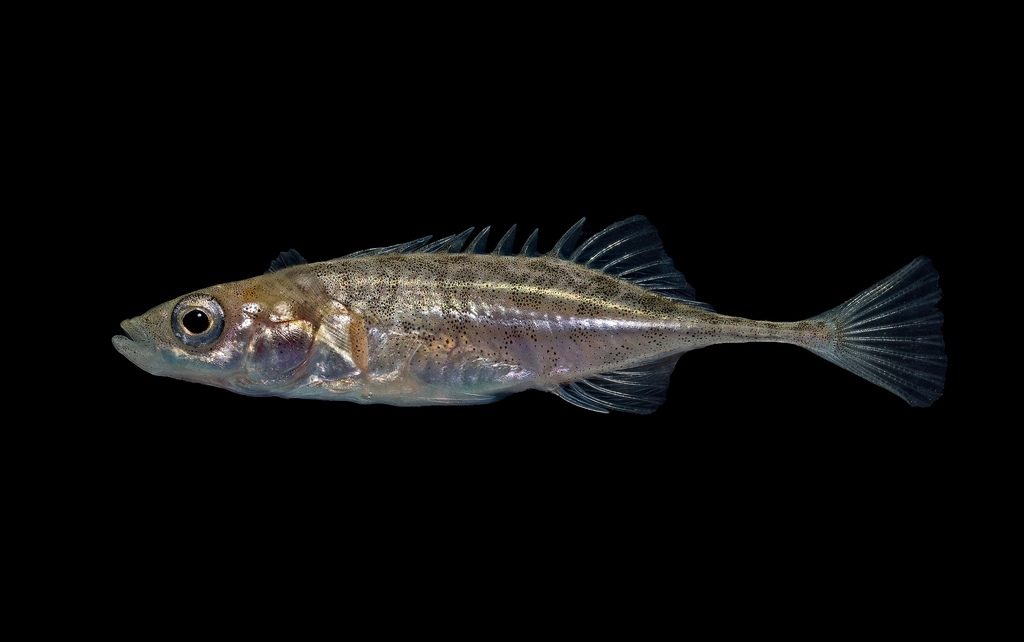
The ninespine stickleback is a small fish, reaching a maximum size of around 12.5 cm. It reaches an age of about 3 years. The body of the ninespine stickleback tapers to a very narrow caudal peduncle and the caudal fin is fan-shaped. The body is less deep and more elongated than that of the three-spined stickleback with a thinner and longer caudal peduncle, but the best way of distinguishing these two species is the number of spines in front of the dorsal fin which, for this species, varies from seven to twelve although nine is the commonest number. This species does not have scales but there is a group of small bony plates on the narrowest part of the caudal peduncle at the lateral line. The mouth points upwards in this species. It is generally greyish or olive-brown with silvery flanks irregularly barred or blotched with darker colour.

Habitat

The species occurs in freshwater systems draining into the Arctic Ocean and the Atlantic across Canada, Alaska, and south to New Jersey. It is present on the North American Pacific coast of Alaska and in the Great Lakes basin. It can also be found throughout most of Eurasia, including the United Kingdom, Greenland, Turkey and the Far East.

Behaviour

During the breeding season (April to July), the male builds a nest suspended on a piece of waterweed, about an inch or so above the substrate at the bottom. The female is attracted by the male and she lays eggs inside the nest, but then departs, leaving parental care to the male. The male guards these eggs and the young fry when they hatch. Then, when they have their spines, he drives them away to look after themselves.

Where to see it

No dive sites list Ninespine Stickleback yet. Explore the map to find sites near you.