
← All marine life
Mollusc
Group

Mollusc

Mollusca

marinebrackishfreshwater

About Mollusc

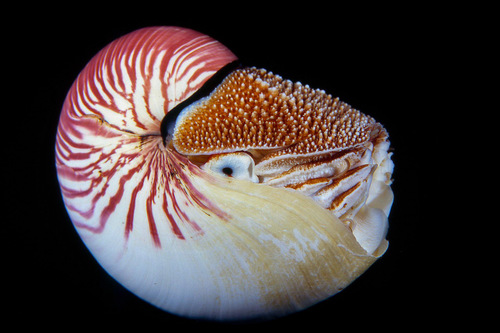
Mollusca is a phylum of protostomic invertebrate animals, whose members are known as molluscs or mollusks. 89,857 extant species of molluscs are recognized with estimates ranging over 251,000 species, making it the second-largest animal phylum after Arthropoda. The number of recognized fossil species is 57,219 with estimates between 60,000 and 100,000, and the proportion of undescribed extant species is very high. Many taxa remain poorly studied.

Molluscs are the largest marine phylum, comprising about 23% of all the named marine organisms. They are highly diverse, not just in size and anatomical structure, but also in behavior and habitat, as numerous groups are freshwater and even terrestrial species. The phylum is typically divided into 7 or 8 taxonomic classes, of which two are entirely extinct. Cephalopod molluscs, such as squid, cuttlefish, and octopuses, are among the most neurologically advanced of all invertebrates—and either the giant squid or the colossal squid is the largest known extant invertebrate species. The gastropods (snails, slugs and abalone) are by far the most diverse class and account for 80% of the total classified molluscan species.

Appearance

Because of the great range of anatomical diversity among molluscs, many textbooks start the subject of molluscan anatomy by describing what is called an archi-mollusc, hypothetical generalized mollusc, or hypothetical ancestral mollusc (HAM) to illustrate the most common features found within the phylum. The depiction is visually rather similar to modern monoplacophorans.

The generalized mollusc is an unsegmented, bilaterally symmetrical animal and has a single, "limpet-like" shell on top. The shell is secreted by a mantle covering the upper surface. The underside consists of a single muscular "foot". The visceral mass, or visceropallium, is the soft, nonmuscular metabolic region of the mollusc. It contains the body organs.

Behaviour

Most molluscs are herbivorous, grazing on algae or filter feeders. For those grazing, two feeding strategies are predominant. Some feed on microscopic, filamentous algae, often using their radula as a 'rake' to comb up filaments from the sea floor. Others feed on macroscopic 'plants' such as kelp, rasping the plant surface with its radula. To employ this strategy, the plant has to be large enough for the mollusc to 'sit' on, so smaller macroscopic plants are not as often eaten as their larger counterparts.

Filter feeders are molluscs that feed by straining suspended matter and food particles from water, typically by passing the water over their gills. Most bivalves are filter feeders, which can be measured through clearance rates. Research has demonstrated that environmental stress can affect the feeding of bivalves by altering the energy budget of organisms.

Reproduction

The simplest molluscan reproductive system relies on external fertilization, but with more complex variations. All produce eggs, from which may emerge trochophore larvae, more complex veliger larvae, or miniature adults. Two gonads sit next to the coelom, a small cavity that surrounds the heart, into which they shed ova or sperm. The nephridia extract the gametes from the coelom and emit them into the mantle cavity. Molluscs that use such a system remain of one sex all their lives and rely on external fertilization. Some molluscs use internal fertilization and/or are hermaphrodites, functioning as both sexes; both of these methods require more complex reproductive systems. C. obtusus is an endemic snail species of the Eastern Alps. There is strong evidence for self-fertilization in the easternmost snail populations of this species.

Humans & conservation

For millennia, molluscs have been a source of food for humans, as well as important luxury goods, notably pearls, mother of pearl, Tyrian purple dye, sea silk, and chemical compounds. Their shells have also been used as a form of currency in some preindustrial societies. Some species of molluscs can bite or sting humans, and some have become agricultural pests.

Where to see it

No dive sites list Mollusc yet. Explore the map to find sites near you.