
Appearance
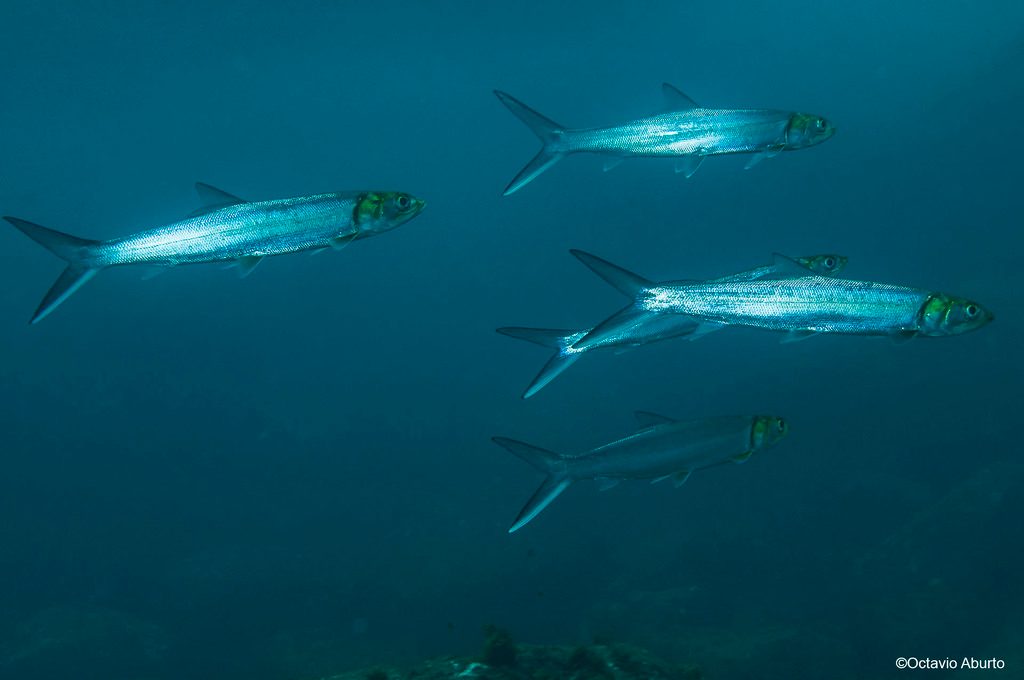
The Pacific ladyfish have very round bodies with terminal mouths, and profound gill formations known as pseudobranchiae. They have a larger number of dorsal fin rays than most Arizona fish, with numbers ranging from 27 to 35. Anal fin rays usually range from 13 to 19, and they have 12 to 16 pelvic rays. This species is very different from most chordates in that it has no conus arteriosus, a tendinous band of tissue from which the pulmonary artery arises. Because of this absence, they have a much smaller pulmonary artery. This fish's lateral lines are unbranched, and lateral line scales are usually within ranges of 95 to 120. All scales are silvery and cycloid, along with the overall color of the fish; however, yellow pigment can occur in the eyes. Some aids to identification include the prominent auxiliary and inguinal processes.