
← All marine life
Inshore Lizardfish
Species IUCN · Least Concern (LC)

Inshore Lizardfish

Synodus foetens, (Linnaeus, 1766)

marinebrackish

About Inshore Lizardfish

The inshore lizardfish (Synodus foetens) is a member of the family Synodontidae found in the western Atlantic.

Appearance

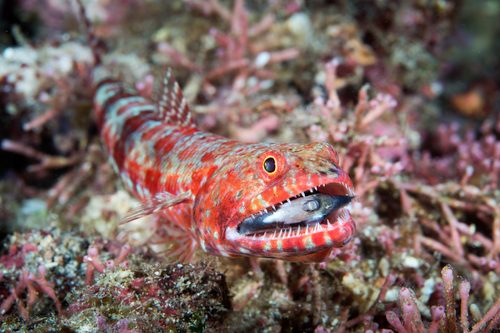
The inshore lizardfish has a maximum length recorded of about 50 cm (20 in) but lengths around 40 cm (16 in) are more common. Their lifespan can be up to nine years. The body of this species is elongated, similar to a cigar. Inshore lizardfishes have a thin body that swims quickly and has a subcarangiform swimming style. The heads of lizardfish are slightly compressed and the tops of their heads are wrinkly in nature.
Habitat

The habitats for these fish include the bottom in shallow inshore marine waters, usually over sand or mud bottoms, including creeks, rivers, among seagrasses, estuaries, bays, and lagoons. Adults have been found to be also in the open sea above continental shelves. The inshore lizardfish has been found in temperatures ranging from 8.3–31.7 °C (46.9–89.1 °F). It has also been seen to withstand a wide range of salinities, from 1.9ppt to 60 ppt. Biomass appears to determine their distribution in their habitat, smaller inshore lizardfish are found closer to shore while larger specimens are more offshore. In areas like San Blas Archipelagos, Panama, the inshore lizardfish was found to be most abundant in numbers during the dry season.

Diet

The inshore lizardfish is an ambush predator. Its diet consists of various demersal fish and small invertebrates. They include: shrimp, crabs, and cephalopods. Because the inshore lizardfish reside in environments that have lots of changing conditions, the inshore lizardfish diet also changes with the conditions. In the Gulf of Mexico, specifically, the inshore lizardfish relies on certain species to get through the seasons. During the colder months, between November and February, inshore lizardfish mainly rely on two different species: Upeneus parvus and Loligo pealei. During the rainier season, the inshore lizardfish was seen to rely on Engyophrys senta and L. pealei. The inshore lizardfish is seen hunting in a wild manner where it lurches at its prey and then quickly finishes it off.

Reproduction

Fertilization has been observed to be external and they spawn all throughout the year. They do not guard their spherical-shaped eggs because the eggs are scattered in the water and instead are protected by nearby plants and rocks. Lizardfish, belonging to the family of Synodontidae, have a unique lifestyle that has adapted to the ever changing waters in reef and shallow environments. According to a study by T. Lemberget about the environmental influences on lizardfish reproduction, "They have a bipartite lifecycle with a pelagic larval stage and a bottom-dwelling adult stage that can be reef-associated". This essentially states that the lizardfish lifecycle is split into two different stages.

Humans & conservation

This species is often captured during shrimp trawls. This occurs in the northern Gulf of Mexico. High mortality occurs from trawl bycatch for this species, but they are usually just discarded after being caught because they have little to no commercial value. Inshore lizardfish is one of the most abundant lizard fish species, so it can provide a highly nutritious diet for lots of people. In Eritrea, inshore lizardfish can provide a sustainable diet when pulverised into food supplements for children. Along with maize and carrots, inshore lizardfish powder can be added to provide an extra bit of nutritional value for children when trying to stay within a low cost. There is no current seasonal restriction for the inshore lizardfish because of its large abundance in numbers and availability throughout the year. Inshore lizardfish are caught by fishing pole because of their manageable size.

Part of

Where to see it

No dive sites list Inshore Lizardfish yet. Explore the map to find sites near you.