
← All marine life
Great Seahorse
Species IUCN · Vulnerable (VU)

Great Seahorse

Hippocampus kelloggi, Jordan & Snyder, 1901

marine

About Great Seahorse

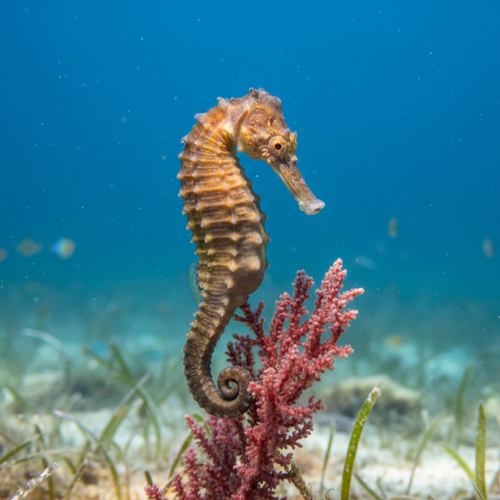
The great seahorse (Hippocampus kelloggi), also known as Kellogg's seahorse, is a species of fish in the family Syngnathidae. It is one of the largest of the 54 species of seahorse.

Appearance

The head of the seahorse resembles a crown. Its spine is very prevalent, but has a rounded shape, especially above its eye. It is often confused for other species, and some great seahorses have even been thought to be an entirely new species, but gene sequencing has disproved this. They can be identified through their abnormally high tail rings on their comparatively slightly longer tails, which account for about 57% of their bodies. It is pale in color and smooth to the touch. They live for two to four years in the wild.
Habitat

It is found in the Indo-pacific region, specifically documented from the coast of East Africa to Japan. It was also recently identified around both northern and southern Australia. They frequent areas with an abundance of coral so they can latch on to something. Though often found in shallow waters, they have been recorded in depths of over 100 meters, with the deepest recorded seahorse at 152 meters below the surface.

Reproduction

Males breed the eggs in sacks. Gestation lasts a few weeks, then males will release the eggs without caring for them. Generally, males are ready to breed again almost immediately after giving birth. Though little is known about the great seahorse's specific breeding habits, many related seahorses have been studied and were found to occasionally be monogamous. Their mating ritual involves twisting their tails and head nods, until they find a partner. Though the males carry the unborn young, they are also the main competitors for mates, which may have to do with an uneven ratio of males to females in a population.

Part of

Where to see it

No dive sites list Great Seahorse yet. Explore the map to find sites near you.