
← All marine life
Dusky Dottyback
Species IUCN · Least Concern (LC)

Dusky Dottyback

Pseudochromis fuscus, Müller & Troschel, 1849

marine

About Dusky Dottyback

Pseudochromis fuscus is a species of saltwater fish in the dottyback family. Dottybacks are generally very bright in color and relatively small, factors which have made them popular among aquarium enthusiasts. Besides their coloration and size, they are probably best known for their aggressive temperament. While many of the more common dottybacks are in the Pseudochromis genus, there are also species in other genera. Common names for this particular species include the brown dottyback, the golden dottyback, and the musky dottyback. The common name “Golden dottyback” is shared with another species of dottyback, the Pseudochromis pseudoplesiopinae. The species name, fuscus, means dark or dusky in Latin.

Appearance

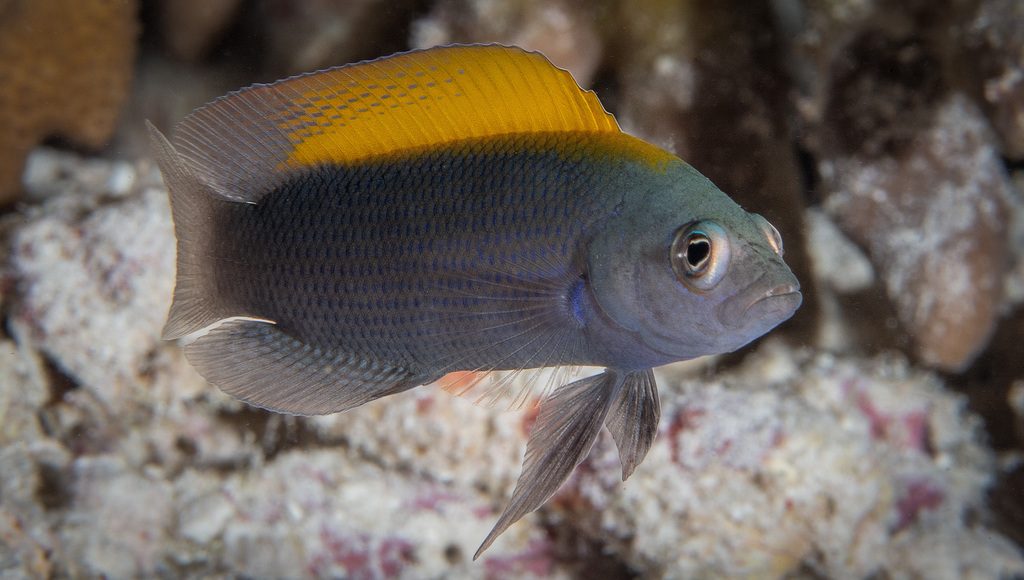
Brown dottybacks grow to a maximum length of about 10 centimeters and they have three dorsal spines, several dorsal soft rays, three anal spines and a few anal soft rays. The spine count is what distinguishes them from their close neighbor, the true basses from the family Serranidae. Like most dottybacks, they are very long and slender. They are also the largest species within the genus Pseudochromis. Brown dottybacks have pear-shaped eyes, not unlike bass, and canine teeth. Color usually ranges from bright yellow to dark brown, but orange, pink, and gray fish of this species have been found as well. Blue spots can often be seen on the nape and the anterior part of the body. Studies have shown that the color differences in wild brown dottybacks are not due to genetic changes.

Habitat

Pseudochromis fuscus is native to the south-western Pacific Ocean and the eastern Indian Ocean. Its range is from Sri Lanka east to Vanuatu and from Australia north to Hong Kong. A map showing the distribution of this fish can be seen here, with red spots showing the range of this dottyback. As is shown on the map, the southern limit of the distribution stops at about the southern limit of the reefs off the eastern coast of Australia. This is because the brown dottyback is most often found in coral reef habitats.

Diet

Pseudochromis fuscus is a carnivorous fish that often feeds on juvenile coral reef fish or crustaceans, though they also will feed on mollusks. Typically, juvenile fish are only targeted for predation during the summer, as the survivors outgrow their vulnerability to dottyback predation by the winter. Common predatory targets include many species of damselfish. Unlike other species of competing piscivors, predation of juvenile fish by the brown dottyback is not affected by the presence of adult males guarding the juveniles. Sometimes, adult male damselfish will guard the nests of their young. While this reduces predation on the young by other predators, predation by dottyback appears to be unaffected. Because of this predatory behavior, the brown dottyback is considered an important regulator of the composition of the coral reef community.

Behaviour

The brown dottyback is a very aggressive predatory fish, and therefore, most of the behavioral research conducted on it relates to the predatory relationship that this fish has with others in the coral reef community. Brown dottybacks appear to preferentially prey on fish with longer bodies, an observation which is consistent with the optimal foraging theory. While long body types were preferred in prey, various studies have conflicting results when examining the effects of overall prey size on targeting. Some studies have found that brown dottybacks prefer larger prey, while others have found that smaller prey are preferred. Brown dottybacks also appear to target rare fish for predation more often than common fish. Preference is also given to targeting prey in good condition over prey in bad condition, a distinction that is often made through chemical cues.

Where to see it

No dive sites list Dusky Dottyback yet. Explore the map to find sites near you.