
← All marine life
Common Jingle
Species

Common Jingle

Anomia simplex, A. d'Orbigny, 1853

marine

About Common Jingle

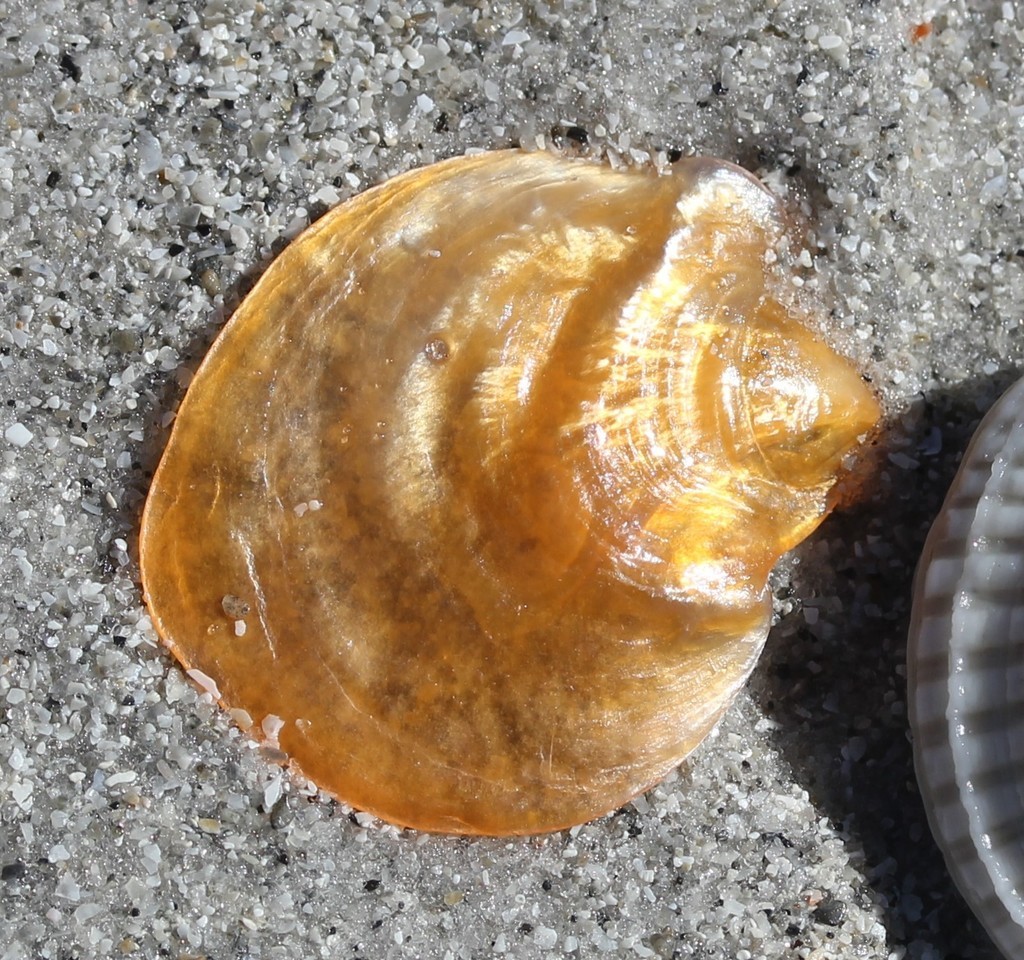
Anomia simplex, the common jingle shell, is a typical species of bivalve mollusc in the family of Anomiidae, sharing attributes to blue mussels, American oysters, and bay scallops. Species related to the family of Anomiidae are often noted for their extremely thin, often translucent, paper-like shells. Anomia simplex can be found in shallow waters, typically estuaries, mainly along the Atlantic Coast of North America; however, they can range as far north as the coast of Nova Scotia, and as far south as the coast of Brazil.

Appearance

Anomia simplex is a typical species of bivalve mollusk in the family of Anomiidae, similar to blue mussels, American oysters, and bay scallops. The family of Anomiidae ranges from saltwater clams to bivalve mollusks, which contains about 7 genera, including Anomia simplex. Anomiids are most closely recognized for their extremely thin, often translucent, paper-like shells, which can often be used to help manufacture glue, chalk, paints, and other materials. Despite the relatively thin and translucent shell, these shells are very strong and withstand many environmental pressures on hard substrates.

Habitat

Anomia simplex is found throughout the year in shallow waters: typically estuaries, bays, or beaches, from the low tide water line all the way up to 30 feet deep. Common jingle shells are found coexisting in oyster beds and mollusk shells as far north as the coast of Nova Scotia, and as far south as the coast of Brazil. Overall, Anomia simplex is densely populated on the Atlantic Coast of North America.

Where to see it

No dive sites list Common Jingle yet. Explore the map to find sites near you.