
← All marine life
Coconut Octopus
Species IUCN · Least Concern (LC)

Coconut Octopus

Amphioctopus marginatus, (Taki, 1964)

marine

About Coconut Octopus

Amphioctopus marginatus, also known as the coconut octopus and veined octopus, is a medium-sized cephalopod found in the tropical waters of the western Pacific Ocean and the Indian Ocean. It prefers sandy substrates with plentiful shells or litter. It commonly preys upon shrimp, crabs, and clams, and displays unusual behavior for octopuses, being one of only two species known to exhibit bipedal walking. The coconut octopus is also known for collecting and using tools; it gathers coconut shells and seashells and uses these for shelter.

Appearance

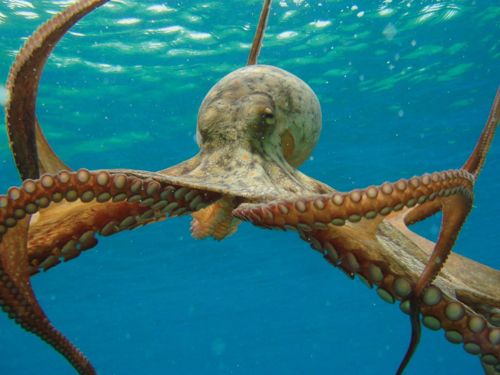
The main body of the octopus is typically between 5 centimeters (2 in) and 10 centimeters (4 in) long; including the arms, it can measure up to approximately 30 centimeters (12 in) in length. The octopus can weigh up to 400 grams (14 oz). The octopus displays a typical color pattern with dark branching lines similar to veins. The arms are usually dark in color, with contrasting light suckers. In many color displays, a lighter triangular area can be seen immediately below the eye. In 2017, the complete mitochondrial genome of A. marginatus was successfully sequenced, showing the species to be closely related to Amphioctopus aegina.
Habitat

The coconut octopus is broadly endemic to neritic, tropical waters in the Indian Ocean, Red Sea, Northwest and Western Pacific Ocean, and Southeast Asian Sea. Amphioctopus marginatus is listed as Least Concern on the IUCN's Red List. The primary threat faced by the species is fishing.

The species prefers shallow, subtidal waters along the continental shelf. The species has a maximum depth of 190 metres (620 ft), and can often be found in mud and sand substrates. Large numbers of coconut octopuses can often be found in sandy areas with a higher amount of litter that can be used for shelter.

Behaviour

The species preys predominately on crustaceans such as Calappa crabs, along with bivalves. Eggs are laid in clutches of 100,000 and are 3 millimetres (0.12 in) in length; they are laid as long chains woven together. The female octopus lays eggs within a shelter such as a coconut shell where she will guard and tend to her eggs; like most octopuses, the female coconut octopus will starve to death whilst brooding. Eggs take between 15 and 17 days to hatch and the paralarvae are planktonic.

Part of

Where to see it

No dive sites list Coconut Octopus yet. Explore the map to find sites near you.